
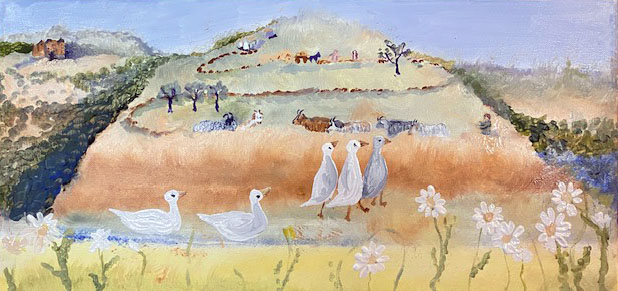
Historical setting: 602 C.E. A cottage in the Vosges
Late summer days on this farm bring so many changes – geese and goats added and the earth yielding a full harvest. The root crops are particularly abundant and if we store them properly, they will stretch well into winter, maybe even to spring. The old cow was traded away, and the goat cheese is different. Ana is talking about adding sheep for the wool. Everything comes with different chores, and things that would seem changeless on a farm, come with new patterns, always.
Our oldest sons are new places at new ages. Simon, nearing eleven-years-old, has taken on extra responsibilities.
Hannah emulates her mother in everything and I expect one day she will be a fine practitioner of healing, even though, right now she’s something of a bossy eight-year-old. The younger children still accept her voice of authority.
My worry for this family is that we’ve been told we are “commoners” in this new world rising. The strivings of nobility demand ever-larger castles and greater gifts to monasteries with new churches everywhere named for some sainted noble. Gifts assure the newly rising nobility have met the obligations of the fearsome and invisible God. Their expectation may simply be that they will have God on their side in the next war.
Once this forest was the hunting ground for kings, and once the clearings and rock walls were just ruins of Roman times where now the aristocracy pass by on horses without a thought of the land, where once in this wilderness, ascetic monks wandered for solitude.
Now, while the power of kings wanes, the lesser nobility proliferates. Human “owners” of Creation are called lords. The land stays the same as always, but somewhere in a castle drawing room or a far battlefield all these hills and rivers have been divvied into small parcels. The people who live on the lands farming and hunting for food have been sorted out and redefined. Most are common. Commoners are peasants and serfs, slaves, servants, indentured, or taxed, whatever name they may know us by and we are required to provide our wines and cheeses, meats and grains to those who say they own the land. Our farm was good this year so the amount of our tithe is very high. If next year we have less, this same high mark will again be demanded of us. I fear commonness is easily abused by people who name themselves lord.
(Continues tomorrow)
 Lazarus Ink