
Historical setting: 602 C.E. The Vosges Mountains
Father Columbanus asked Bishop Felix the lingering question, “Does the Pope take notice of the problem with the noble bishops of Gaul?”
“Yes indeed,” answers Bishop Felix. “He wanted to know why you, a man of great importance here, and I, one who oversees a monastery, are not bishops, and yet others are hailed as bishops who only oversee old buildings and do much less of the earthly work of Christ. I explained that here only bishops can ordain a bishop and in Gaul bishops have Frankish titles. He looked pained and called it ‘simony.’ Then the Pope said he sent letter after letter to the ‘great and holy Queen Brunhilda, regent for kings,’ reprimanding the practice of simony in Gaul.”
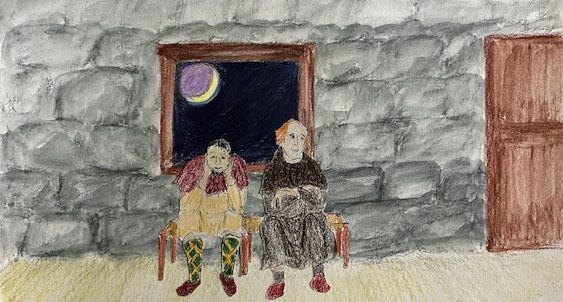
Brother Servant and I are sitting here quietly on the side bench but with the mention of Brunhilda we bump elbows and share a smirk. The Pope is complaining to Brunhilda of bishops practicing simony? Gratefully, it is Father Columbanus who asks the question we all want answered.
“How is it that Pope Gregory would send his communications to Gaul through Brunhilda?”
“I think he assumed royalty is in charge here. And there was, of course, the temporal matter of taxes owed to Rome for the use of Papal lands.”
I whispered my concern to Brother Servant, “What of Luxeuil, and Annegray, and our farm that was also granted by King Guntram?”
He whispered back, “I believe these are all papal lands, Brother Ezra. You pay your tithe to Luxeuil, and we send an offering gift to the Pope, and we call it the Roman tax.”
Now both of the fathers have stopped their conversation to silence our interruption. Our humble apologies are mumbled with heads bowed.
Father Felix continues his story, “Our Holy Papa in Rome said he’s been receiving disappointing reports about the bishops of Gaul who bestow church offices as favors to family. Apparently, the Pope had established these communications with our kings since he’s been pope. He said he sent the queen relics – iron shavings from the key to the Kingdom of St. Peter, and a special papal garment for elevating one bishop to serve over the others – a palium.“ [Footnote]
“And here you are” says the Father, “now a bishop? I’m not sure if that is actually Holy Justice, or simply my own humanity that is savoring revenge.”
[Footnote] Demacopoulos, George E. Gregory the Great: ascetic, Pastor, and first man of Rome. Indiana: University of Notre Dame Press, 2015. p.142
(Continues Tuesday, Sept. 19, 2023)
 Lazarus Ink