
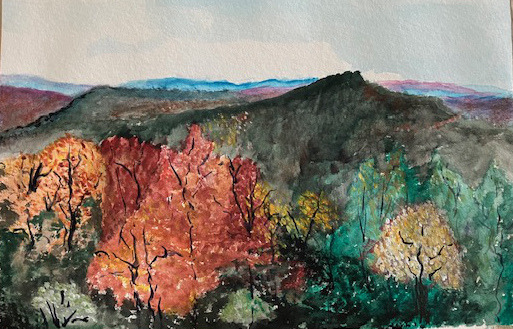
Historical Setting: 610 C.E., Vosges Mountains
Seven years since last I wrote.
Bishop Felix returned from his recent journey to Rome with the news that Pope Gregory is dead and much is left unfinished. The hopes Columbanus had in finding an ally in the pope went array because the pope didn’t even receive his letter. Now controversies are brewing over the power of the papacy and the hierarchy of bishops. Bishop Felix is still hoping for missionary assignment to East Angles following Gregory’s appointment of Augustine to convert the Pagans. There are many loose threads.
We’ve watched for wars from the north and from the east. The nobility of Metz sent their spies to learn of this. The two spies that I know went looking for warring enemies and came back to this papa’s house before they reported back to Metz. Greg and Gaillard said the likely invaders, the Avars and the Slaves feared by the Franks, have settled in the lands beyond the rivers to the east. But the armies of those marauding tribes are now warring with the Persians and eastern vestiges of the Roman Empire in the Christianized Byzantine. [Footnote 1] With the wars far away, the settled tribes have no warriors left among them to burn and sack these Frankish lands.
So, when Greg and Gaillard returned from their first journey across the rivers, last year, they brought news that these tribes we feared were, themselves, war-ravaged and suffering. They told us of famine and plague among the Slavs. This rallied the empathy of the Bishop of Metz and his wife Doda. So, we all gathered up supplies to send with the Frankish caravan from Metz filled with Christian charity for these suffering people. [Footnote 2] Our own farm supplied some of the mules and added to the sheep and goats that were sent. We were able to fill one whole wagon with just the abundance from our field and gardens.
Hannah, who was fifteen last year, begged to go and care for the sick who desperately needed a knowledgeable healer. Ana was most against it.
“She has no experience with plague.”
I asked Ana, “How would she gain that experience if we didn’t allow her to go?” And I reminded Ana of her own advice for letting children grow up in their own ways. “She will undoubtedly go with or without our blessing.”
So, Ana and I blessed her on her way. We sent her with lots of herbs and medicines, and a bird to message us back.
[Footnote 1] One would think a history blogger would know this, but it took a source book. (Herrin, Judith, Byzantium: The surprising life of a medieval empire, Penguin Books: U.K. 2007, chapter 8.)
[Footnote 2] The Bishop of Metz, Agulif, and his also noble wife, Doda, were known to be charitable in a time when Christian charity was valued. But sending this caravan to needy strangers in 609 C.E. is fictional.
Art note: This Goauche painting of the Vosges in the autumn was my class project, introduced to this medium by a most excellent art teacher, Camille Tulcewicz.
(Continues tomorrow)
 Lazarus Ink