
Historical Setting, 629 C.E. The cottage in the Vosges
I’m listening to my children fill in the missing years. Next, I listen to Greg who is here on the bench with Gaillard.
Greg begins, “Papa, I guess you found out the hard way about that ‘bad neighborhood’ where the Jewish refugees ended up.”
“Did Brandell tell you of the peacemaking possibility he and Gaia laid out for them?”
“He said their outsider viewpoint gave them unbiased judgment, which made it obvious the neighbors on both sides of the river had to work together or no vineyards could ever flourish.”
I add, “Try as I did, when I went there several years ago, I wasn’t able to interest anyone in peace, and they couldn’t find it for themselves.”
Gaillard observes, “It was probably one of those possibilities that was right in front of them yet the established vintners feared any success of new neighbors would only result in their own loss.”
Greg adds, “and the refugees had their own fears and concerns.”
“Now,” I mean to speak to Greg of his own brother, “when a rift arises close to home it is sometimes hardest to see.”
“I feel one of those patriarchal lectures coming on, Papa. Did I ignore my responsibility to the brotherly bond with Brandell, somewhere in all this?”
“No, Brandell only spoke of his gratitude to you for starting him on his journey, guiding him through the mountains to the port in Ravenna. But I have heard from Haberd that you have a debt of gratitude due him.”
“Haberd? What do I owe Haberd? He gets to rule the family farm, even though he is hardly the first born here.”
“Haberd and his wife and children have kept it a family farm, when so much tilled land is controlled by the few rich noblemen in these times.”
“So for this, Gaillard, nobleman of Metz, and I, are supposed to be grateful?”
“He only needs to hear you are grateful for the use of pastures for ten horses and ten mules.”
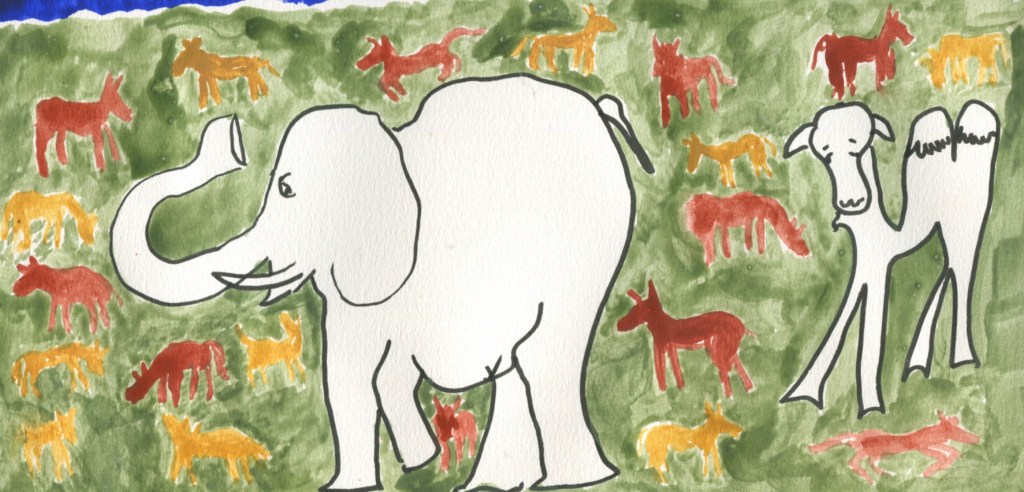
“So that’s what this is about. You know we could have brought elephants.”
“Or camels, he said you offered. He doesn’t need threats of larger beasts, or even payment for the extra straw that took a bit of ingenuity for him to maintain. He just needs a kind word of appreciation from his older brother.”
(Continues tomorrow)
 Lazarus Ink