
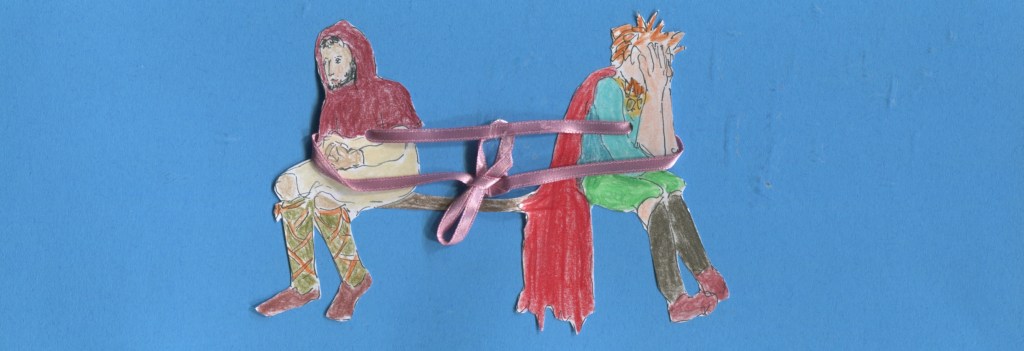
Historical Setting, 629 C.E. farm in the Vosges Mts.
Vizsla came into our house in the middle of my prayer just in time to hear my spoken prayer asking God to be with Vizsla in his time of grief in the passing of his mother. So, he holds onto me now, as his brother in grief. Maybe I am that, but only by holy happenstance; I didn’t choose it. And especially, I don’t want it. There is nothing about Vizsla that makes me want to be a brother in anything with him, particularly in grief.
Now, through all this loud wailing and tears a theological question rises up about the nature of God. Is my God different than his God? I don’t really have God, God has me. Does Vizsla even notice God? I know nothing of these Avars at all, except they fight Christians in East and they wander the Persian desserts then leave their families to starve in the lands by the Danube!
I know God is God. I don’t pray aimlessly into a void. I recognize Earth and all Creation as the great metaphor, the wondrous poetry, the art of the first and always Creator, the Spirit of all that is. God is love, and love is the …
But I would rather argue theology with Vizsla than share with him in grief.
I argue, “It isn’t my God or your God, it is just God. It doesn’t matter if you are Greek or Roman, Jewish, Ishmaelite, or Zoroastrian, God is God. If God is God religion doesn’t forge new gods. We just come around to finding that same God each in our own way. The one religion blames another for its different ways.”
Vizsla observes, “Pagans call other tribes Pagan. Christians sever their own Jewish root. In the name of God’s love religion slaughters religion. And you wonder why I don’t own your God?”
“Vizsla, it is God, not me, who answered your need for compassion no matter what oddities of coincidence made you think my prayer was for you. Just, leave me out of it.”
Simply and truthfully, without frills, I actually do know that Love is demanding me to share this odd man’s tears of grief just now. He seems to think that my duty-prayer brought God in affirming to him that he is beloved despite the hole in his spirit called grief.
We clearly don’t share all these human contingencies to God called religion, but maybe we do share in grief and in need.
(Continues tomorrow)
 Lazarus Ink