
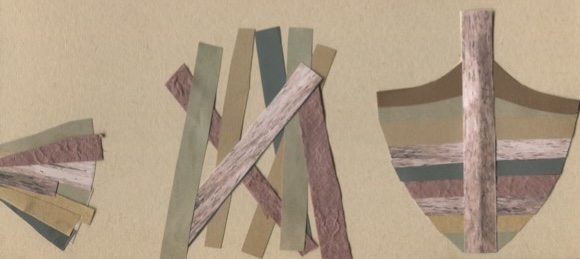
Historical Setting: 789 C.E. Jutland
Straying from collecting of firewood, I’ve wandered into a shipyard just north of the houses. No one is here. I suppose there are more of these artists working inside these houses. And now I find plenty of wood stacked on the scrap piles maybe set aside for the burn, so why do I work so hard bringing fallen logs to the fire pit?
On closer look I wonder, maybe these aren’t scrap piles at all. Maybe these cut and planned pieces of hardwoods are here for the artists to use for the detailed carving projects yet to be started. I guess it would be thoughtful of me not to throw these onto the burn pile. What seems scrap to one man, might already be a great work in an artist’s imagination.
And here is the purpose for the work of the smiðr. Each ship being built has lap strake of oak with the same curve as the wood piece the smiðr carves to make an elegant top edge. And each ship requires the art.
This village is much larger than I first thought. I wonder how many more artists are working with a monks’ intensity to use what there is of winter’s light to chip away the art?
Every useful tool, even the sled that I followed here displays designs with details of knots and repetitious borders mingled with monsters and mazes. In these years that are lost to me the world apparently has become obsessed with finely made edges and trimmings.
At first, I thought this was simply one smiðr’s obsession. My imagination spun up stories of the smiðr coming from the Island of Columbanus, maybe as a slave, or a captured monk, an artisan with the inks but having no vellum here for his letters, he used the blade to make the details of the borders that would have been done to a manuscript. So, I invented a story in my imagination to account for the similarity of the carving to the manuscripts known among the monks.
It could have been. But maybe it went the other way. Maybe these pagans, worshippers of different gods went to the Irish islands to live among the monks, thus the artwork with pagan images oozed its way onto the liturgical documents giving dark beauty to everything it touched. Who would know the order of the history of this?
(Continues tomorrow)
 Lazarus Ink