
Historical Setting: 789 C.E. Jutland
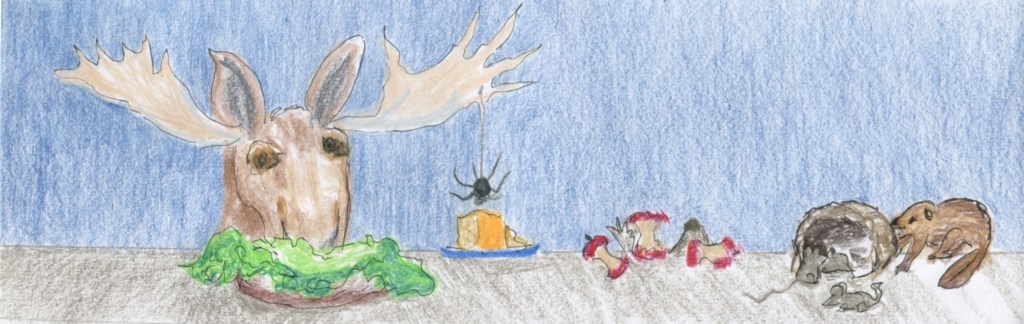
This morning men and the few women who passed around the horn last night are groggy with hangover. No one is here at the feasting board when I come out to clean up the dregs of celebration. Everyone who listened so long to the stories told by the seiðr must be sleeping or hiding or maybe there’s been some shape changing from drunkin’ partiers into woodland creatures that I see have visited this place in the early hours of this morning. There is really very little left here to clean up.
First thing this morning, at the house of the smiðr where I’m staying, Marian is already setting beans to soak for supper. The elder smiðr isn’t here just now. Marian tells me while I was out, he went to take his carving of a ship’s border to the building site for the new ship. But I was just out there, and I didn’t see him.
Now he returns from a visit to another house where one he calls an “apprentice carver” was working the on the center piece of art for the new ship. He has the bear skin I’ve been using as a sleeping mat wrapped around this, something big and nearly too heavy for him to manage.
Apparently, this elder smiðr considers himself the master carver and he stopped to assess the work of a younger artist. Now he is cursing, all twisted in knots over the “poor standard of workmanship” youngers get away with in these new times. Agism again. It works both ways.
Of course, I’ve seen this method of teaching before, when an elderly abbot inspecting the work of a novice speaks only the woes of youthful flaws, then the would-be teacher takes to the inks to do it over by himself. It may sound like an exemplary teaching style, but really it is this old monster agism gnawing away at generational harmony. This elder smiðr who only works alone, had no intention of guiding an apprentice to do better work. In all his cursing and fuming he just plans to fix it himself.
Unwrapped this whole ship’s head is nearly too large for the smiðr’s worktable. These ships are intended to look fearsome and dangerous, when they approach a village for a raid, so it is important that the carving, the vanguard of the attackers, represent the ferocious presence of a horrific monster, but here, is a…
(Continues tomorrow)
 Lazarus Ink