
Historical Setting: 793 C.E. Skåne
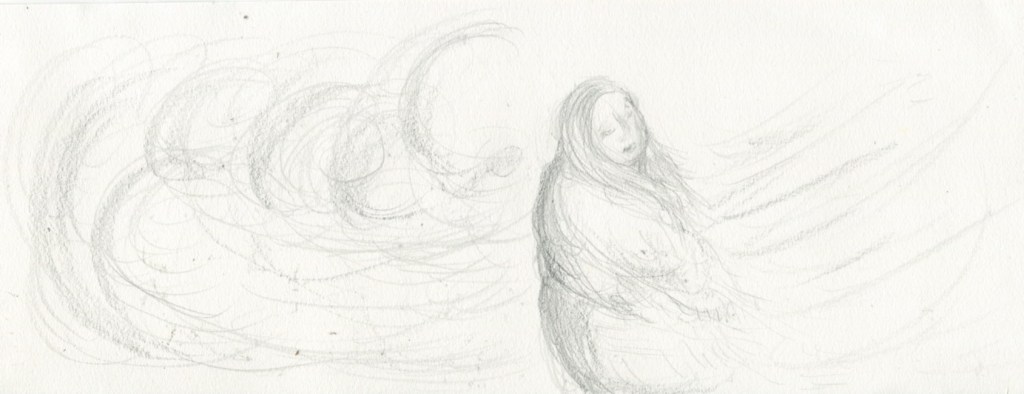
The seiðr, whose name I don’t even know, brought me to a ruin of a house with no door. We sailed here on the west wind so I could know the answers to my questions about this land.
As always, I’m wandering, just looking for the thread of love that brought everything into being. And here it seems lost from human grasp – it is a ruffian world with few women. I’ve learned that here books are only runestones, and the deep grief that rules these lands isn’t about the hours of darkness at the winter solstice. The hidden grief is for daughters turned out as infants – after a mother held them and sang to them, nurtured them and knew their human spirit — daughters were put out into the wind and cold with something to appease their hunger – a thing, a piece of cloth to stifle cries, and here, a precious pendant was used to take the place of her mother’s breast. This practice makes a linage of Norsewomen a rarity. Mostly, captives, women are thralls, slaves, concubines. Or the few women are perceived like the seiðr, oddly powerful and nearly magical.
As I watch her pondering this ruin of a house, I wonder if the seiðr brought me here, not for my questions, but to search her own life. She goaded me into speaking something of a Christian judgement against Paganism. And now, in the calm of the turning winds I asked God to give me better words to answer her argument. God sends no words. But I do have a glimpse of understanding.
My first perception of her was a docile woman with a wine skin and a walking stick, with tales to tell. Now, I see a woman, once a maiden, still grasping onto little hates and hurts that shadowed her own loss of a mother despite her own survival. I don’t even know her name.
Dear God, is my need for the words you haven’t given me, purposed to remind me that the need is not for words, but for human compassion? Are you asking me to listen to her with caring?
I go back to the seiðr still standing in the wind in the doorway that is not filled with a door. “I’ve spoken with the invisible God who is God, and I am reminded not to be so critical of the ways of others.”
(Continues tomorrow)
 Lazarus Ink