
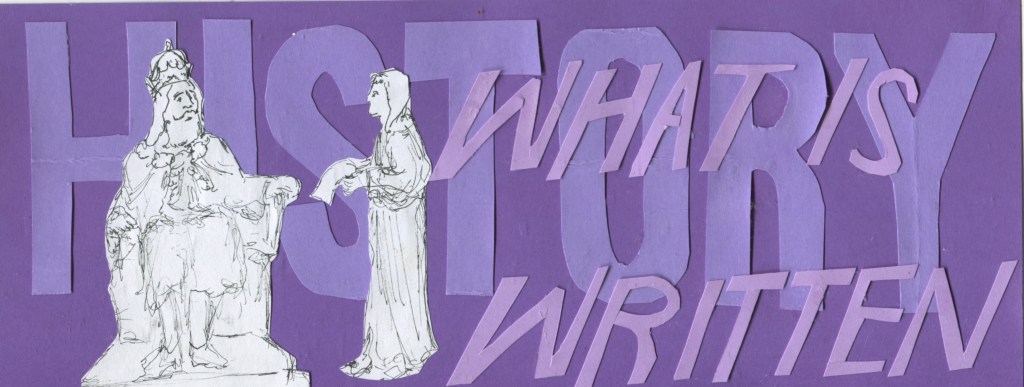
Historical Setting: 793 C.E. Lindisfarne
Before Alcuin signs off, he offers his own personal and political act in response to this tragedy.
The scholar adds, “I plan to go to him, [the king] and if I can then do anything for you about the boys who have been carried off by the pagans as prisoners or about any other of your needs, I shall make every effort to see that it is done.“
This letter becomes the mark in history. It explains why a stone at Lindisfarne depicts a marching army in the end of times going into battle but not fighting as seen in carvings on the triumphal Roman arches commissioned by the winners of heroic battles. This ending war has no image for after the end.
This monastery is left with the unsettling crisis of Jesus’ own teaching and example of pacifism pitted against the realities of a warring world. As I am now, and as I have been before in many other awakenings into life wearing the garb of a monk, I see this through the eyes of an aesthetic.
These Christian communities began as cells of dessert mothers and fathers, isolating themselves from the world for purity of prayer. But it soon was apparent in isolating for prayer, that amid God’s constant answer to every prayer the law is not only “Love God above all else,” but that can’t be accomplished alone with God in a dessert or wilderness. There is something more, more than thirst, more than hunger, more than any suffering or punishment, “Love God above all else – and…”
I’ve prayed it many times. Dear God, I love you above all else, beyond my human comforts and needs, I love you more than even the beauty of this desolation, beauty that you send over the grieving and the pained, even though we, here, I included, didn’t ask for beauty. We did get beauty. Yes, I love you.
Then Jesus answers, “feed my sheep.” And the aesthetic realizes the law is “Love God above all else and.” The “and” is “and your neighbor as yourself.”
The “and” calls people together for the song – Psalms sung climbing the steps to the Temple in ancient times – Chants in the catacombs and in the caves — a convergence of separate “oms” into song, and song into the shared voices of choir, and the oneness of all, then the oneness with the neighbor, and the enemy, the needy and the thirsty, belonging one to another in God. So, these communities of monks were just a natural response, not an army or a plan.
(Continues Tuesday, Sept. 30)
 Lazarus Ink