
Historical Setting: Jarrow, 794 C.E.
I return to St. Paul in near morning light.
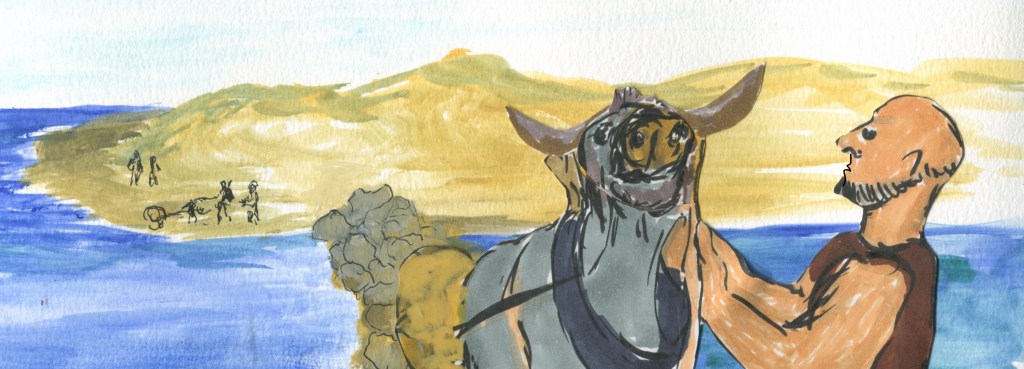
It is the changing of the guard when these king’s soldiers who are assigned to guard the seashore are taking their posts dressed as monks prepared for any real or imagined Viking attack. On the Jarrow side of the Tyne some men arrive with a mule and are moving rocks onto the sandbar.
“Why?” I ask them.
“It’s a new plan to stifle the longships of the Vikings so they can’t come up the river.”
“Isn’t that likely to stop all ships from entering the river from the sea?”
“Any acceptable ships can moor in the basin as they do anyway, waiting for the righteous tide, and a smaller currach can ferry the people and the goods up the river if needed before the tide rises.”
Having seen the longships of the Norsemen I happen to know they don’t have the deep draft of merchant ships and galleys that would be hindered by a rock laden sandbar. They are nearly already riverboats.
I ask, “But what if they would attack near high tide? They would just slip right into the river, and never even notice all this fortification.”
“Aye, but the rocks would catch them on the return and they wouldn’t get away with the plunder. All these rocks will surely stop them from escaping.”
A Viking raid isn’t like an army attacking an enemy at war; it is much quicker than the turning of the tide — silent and brutal.
The overseer of the work says, “Everyone knows now the saints won’t save them from the attack. This isn’t Lindisfarne. Here every hearth will have a spear, every mantle a sword and every belt a dagger.”
So, fear calls for killing power. Fear transforms the hearthside, where a child would normally learn familial love, into an armed fortress with lessons in hatred for strangers. Fear hides weapons in monk’s robes. It heaps a low-tide causeway with jagged rocks as snares for ships.
These people have never even seen a Norseman marauder. Yet they call them the war word, “Viking.” It is simply the tales of Lindisfarne that made the rumor that set the rest of the world against welcoming strangers. Fear has the power to suck the heart out of anyone’s self, and teach away all tenderness for the sake of transforming protective fear into blanket hatred. We have an enemy now: the unknown neighbor.
(Continues tomorrow)
 Lazarus Ink