
Historical Setting: Monkwearmouth, 794 C.E.
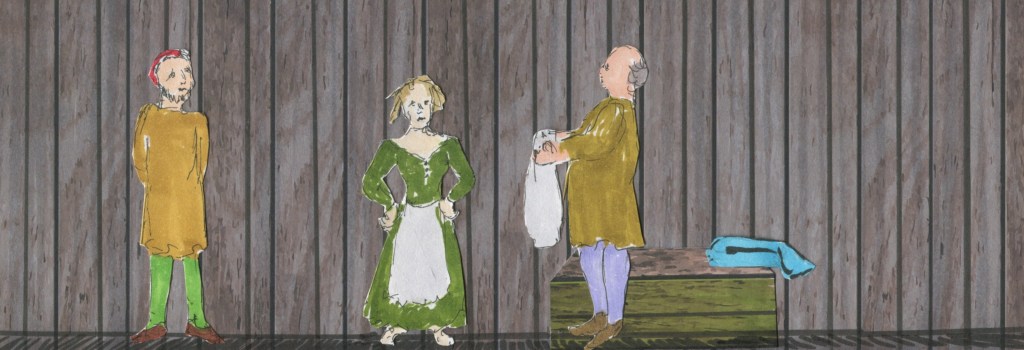
The young girl, along with Cloothar and I, have found shelter from the cold wind in a stable shed at the harbor on the sea gate of the Tyne. Cloothar has tailored a dress for the girl — the dress I traded for my cloak. And now he is in the spirit of this gifting also, and has made this child a cowl, and he has found in his heaps of merchandise. a linen apron just right for a small sized woman.
She fingers the apron, nudging the smooth weave, the purity of clean cloth, between her thumb and finger. Her fingers are like bird’s legs, rough and spindly but purposed for clinging to a branch — a flightless fledgling, alone. Her prayer is silent.
Dressed up in her own wools and an apron, she has the outward appearance of one who can manage the normal routines of life. But of course an outward appearance doesn’t fix the depths of a person where grief is relentless. The torments and sorrows aren’t dismissed when hidden. Underneath her restyled clothing she is still naked and grieving. But at least, I suppose, she isn’t exposed to the judgement from others for how she suffers. She looks to be a person first, before any infestation of demons, or sins of self-destruction are conspicuous. At least that was my thought as I wish to fix this thing.
So, what will she do? Where can she go?
Cloothar, hurrys to return to his boat by the rising tide and before the impending dark of night. I feel the unsettled night coming on as well.
I tell her, “When the tide is out, the sandbar becomes a shallow crossing if you wish to go back over to the woods.”
She may know that as her first home. But she keeps her head bowed studying the weave of the apron with her fingers.
She says, “You don’t have to wait here, you know.”
“Yes, I do have to stay. It would ache my conscience to leave you here without a place to be or people to be with.”
“It’s not about you and your shabby little conscience. I have to figure it out for myself, or not.”
Her idea of ‘Not’ isn’t an option. My “shabby little conscience” won’t allow it. So we sit here in the dark.
(Continues Tuesday, January 27, 2026)


Your principal character regularly exhibits compassion. But you seem to deny that characteristics to others in the narrative, especially if they are somehow associated w/ organized religion or the religious life. That is not true to life.
LikeLike
Yes, you are reading it as intended. Taking a long look at Church history individuals were no less endowed with empathy than they are today. Saints were known in life by their Christ-like loving nature, but it was the spectacular miraculous works of saints that were remembered as what set them apart. Jesus valued love of neighbor, Leviticus 19:18. But the Church as an institution picked up the political ambitions of Rome — even the name “Roman” and functioned as a power-hungry autocracy. May that historical context creep into this telling of history.
LikeLike
There is certainly truth in what you say.
LikeLiked by 1 person