
Historical Setting: Jarrow, 794 C.E.
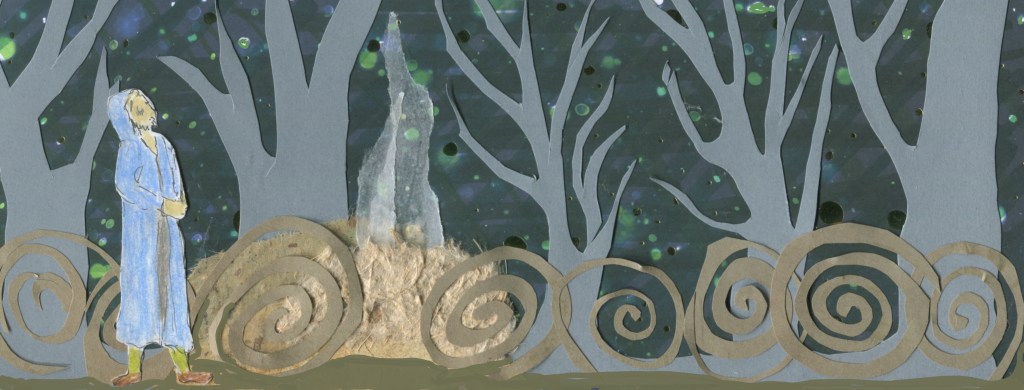
Usually, while at St. Paul, I end the day taking a walk at the vesper hour, following the river to the sea. But this evening my thoughts are on the little village just beyond the paupers’ wood, so I walk the other way up the river to the place where several little houses make a village. The woods are just a few old trees, with the undergrowth of thorny vines and now it feels uninhabited here. The very poor hide in hovels of leaves and sticks and rags. I see no one here though the smoke from their fire rising smells of rotting meat.
In Deuteronomy [15:11] it is said the poor are always with us. So, it is always the responsibility of those with more to care for the poor. It is a given, not an exception. But maybe we also always let the poor hide from us, at least until there is a horror that can’t be hidden, a plague, or a drowning mother rescued by the watchmen.
I want to take a long look at the house of the ealdorman in the village. The child of this poverty called it a “castle,” because it had a horse tied at the rail and a fine roof as she had never known before, sheltering her as she was in her nine months and a year with that cruel man.
Here, now, that house at the head of this village is bustling with activity. Where once a horse was tied, here is a mule team and a wagon. Men are in and out of the opened door of the house removing furnishings and chests of personal belongings. I stop a short distance away to watch. Ousbert, commanding this project, is wearing his breast plate and helmet as though he is on a soldier’s mission. Should I ask?
“Good evening, Sir. Has some ill befallen the ealdorman?”
“The King ordered his removal.”
“Why?”
“You know why. The proclamation commending the guards was presented at the court of King Ethelred.”
“The heroes were acknowledged?”
“At first reading, yes. Then the king asked that it be read again. Then he read it for himself. He pondered it.”
“He commended the heroism of the guards?”
“It was the story of the rescued woman that stirred his ire so he ordered me to investigate the ealdorman.”
“And you found him lacking?”
“I didn’t have to look very far. I only had to examine the log book.”
“You mean, he kept a log of his transgressions?
“Have a look.”
(Continues tomorrow)
 Lazarus Ink