
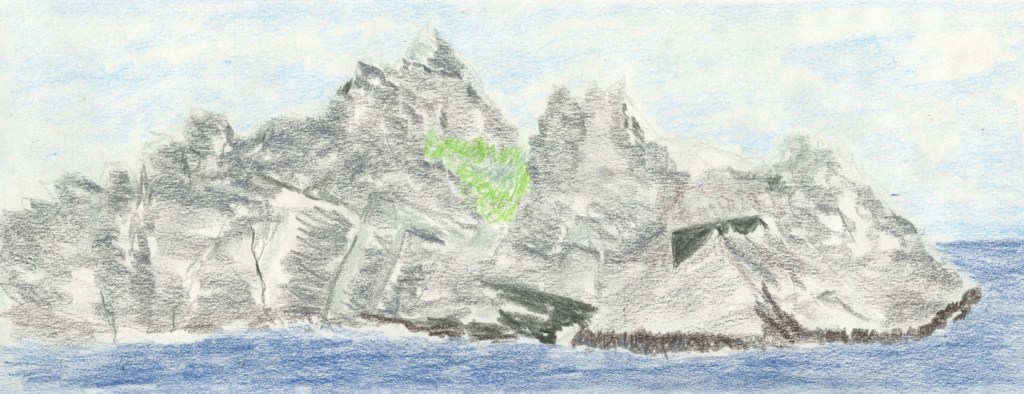
Historical Setting: The Great Skellig in an unknown time
Here is a fracture of earthen rock jutting out over a foreboding sea. Climbing onto it would be daunting to any creature not equipped with wings. Heaven is abundant here. But it is the things of earth that are rough and sparse.
It isn’t a Christian thing, or a Pagan thing; it is an ancient thing, forever bound in the holy space between earth and heaven where people come seeking, and maybe even trusting that which is invisible yet well known as Holy. Even in such spiritual bliss within such holiness, comes a longing for an earthly voice to be the flesh and blood human speaking for Holy One. These brothers come here longing to hear the voice of God whispering the love message.
In the earthling way of thinking, the mountain peaks would be given grand names and the cliffsides would become the paths to reach them, but here, the peaks are simply called Skellig maybe because that’s the sound of the rock rolling down the cliffside. The whole island is Skellig, and Skellig is also another rock like this one, nearby in this ocean. But in the midst of this Great Skellig, between the unnamed peaks is the one place with a name. It is a gentler slope and it links one peak to the other. I’ve heard it called Christ’s saddle. It is a perfect seat for the far-traveling mystical presence of the Christ known here on the gallop from heaven to earth with the holy message always known but never spoken, except in metaphor and parable.
Here the earthbound fringe of humanity longs for a physical presence of God. Even the priestly voice of a human can’t really fill the gapping need for the link between heaven and earth. Yet, here, a priestly abbot can give a monk a comfortable footing on earth while his own monk’s Spirit soars heavenward.
I follow Brother Lugh and a few other monks through the opening at the east facing end of the largest of this cluster of cells. These stacked stone cells look like an enclave of bald heads — but with corbels. Why have these monks, new to this Skellig, not thatched their shelters, at least with fescue and kelp as Brother Timothy has done to his cell? If these monks had lived their earthly years as my own sons, they would know the importance of thatch to keep the damp out and every little passing raincloud wouldn’t chill their sleeps.
(Continues tomorrow)

