Post #8.4, Tuesday, May 12, 2020

Historical setting: A dark age along the Channel off Gaul

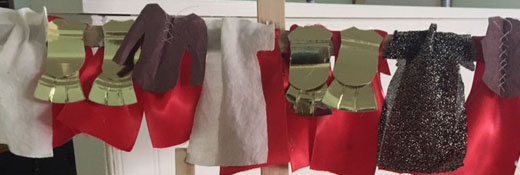
         Seated as I am, the last rower of this facing, my forward view is of the shoulders of thirty-one other men all moving evenly in the dance tempo of the row.  Each man has his shield facing the sea above his oarlock, and on the interior hook above his place dangles his full gear.  Those that have the conscription raw fiber tunic like mine also seem to have the leather garb or gambeson, to wear under armor. Some of the men have actual pieces of armor hanging aside on the personal hook. A few have shirts of mail, which are very expensive as they are finely hammered chains linked together as fabric. Nearly every hook also has the helmet and the scarlet cloak of the Imperial army.  I have nothing for a fight, or even the march and I probably won’t be purchasing armor with sword and shield, so my hook simply keeps my plain, rough-spun hemp tunic aloft, above the ever-damp hull.

         We are a somewhat smaller galley than the large warships of old, with only our sixteen oarsmen on a side and only one level of rowers.

         The smaller make-due ports along the western coast of Gaul are spaced apart by a normal days’ row and are fit out with a sleeping floor or possibly an actual barracks. [footnote]

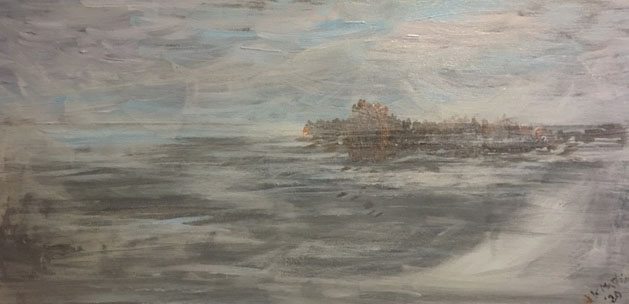
            These are not the times of epic sea battles where thousands drown as heroes into the Great Sea between Rome and Greece.  Here, in these colder waters a little ship on patrol easily out-sizes and out-mans the pirate ships, usually made over from captured merchant vessels. And on this run we do make port at Aletum.  This is near the island that seems set in the channel just for the haunts of pirates like an old dead tree stands above the forest, simply to be a snag for the vultures and other raptors to peruse their prey.

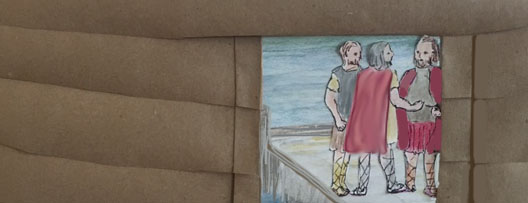
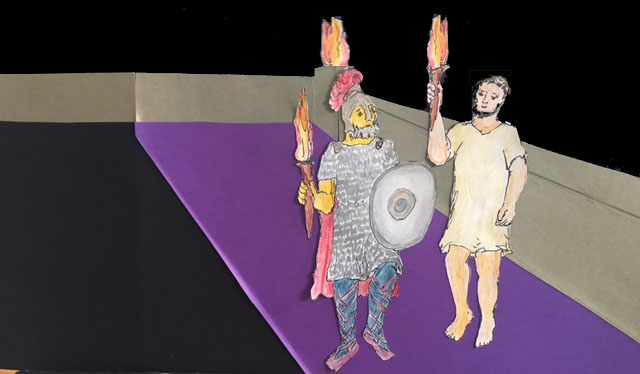
         Preparing to go ashore here requires the silent intensity of donning armor. We slide the dromon between the pilings leftover from an ancient slip torn from the shore by storms long ago. The officer assigns two of us to the night watch duty while the others will be sleeping in the shelter.

(continues tomorrow.)

[footnote]

https://en.wikipedia.org/wiki/Roman_navy  — retrieved 12-21-19

Post #8.3, Thursday, May 7, 2020

Historical setting: A dark age along the Saxony Shore of Gaul

         It is the dance. “II, I, Pull,” over and again in 3/8 time, the Hora, it is without the full circle of the wedding. We’re all aligned facing back. “II, I, Pull, II, I, Pull,” shoulder-to-shoulder together in the drumbeat of the dance. It seems I’m bound to pull this oar for twenty-six years?

         My memory seems idled with Rome somewhere in the fifth century, but my shipmates tell me it is now 562 A.D. That’s why the bright stone-works and solid beams of Roman progress now appear mossy and rotting.

         My strange circumstance of so many healings back into life, living as an earthly man into one century after another would only confuse them; so I keep my gift of life and life again to myself. They do see I was once shorn as a monk, and they remember my rescue from the woods on the bank of the River Liger which brought me into their midst before the latest repair of the hull.

         Maybe this is history. Maybe it is our shared, universal memory. Maybe it is a cycle, and so what has been is what will be and history is its own prediction.

         The Empire crumbles as so many tribes of Goths from the northern reaches have had to find new lands on the southern side of the Danube. Maybe it is because they are simply heathen barbarians looking to rile wars. Or maybe it is because of the rising water, soaking the lowlands where food was once grown. I haven’t noticed it happening in my lifetime even though my life is forever long. The blessing is that the earth changes happen slowly in God’s time, not human hurry. (May it ever be so.) So the warming has been happening over thousands of years — the ice age with its bergs and mammoths, white bears and ermine in winter white fit for kings — is receding to the north. The omen of change is melting ice and rising seas.

         One last freeze-over of the boundary river allowed the tribes to cross over to make their homes in these lands already being coveted by Roman expansion. And so the wars are stirred.  The desperation of need for safety and food honed the thuggish fighting skills of these tribes of refugees we call barbarians: Visagoths, Ostragoths, and tribes and tribes of Franks, and of course the Anglos, the Lombards and the Saxons, the Salvadorians, the Polynesians and Indonesians, the Californians and Australians and those at the tip of the Long Island just beyond the Hamptons.

         Hasten slowly.

(Continues Tuesday, May 12)

Post #8.2, Wednesday, May 6, 2020

Historical setting: A dark age in Gaul

While I was off in quietude knitting odds and ends of the yarns of memory into some kind of fabric of facts or dreams, the good doctor was visiting the shipyard where the old hull of the dromon is being stitched back to purpose. He is reporting to me on his meeting with the officer.

         “I think the officer is hoping you will join them as they will soon be back patrolling the Saxony Shore with the rest of the fleet. He said he hopes to impress his superior with, not only an old ship still afloat, but with at least one new and younger rower on the benches. Any little good news these days will surely buoy the wider hopes for Roman restoration.”

         “Maybe I can row to my old home again. I hope to journey to Iberia.”

         “You probably won’t row your way to Iberia on that old dromon. The ports on your ship’s patrol are all to the northeast, up the coast of Gaul on what used to be the Saxony Shore. But Saxony is no longer under the Roman order; only the Gaul side of the channel is patrolled.”

         “So, you are saying we won’t be going to Hispania? Possibly I can arrange a wage for my work then buy a passage on a merchant ship to Iberia.”

         “Yes indeed. The navy pays a substantial wage. A loyal navy rower signs on for twenty-six years and at the end of the completed service the wage is issued.”

         “You mean for twenty-six years I will sit in the hull of a warship, and every waking hour draw an oar in perfect rhythm with the thirty-one others – all those men doing the same labor together ever day for twenty-six years?”

         “Well it won’t be as dull as it sounds. Of course, a patrol may encounter pirates or raiders along the way and the dangers will need to be rebuffed. Or maybe Rome will become empowered to fight wars again. That’s why they require only loyal Roman troops for the work. Slaves really don’t fight well.”

         “I don’t fight at all, loyalty or not. They would surely be disappointed.”

         “You are already indentured to the officer for your rescue and your care. I think you will have to make a payment or do the work.”

         “Sounds daunting.”

(Come again tomorrow.)

Post #8.1, Tuesday, May 5, 2020

Historical setting: A dark age on the Saxony Shore of Gaul

         God knows I’m thankful for glimpses into memory of a wife and for the gentle thoughts of touches — the warmth of earthly breath and fragrance — all these remembrances of love shared. I know earth’s metaphors speak a truth of so many kinds of human love revealing a nature of God who is love.

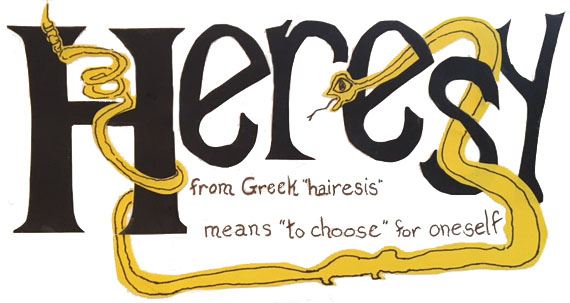
         Of course, I know that’s not what is taught. I know it is my heresy, not theirs, that lets me see these thoughts of love as a holy window on grace rather than the Original Sin they say it is. One thing is certain, if I am a monk, I’m surely not one who is chaste.

         Thank you God for these glimpses of love given to people in earthly ways and spoken through my human understanding in tangible metaphor. Amen.

         The sun is a full ball of orange sinking quickly. I’ve got to keep my appointment with the gentle doctor or the whole Roman infantry will be sent to find me. I see he is still waiting for me.

         “Dr. Neifus, thank you for meeting me here. I’m not sure I could find my way all the way to the infirmary, but I can assure you my clarity of mind is returning. And as you promised, it’s coming to me in doses I can manage.”

         “So have you a memory of your own lifetime and not just grandmother stories, now?”

         “I’d like to say I do, but I’m still only gathering it in glimpses.  At least all those blinks of remembering are not beating me with logs.  I did recall a happier time and I am anxious now to pursue that.”

         The doctor also made good use of an afternoon to himself. He explains, “I took a wander over to the shipyard to learn of any news of progress in the repairs on that old Roman galley, a dromon. And, I have to say, my real purpose was to brag a bit on my ancient skills as a healer.  I told the ship’s head officer that your healing was progressing very well. And now, I hope that’s still true.”

         “It is true indeed, Doctor. You are a fine and dedicated healer.  If the officer were to test my rowing endurance I’m sure I would do well. And I’m anxious to pursue my remembrances now that they are not simply revealed to me as terrors. Did the officer talk with you of any plans to set sail?”

(Come again tomorrow)

Post #7.14, Thursday, April 30, 2020

Historical setting: A dark age in Gaul

Dear God, guide my feet, my heart, my remembering. Thank you for strength and healing. And thank you also for Dr. Neifus, though not understanding, at least he is respectful of my need for this solitude. Thank you for staying near.

         I ponder the glimpses of memory. In flashes I can see the damp logs flinging toward me wielded by desperate men and nearby the pale woman on the bed, never smiling, coveting my relic. Why had I a relic? I find no reason in the jumble of it all to understand why I would have a relic. I know who I am, and I’m not of pagan root that worships remnants of the dead and rotting saints. [Footnote] 

         This dell is young. This stand of willows grows up from a boggy floor of a once deep woods. The ancient forest was surely felled of its beech and ash and oaks to squelch the need for sturdy beams so that the building of city could stretch to new edges beyond the old Roman walls. Such were the earthly dreams of greatness that drove us then. But when was that? I’m trying to remember when city walls turned mossy and pitted. May it come back to me, may it come.

         A yellow flower blooms here by the riverbank. I remember her beautiful golden hair. I remember it perfectly well this moment. We laid together as husband and wife. Is she wondering where I am now? Did I leave her somewhere by the river’s edge? Where was it I was going when I last waited here at this riverside port in Nantes? I have a thought of Iberia.  Perhaps my home is in Iberia and I only returned here to Nantes of Gaul to follow the river Liger to the Civitas Toronorum in order to pray in solitude in the caves of the saints. Why did I leave Iberia? I feel an urgency to go to Hispania. I’m not sure where I belong but when I see it, I think I will remember it.

         Dear God, thank you for the tender veil of green willow leaves today. Help my dimmed memories come to me in portions I can manage. Amen.

(Come back Tuesday, May 5)

[Footnote]

AM Klevnas  Girton College, University of Cambridge submitted for the Degree of Doctor of Philosophy.  This academic paper explores an archeological mystery of Europe during the Merovingian Period in which graves of probable respected community members are disturbed within a short time of the burials. One hypothesis he explores is this: “Early Christians featured close physical interactions with the remains of the dead, practices which are almost unrecognizable in today’s Christianity.  Exhumation of remains and translation to a higher status burial place was a key rite in the creation of an early medieval saint.”

Post #7.13, Wednesday, April 29, 2020

Historical setting: A dark age in Gaul, probably 462 C.E.

         I beg the doctor. “Please let me go alone for my prayers.”

         “Lazarus, my boy, you know the dangers of walking alone into the woods.”

         “So you think Nantes has its woods filled with robbers wielding dead tree stalks for clubs, waiting to attack and rob me of this assigned conscription infirmary tunic? Or maybe they are waiting to rob me of these bandages you have provided? What use would I be to robbers now?”

         “So you have a memory of the weapon used against you?”

         Yes, he is right. I did have a glimpse of remembering. They had rotted limbs fallen from trees older than that stand of greenwood in which the robbers hid. The fat woman was on a bed and she wanted my relic. 

         “Doctor, really, I’m safe. I have no treasure or relic.”

         “So you do remember the attack. Tell me what of it you recall now.”

         I can’t tell him about the fat woman and the relic. Surely he would think my brain is fluff then. “I just remember they were swinging heavy, rotted logs. The two men attacking me were hardly fit with strength enough to wield such woods. Surely they weren’t professional robbers. In fact they seemed silly and weak, needy they were of both weapons and strength. It was odd they would go up against my strength when I hadn’t even any riches. Yet they did. I’m sure I had nothing to rob.”

         “If you go alone into the wood, how can I trust you will take care not to climb onto rocks or try to move more quickly than you are able? Perhaps I should keep watch from a distance so you can have your private prayers but with assured safety.”

         “You are an excellent doctor. My healing is remarkable. But you have to admit, I’m quite well enough to take myself for a walk in a gentle wood.”

         “Very well then. I see I can’t stop you.  I will meet you right here before the sun sets.”

         “Thank you Doctor.”

(continues tomorrow)

Post #7.12, Tuesday, April 28,2020

Historical setting: A dark age in Gaul, some say 562 C.E.

“I remember the Roman galley which I can see right now from this place where I sit on the harbor wall. And it is still hanging from the ropes for repairs.  I would guess my healing is coming better than the repairs of rot to the ancient ship’s hull.”

         Dr. Neifus answers, “That would be a good guess. Brother Lazarus, I always figure our Creator God works amazing wonders with things like healing; so we need not worry, even our memories can sometimes heal. Our minds, when cleared of devils and demons, can work for the good of us speaking in dreams and remembrances in the exact and appropriate doses of truth to match our endurance for such truths.  In my days as a battlefield surgeon I saw many soldiers suffering from terrors of battle, sometimes in hidden ways. I’ve noticed that some recollections are better kept hidden in bandages. But in time you may find your memory is closer to reality where others of us live.”

         “So it is your prognosis that I’m not living in reality?”

         “I hear you talking about times in generations long past as though it were your own life. What would you call that?”

         “Doctor, I don’t mean to be unappreciative of your fine care but I need to take some time to untangle my thoughts. Surely my monk’s trim says that I’m one to spend my hours in quiet prayer. Perhaps my memory would find creative renewal in nature. I just wish to spend some time alone now.”

         “Very well, if you don’t want me to watch so closely I will turn my face away and watch the river.”

          “Doctor, I’m asking that I may walk on alone and follow that path that lays next to the river and leads into that dell. I’ll return before nightfall. We can meet right here. I can assure you I will be in a better state of mind.”

         Time alone for prayer is a strangely valuable commodity. I remember well, Jesus begging my little sister to give him some time alone. Even the disciples were sent off in their boat while he wandered the hills. Then when he returned to them he was in a strange and holy state of calm. He seemed to them a ghost, walking above the turmoil of the frothing sea-waters. Why is quietude so hard to find? It seems so abundant in places with no people.

         (Continues tomorrow)

Post #7.11, Thursday, April 23, 2020

Historical setting: 562 C.E. Gaul, but Lazarus is remembering Clovis in 495

“Why do I remember bits of times that make an argument with the kind doctor?  I want to refute these politics that Dr. Neifus doesn’t even think belong in this generation. I defend.

         “That King, Clovis, has no respect for the faith.”

         “Brother Lazarus how can you think the first baptised Christian King of the Franks didn’t respect the Church? He is a saint you know.”

         I should keep these thoughts to myself. I can hardly imagine Clovis a saint. Clovis is always blundering into sacramental things in a most unholy way. Some of us see his antics as heresy; others excuse power plays as signs of greatness. We have to wonder if it is by pagan superstition or by holy miracle that he declared himself Christian in the first place. He claims to have made his raucous style of negotiation directly with Christ.

         — [His prayer] If You grant me victory over these enemies, and if I experience the power people dedicated to Your name claim… then I shall believe in You… — [Footnote 1]

          He assumes God is like any other crowned head and is soon going to pay him écuage to keep the peace; which of course Clovis doesn’t keep. He only sells his promise then breaks it and executes his victim. He hasn’t the slightest thought of Jesus’s pacifism. He plays God like a chess piece.  Dear God, surely you must already know this, and yet…

         Now the doctor is questioning my knowledge of the King’s commitment. “How can you say the first Christian King of the Franks didn’t respect the Church?”

         I’m sure I saw this myself when I was working at the inks. The king’s guards came into the monastery where we were working. I can only try to explain to the doctor what I saw.

         “The King’s guards brought Clovis’s captives into the monastery.  Chararic and Chararic’s son were said to be disloyal to the king. Clovis demanded they both be shaven and shorn with the monk’s tonsure. Then the king demanded Chararic be ordained as a priest and his son as a deacon. Doctor, how holy could be those Christian orders? Clovis only wanted to humiliate Chararic before their executions. It was nothing like a king respectful of Christianity. Really Doctor, I do remember some things.”[Footnote 2]

         “Lazarus, my boy, you need to give yourself time to heal. Let not the ancient times bother you now.”

(Come back Tuesday, April 28)

Footnote 1   Gregory of Tours: The Merovignians edited and translated by Murray, Alexander Callander, series edited by Paul E. Dutton, “Readings in medieval Civilization and Cultures: X, Petersborough, Ontario: Broadview Press, 2006. p. 10.

Footnote 2 Ibid. p. 20.

Post #7.10, Wednesday, April 22, 2020

Historical setting: 562 C.E. Gaul, remembering 497 C.E.

I argue what I remember with the doctor. “I do remember Nantes when it was an important Roman shipyard and a thriving port.”        

         “It’s the Emperor’s dream that even here in Gaul the Empire will again be Roman.  The wish is called the ‘Justinian recovery.’ Perhaps you heard this from an old great-grandmother who would tell you tales of the magnificent Roman cities of times past.”

         “Doctor, I’m sure what I saw was Nantes. Seeing it now, I can clearly recall.”

           “Old stories abound. Before Clovis won the wars for the Franks, all along the Saxony Shore every Roman port had a thriving civitas with roads and bridges.  My grandparents talked often of the old Roman times when they were young. You have, no doubt, heard stories.”

          I know the reason for this rot and disrepair. It is Clovis himself. Clovis, the King of the Franks plunders everything for his own selfish gain. But I try to stay far away from the politics and wars in the writing room of the monestary. How can I explain?

         “You know Doctor, Clovis uses every sort of treachery and one-by-one subdues each king even of other Frankish tribes. Some pay him tribute. Regardless, in the end, they’re all assassinated or executed.”

         The doctor argues. “Clovis the King was of another time?  [Footnote]  Brother Lazarus, I’m telling you, these tales of the first king bringing the Franks together as one winning people are just stories.  If they happened ever, it was long before you or I were born.”

         He says I’m confused yet he tells me nothing of a time that is now if it isn’t then. And I so wish to weave together enough of remembering that I may find my way back to the familiar places and people.  The new bandages around my head now allow me to see clearly, and they leave enough space that I can touch my head and find that, indeed, my hair is tonsured as a monk’s. The doctor notices my hand exploring my tonsure.

         “Don’t touch the wound.” He must be watching me every minute just so he can worry over the wraps that he, himself wove from the nest of gauze.

         “I wasn’t touching the wound. I was just touching to notice that my hair and beard are indeed tonsured, and only slightly growing back. The bare part is fuzzy now.  So I am trying to think of a monastery to set my memory right.”

(continues tomorrow)

[footnote]  Gregory of Tours, Bishop of Tours, bshp. 571-595 wrote the “History of the Franks” c 594 CE. [(under a different title) Translated by Ernest Brehaut in reprint for First Rate Publishers.] The Christian conversion of Clovis was significant to the Christian history of Europe. Gregory’s history is clearly flavored with his own superstitions and biases. Most interesting to this blogger is that Gregory included the deceit and power-plays Clovis used while also presenting this first king as a worthy Christian saint.

Post #7.9, Tuesday, April 21, 2020

Historical setting: A dark age in Gaul

The doctor doubts my memory. But there are some things I know. “I know I am Lazarus, friend of Jesus, and I think I might work as a scribe and I remember that I’m often the one to take the gospels to the Christian fringe.”

         Through the dim shadows of gauze I see he gestures the “cross” on himself; but as I see so often, it is only a so-called “cross” of shoulders, head and gut – nothing of the Jesus pain or the laborer’s usefulness like the pierced hands and feet.

         He says, “So perhaps in a symbolic way you are saying that Jesus is your friend.” He is trying to offer me a comfortable escape from my admitted heresy of making Jesus sound human.

         This chat is no longer about who I am, but about what has become of Christianity in these times of excessive Trinity with its creeds and persecutions; it’s about heresy. I suggest we take a walk outside in case there is a better clarity among the things of earth.

         The split of my head is mending nicely and the seasonal re-leafing of greens seems to bring healing to all of the earth. A warm breeze wafts from the south and nuzzles the mist resting on nothing over the river like a levitating magic carpet ready to fly off into another ancient myth. With no wars or pirates to bruise the troops of Roman Navy the medic of the ranks has no one but me to mend, so he follows closely on my springtime stroll along the riverbank.

         “So, Dr. Neifus, I feel I have a recollection of Nantes from another time.  Once I sat here on this short wall waiting for a merchant’s ship to take me to my mission in Iberia.”

         “Give yourself time, Lazarus, my boy. Ports tend to look alike, one to the next. The merchant ships mostly use the port at St. Nazaire, so I doubt you are remembering Nantes.”

         Really, as I see now, it is quite the same only the shipyard seems more poorly maintained worn and out-of-use. And even the city wall shows the wear of time. I wonder when it was once, and when it is now.  But if I ask the doctor he will surely think my mind is fluffed. I do know who I am but apparently he has no imagination for that.

         (continues tomorrow)