
Historical Setting: Jarrow, 794 C.E.
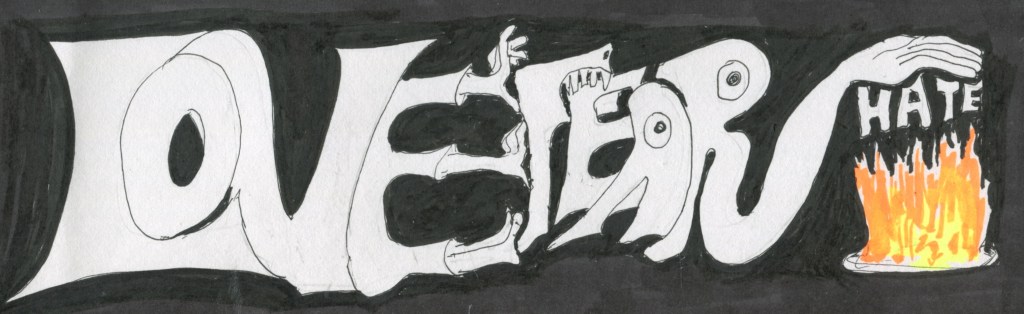
It is an easy verse to remember, “There is no fear in love,” [I John 4:18]. But it’s nearly incomprehensible in real life. Surely, the quill slipped and it was intended to say, “There is no hate in love.” Hate has teeth and tools, strength and power. Fear is a human frailty that leaves its victims helpless and shuttering.
Hate is transformative. Those war-kindling rumors offer up strangers as hated enemies. Hate can take any fear, big or little, real or imagined, debilitating or simply a nuisance and rename it, “The Enemy.” So, when rumors circulate and Jarrow hears of the raid on Lindisfarne, a truly hated enemy is created out of rumors by fear. Really it isn’t a Swede, or a Dane, or a Norseman, as though the enemy is a person made in God’s image; it is a fearsome rumored “other” — a Viking.
Fear hides as cowardly hatred, and hate devolves into a lie to dehumanize, and transform other people into horrific superhuman monsters.
Jarrow has turned a feared rumor into a Viking enemy and even good Christians are encouraged to hate despite Jesus’s teachings to do otherwise. But I buried the dead, and I know this enemy is no human. It is actually, greed — the root of sin — though no one really wants to forfeit the power of that sin even though less greed makes them less vulnerable. Because, when the sin is greed it serves a feast, not a simple bowl of gruel. Greed warms a house, and furnishes it better than mere shelter. Greed appears to be a very likeable sin, says the woman who clothes all her family in velvet. The plentiful life of the greedy is a prize worthy of the cost even if it calls for wars and murders to keep it.
Greed drives the marauders to this shore because those Vikings share this sin. The Viking raids are not hate-crimes. The raids are crimes of excess. The brutality and deaths are perceived as the collateral damage of wealth. If the raiders come to this shore they won’t visit the pauper’s woods, they will seek out the tallest towers and the fattest storehouses — likely the monastery. Yet, here, these preparations are to build higher watch towers and fortify the storehouses with weapons — always to save the gold at the risk of human lives.
(Continues Tuesday, February 10, 2026)
 Lazarus Ink