
Historical Setting: Jarrow, 794 C.E.
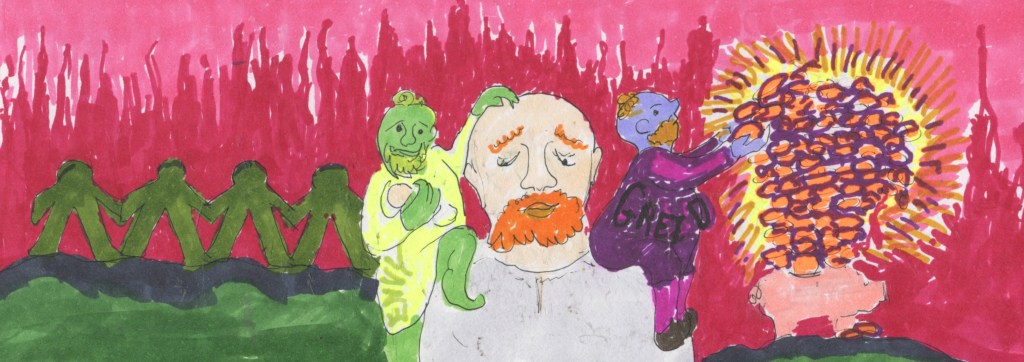
Comparing the things in our lives with others is always a false gauge for happiness. Envy and greed are closely linked to each other. It seems all these seven dwarves of “deadly sins” are false paths to love for self and neighbor, and these things leave us spiritually hollow, not hallowed. That is because envy and greed are always reaching, never grasping. Greed is always chasing after more, never with enough to fill the hollow space, and envy also sets an unreachable, ever-shifting goal based on what someone else has. Envy and greed are moving targets — a mythical leaping stag always escaping into the woods just ahead of the arrow released.
Defining one’s own actual needs and goals is a completely different way of thinking than these motives of persistent emptiness. Jesus explained the respite from this endless chase simply as the Kingdom of Heaven. [Matthew 5:1-13] But then frailties of greed words and envy words moved this kingdom from available here and now to a far distant place in the clouds. To assure it would always be distant and unreachable the Kingdom of Heaven morphed into the folklore of an after-death reward, like Valhalla.
The variety of happiness Jesus spoke of starts simply with gratitude — noticing the goodness of what is already. It is based on abundance, not emptiness.
“Thank you God, for…” Like the child’s prayers.
“For mother, father, family, home, enough food…”
Pretty soon all this thankfulness widens to cows and friends and trees and birds, and on and on, until all of Creation can be named, then the asking prayer is simple.
“Give us what we need to live today.” (our daily bread)
“Take away the worry so that enough is complete.”
The asking prayer becomes the opposite of envy and greed. The hollow space that isn’t envy is compassion and that becomes the healing power.
So, in the mornings the old men gather on the benches, some with hollowness, loneliness, hopelessness, anger at what is not in their control — like the tithes and taxes and the people who mandate them. They come to the benches to complain. But if Tam shows up with his gratitude in-tact for his sons and daughters, for his cows, and for the grass that feeds them in the spring after a bare-bones winter that left him grieving for a calf that failed, and of course his own father passed this winter. Even in his grief he comes with a sense of joy for his neighbors and friends, who are these other men gathered here.
Thank you, God.
(Continues tomorrow)

