
Historical Setting: The Great Skellig in an unknown time
Brother Lugh is sorting through my description of early Christianity, which sometimes hides the hateful notions of Roman domination right in the midst of the Gospel tradition. He turns away, starring at the ground when I say that Roman political lies infiltrated the stories we have of the execution of Jesus. The lies made the Jews appear to be the murderers of Jesus, when it was actually a Roman imperialistic reach that tortured and killed many Jews, including Jesus, with crucifixion. Brother Lugh is sorting through this confusion that I have intruded into his own foundation of faith and threatened his own traditions and beliefs. It was his Christianity that brought him to this monastery faithfully following his own father’s wishes.
Dear God, stay close to Brother Lugh as he weighs the conspicuous rift between the Roman tainted Christianity and the teachings of Jesus.
He asks, “What about the Jesus message to love God above all else, and to love your neighbor? Don’t the Jesus love laws explain the difference between Christian and Jew?”
“Brother Lugh, I know this isn’t what you’ve always believed, but the love commandments are in the Hebrew Bible too; Every morning and every evening an observant Jew repeats the law to love God above all else. It is the Shema Yisrael, the most basic prayer of Judaism. And the second most important law Jesus named was the ‘love of neighbor.’ That was from Leviticus 19:18.”
The abbot suggests we take a hard look at the holy book.
“Do you mean there is a bible here on the Great Skellig?”
“Of course, did you think we had no bible to guide us?”
“I guess I shouldn’t be surprised.”
I know that the Irish tenacity of the monks who followed Father Columbanus carried that Holy Bible deep into the alps to set the seedling of faith in his new communities. They were hauling a bible up and down those impossible mountains and cliffsides, so why would I think bringing a large, and precious book up these cliffs would be any different?
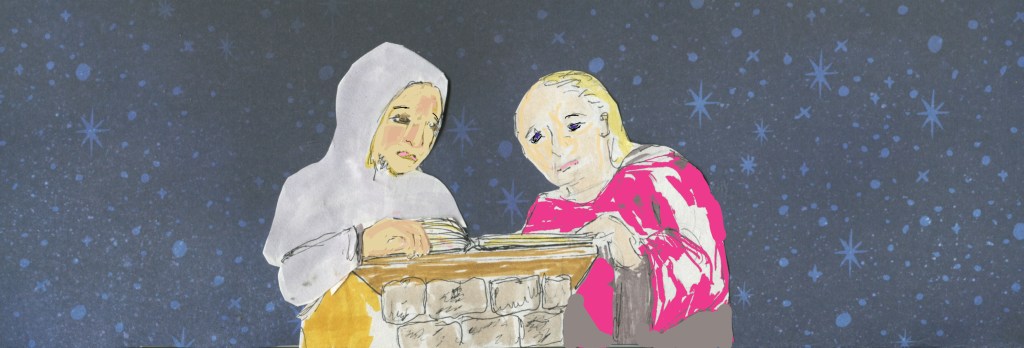
Brother Lugh goes immediately to the church. I follow. And sure enough, the abbot does bring out a great copy of the work of St. Jerome and places it before us on the book pedestal in the front of the worship space, just under the stone hewn cross.
(Continues tomorrow)

