#67.10, Tuesday, April 22, 2025

Historical Setting: 793 C.E. Skåne

I have to say, having seen the politics of the Frankish bishops manipulating the church, in my life and life again, this worm of greed has also been working to devour the religion from the inside.

Maybe Emil’s observation of Christianity is well founded. I’ve been away for a very long time.

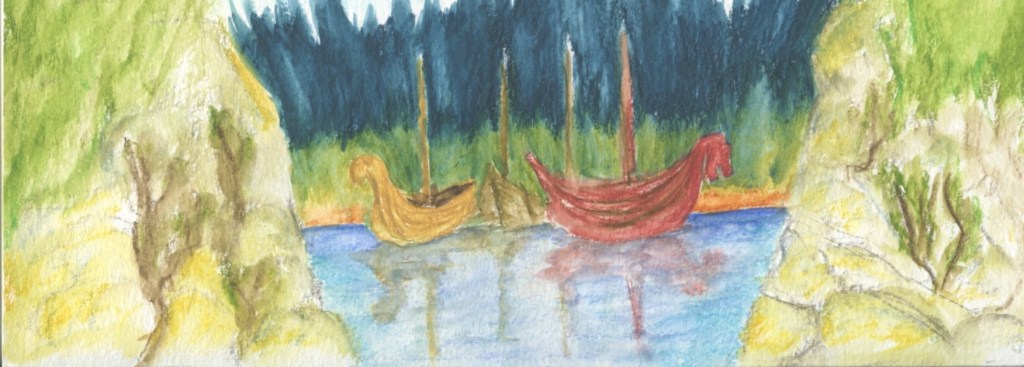
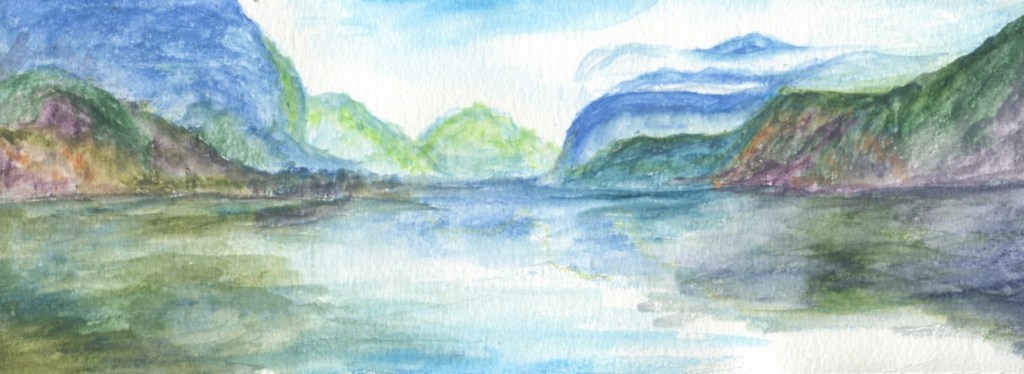
Ships and men are gathering along this coast tucked into these fjords – which are tongues of sea pressing between the mountains. Snow and ice are falling away to reveal the new earth of springtime, a brief moment of solitude in all this beauty fills my longing for Creator.

Dear God, in this strange place where I am I still see your great works – the awesome altitudes of rock sides high and heaven soaring through the rising mist of morning – then the perfect image of what is earth and sky, is reflected in the stillness of the waters at our feet, as it is on earth as it is in heaven. Thank you for this immersion for basking in the beauty.

I also see around me the people of this time and place and they are longing to know you, yet they don’t have an imagination for anything more than themselves and maybe wooden dragon heads and sea monsters of their own design to frighten enemies. It is enemies here who seem invisible and imagined and are driving their lives in the same way some people are driven by your fulness of love. Give me a wiser understanding of people and love.

You have wiped clean these thin places so that finding you here, feeling your touch, and breathing in your breath of life is easy and peaceful. It seems no one else here notices.  I guess you know this. With your help, I will do my best to keep my tenuous hold on the love thread I always try to follow.

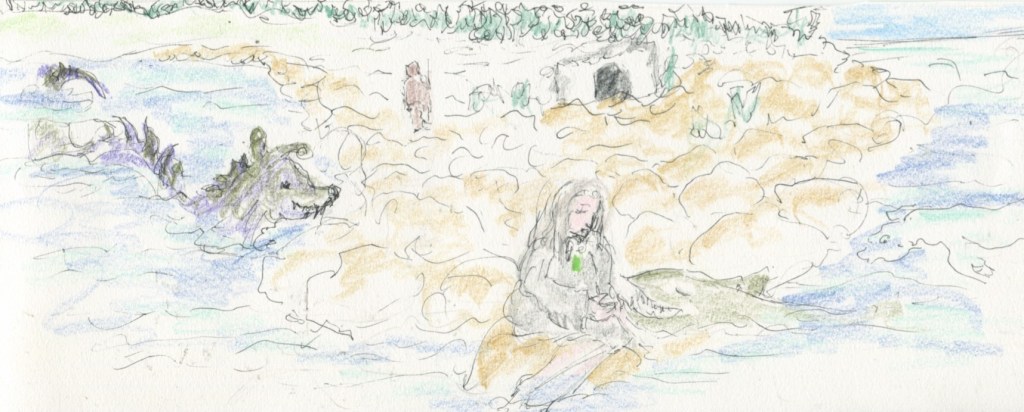
And please stay close to the woman who calls herself Sjókona, whom I left alone in a ruin of a house with no door for closing. I couldn’t go back to her in my own grief, so I mentioned her loneliness to a sailor named Gunnar. May it be she has already been rescued.

Thank you for letting me live into this beauty of earth, and let me always bask in love. So be it.

Down from this place I found for my contemplation amid the rocks on the hillside, the rocky shore of the harbor is becoming an increasingly busy respite from the sea for Norsemen’s ships.

(Continues tomorrow)

#67.9, Thursday April 17, 2025

Historical Setting: 793 C.E. Skåne

         My rowing mate shows me his collection of chism and he’s telling me a perception of Christianity I’ve been critical of from time to time, but in my own constant devotion to the simple Jesus love, I’ve never considered the collection of wealth as the very nature of Christianity.

I keep the teachings of my dear friend, Jesus, always so close it is the love that beats my heart. And now I find, in this future world where I’ve awakened, I miss a few things of Christianity. 

I long to be with Christians because, even amid all the oddities Emil perceives as Christian, is the spiritual community he doesn’t know or see  – the ancient chanting and shared music of the ritual — the pilgrimages of many with one spirit — the lone dessert mothers and fathers always keeping the faith — the unceasing welcome from strangers who also claim Christianity — the accessibility of shared prayer — the belonging in the love that hides in the hearts of so many of us – people with all their differences and sameness woven together in patterns of belonging. Even these nearly 800 years after Jesus’s earthly life, the bonding together in the invisible love of God continues.

I even miss the Jewish root in the ancient scriptures – tables set for family gatherings, or the student poring over the scriptures by dwindling flickers of candle, suddenly noticing an amazingly simplicity in the shared love law, deep in everyone’s root. Jesus called it to our attention, reading again Leviticus 19:18. He argued that the lawyers of his time were letting this important law go in all their efforts to keep the clutter of ritual. But ritual is a door that can open or close.

And now, it is the thing that Emil believes defines Christianity. He notices golden reliquaries without a thought of any saintly virtues that drove people to enshrine bones — as tangible Christian evidence that such goodness can persist on earth as it is in heaven.

He collects the white linen given in grace, and he values the weave of the flax, and the silks and dyes of the costly garments of priests, the grandeur of the churches, amid the poverty of the people.

What I see as Christian is a symbol of hope and abundance, a sign of the turning, giving power to the poor. Yet a Viking, nurtured in greed, sees a rich church rising up in a humble land as an unguarded resource of wealth.

(Continues Tuesday, April 22, 2025)


#67.8, Wednesday, April 16, 2025

Historical Setting: 793 C.E. Skåne

Emil shared with me his notions of Christian baptism.  As he explains it, Christians have a strange and lovely greeting for their Norsemen visitors. It seems Christians have three gods and the churches are castles of great wealth.  “When you arrive at the Christian castle they anoint you with oil, as though you are also a king. Then they let you bath while they chant magic spells.”

So, in these chests that are rower’s seats here, these men have their own personal collections of chism – a symbol for them of Christian wealth, and they share the Pagen secret for collecting them.

As a Christian, the anointing and the chism are symbols of contrition and forgiveness of sin. This whole thing would be surprising to Jesus, I’m sure.  But as I consider my friend, teacher of God’s relentless love, this game of heathens collecting chism, with the anointing, simply offers a metaphor for grace – gifts freely given. Some of the priests offering this ritual are surely aware of grace, but probably some think there is a payback here – great numbers of heathen rescued from Hell is a score for the imperialistic inheritance of Christianity.

To me, it seems a little miss-understanding of the grace of God but apparently it pleases everyone.  The only real worry is about the miss-understandings that please no one – the confusions that lead us into hate and hurts with our loved ones and into wars with strangers. And when the talk is all about arming men, building sleek, fast ships and all that is happening at these harbors, there is a tangle in the love thread, a misunderstanding that will lead to many deaths.

I ask Emil, “What enemy are we arming ourselves for?”

“Enemy? It isn’t like a war where the enemy is another king’s men.”

“That’s good to hear, because I’m really not favorable to wars.”

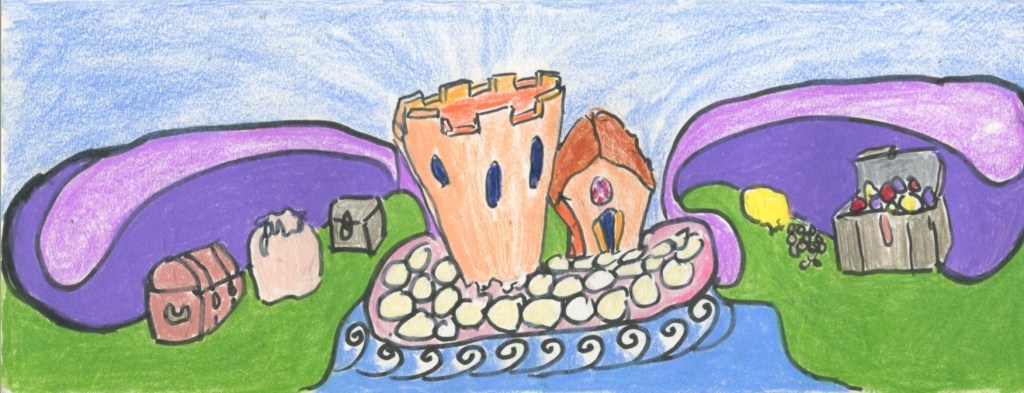
“If you had traveled to all the far places, you would see the world is rich with treasures. Kings in their castles, Christians in their golden towers said to honor un-seeable gods, rising up from amid the hovels and houses. All these riches – silks and linens in purples and blues – chests of gold – they have great halls just for artists in the inks – and in those halls the soldiers are only armed with quills and they never prepare for battle — they don’t forge spears or carve ships — they just paint their little designs on parchment. I’ve seen it myself.” 

(Continues tomorrow)


#67.7, Tuesday, April 15, 2025

Historical Setting: 793 C.E. Skåne

         This fellow rower, Emil, first scoffing at Christians, is now revealing to me a collection of five chism, which are pure white linen squares used in the anointing of oil, symbol of releasing sin just prior to Christian baptism with water. As a Christian from another time, I happen to know that the Church sacrament of baptism is a once in a lifetime event, usually bestowed on babies to rescue their spirits in case of an infant death. Baptism is the transformative act that makes a heathen into a Christian.

But Christianity is a proselytizing religion, committed to expanding its own numbers. It was a Roman thing I guess, a religious variety of imperialism — an ancient Roman remnant. Paganism and many other religions aren’t as zealous about conversions. The gospel stories are often about counting the crowds of people. It was going on even before Jesus was gathering crowds. John the baptizer was known for his popularity. The number of followers was always important for preachers, teachers and zealots of all sorts.

But here this fellow, proud not too be a Christian, apparently visited Christian ports often enough to stand in line five different times at the churches, for anointing and maybe baptizing but always given a white piece of cloth to wear on his head. He explains that this impresses the Christian merchants they deal with in the markets. 

“How is it you have these?” I ask. [footnote]

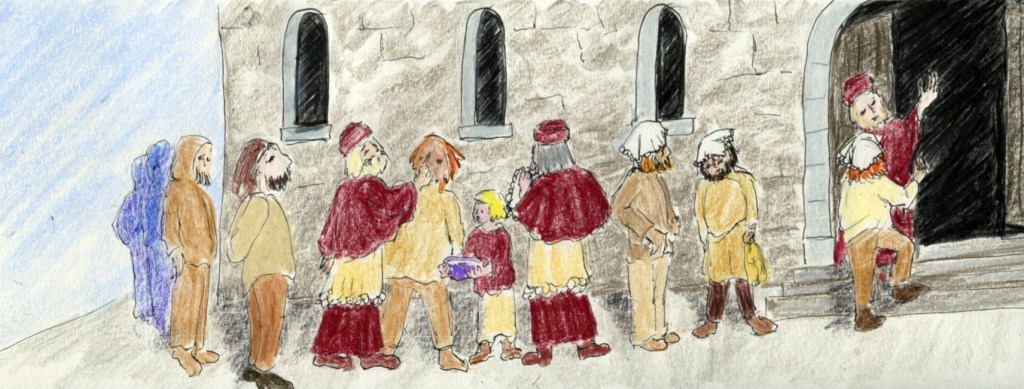
“They give them away at the churches in all the Christian ports. You’ll see how it is when we visit a Christian kingdom.  You go up to the big rich Christian castle and the fellow in his fine robes walks down the line of us, with his dish of expensive oil, saying Roman words, then he fingers the oil right onto your head and gives you one of these fine linen cloths to cover over the oil.  You wear this like a head covering when you visit the Christian markets. If it’s hot, and you have the time, you can stay in the church line, and they take you inside and bathe you in cool water. I figure when Christian merchants see you wearing the cloth they nod and smile as though you are a personal friend of their gods – all three. They do only have three gods, you know.”

[footnote]   https://www.vikingeskibsmuseet.dk/en/professions/education/the-viking-age-society/the-norse-gods-and-christianity retrieved 8-13-24 This site features an interesting story that inspired this – a Norseman with 20 little cloths, complained when the white linen was replaced with a lesser quality fabric.  The demand was so great.

(PLEASE NOTE: In the months between researching this and posting this, several of these museum related blog sites referenced here have been taken down. Perhaps this story is fictional and this is a retelling.)

(Continues tomorrow)

#67.6, Thursday April 10, 2025

Historical Setting: 793 C.E. Skåne
 

         In a Christian world, when Christianity ruled people with authority even over imagination, any ship that could speed against the wind seeming to move faster than the rowers could dip and pull would be called a holy miracle. But in this new time and place, I call “future,” these men don’t attribute the amazing speed of the longship to any gods. They claim it as a work of human design. They built them; they know. These longships for war are human refinements of old designs in mounting a mast to a shallow keel. The clinker-built hull of smooth split oak aligns the lapstrake to flow the wake away from prow rather than simply floating on the water and moving forward by plowing into the sea.

         We slip into one of these inlets between the mountains where other ships are already waiting and where we also will wait for more of these other longships to arrive.  Apparently, as more longships gather, the expectation is that by sunset we will be a full fleet and tomorrow morning we will all sail on to Bergenshalvoyen to receive our full instructions.

         My language has been twisting and stretching to understand these futuristic dialects, so already I am much more able to communicate with these other men though my accent, I am told, is “thrall.” That’s what they call Frankish Gaul where they get their slaves.

         Here in this place where we’ve landed stands a runestone. I ask Emil what it says.

         “They say it is a story of the great honors that await us if we die as heroes in the battle.”

         “Did you read the runes to know that?”

         “Of course I know it. No one needs to look at each little rune carved in the stone and imagine its meaning and then put all that together to say what they already know it says. No one needs to read if we already know the story.”

         “You don’t think there is something to be learned from reading?”

         “Why? It is such a Christian kind of thing to read stories that are already known.”

         “How do you know they are known? And how do you know of Christian things?”

         “Take a look at what I have here.”

         He opens the little chest he sits on in the ship and there are all of his personal things. Folded neatly, under his fleece are some little squares of pure white cloth, chism, used in the anointing of oil in Christian baptism.

         “Why do you have these?” I ask this proud Pagan.

(Continues Tuesday, April 15, 2025)

#67.5, Wednesday, April 9, 2025

Historical Setting: 793 C.E. Skåne

I am a man with no wealth no trunk or coin, or even a shirt to keep in the trunk that I don’t have. I make myself a rower’s seat — something like a milking stool — a driftwood plank propped with a single vertical cut of a log.   

         “Emil,” he says his name is. We are opposite oars. He has the bench-trunk on the port side and I’m starboard. He acknowledges my presence here with his gaze – silent — intense, from the top of my head to my feet. His eyes welcome no stranger.

         “Laz.” I answer. He makes the silence gaping between us, maybe expecting me to fill it. “It’s short for a name from a gospel.”

         “A what?”

         “Christian scriptures.”

         “You’re Christian?”

         I have so little knowledge of this time and place where I am, that I can’t even guess what that means to him. Does Christian make me holy, or hostile? It seems I am the one who doesn’t know what a Christian is. I try to give us space by distancing the “Christian” part of my name.

         “I was given my name from an ancient tradition.”


         The coxswain is right behind me at the tiller. His voice can still the roar of the sea. In a calm harbor his order “oars-up” reverberates through all Creation. The tiller is set turning the prow against the current as we cast off.  He signals and we start the row in unison. [Footnote]

         We follow a channel passing by the little house with no door, and that now seems far away and uninhabited on a rocky outcropping as this ship passes it by.

         Out of the rivers, onto the sea, then we turn northward following the coast. Along this shore line the hills rise ever higher from the sea edge, and each river we pass cuts a deeper wall into the rounded slopes.

         The wind is against us on the open waters. Forever and in this future time where we are, sailors set their sheets to caress the winds and nudge the helpful part of the push. But with rowers, our coxswain doesn’t even choose to set the sail. This ship slides through the waters swiftly and silently using only oars. Faster than the drag of oar, it is the lift of the oar that requires a deft rower. In fact, this ship is not like a currach or knarr or any other variety of boat to be dragged through the water by mere human strength.

[Footnote] Study of these ships by modern archeologists is well documented and available for one’s imagination to spin into stories. Basic information on ships is at https://en.wikipedia.org/wiki/Viking_ship retrieved 12-22-2024. One site provided a documented journey of a restored ship but was not up and running at the time of this preparation. Hopefully it will be available another day.

(Continues tomorrow)

#67.4, Tuesday, April 8, 2025

Historical Setting: 793 C.E. Skåne
 

         Some of these ships are prepared for a journey. I imagine, with the calm winds and the complexities of navigating these inlets more men will surely be needed at the oars. My language doesn’t seem an impediment here. This harbor chatters in a cacophony of languages and I know words for every meaning. So, I ask.

         “With all these ships, surely rowers are needed.”

          “Indeed, rowers are always needed – marauders and merchants alike, we all need rowers.”

         I learn that rowers on these vessels either have a stake in the journey, or they are thralls or debtors. I am simply in need of purpose and a shirt. Rowers have both. But since I have no stake in a ship, and I am neither a thrall nor a debtor, it is suggested I offer myself to a coxswain for whatever trade can be negotiated.

         I’ve found a ship that has a place where an oar lays loose with no trunk or bench for a rower’s seat. And the coxswain is here just now, re-harnessing the tiller.

         “Aye Sir, this looks to be a very fast ship with the right wind or a good string of rowers.”

         “And we have neither.”

         “I am an able oarsman.”

         “Why are you offering?  Do you know where we are going?”

         “No. I hardly know where I am.  But I was noticing all the rowers have fine tunics of woven fabrics and I am in need of a shirt.”

         “So, you can buy the fabric for a shirt from the merchant who deals in goods for sails.”

         He tells me this, as he is looking more closely at my stained and stiffened deerskins. This deer hide I wear should be an outer garment, and I think he is noticing it is pierced by wolf fangs and poorly made. Surely, he can understand why I’m begging for a shirt. Very well, row with us.

         “It is a strange pattern in the skies and clouds. So often the easterly winds make the planting season drought. We expect tomorrow will be another day of calm in the heat of the day so no one would need to wear a shirt for the row. When we arrive at Bergenshalvøyen the owner of these boats will provide you with a shirt. Just put your rower’s bench next to Emil.” I see this place where I am assigned but I have no trunk or seat.

(Continues tomorrow)


#67.3, Thursday April 3, 2025

Historical Setting: 793 C.E. Skåne

         The dark emptiness of grief —

         She shouts her enticements to my back as I am walking away, inland, maybe, following this river back to its source.

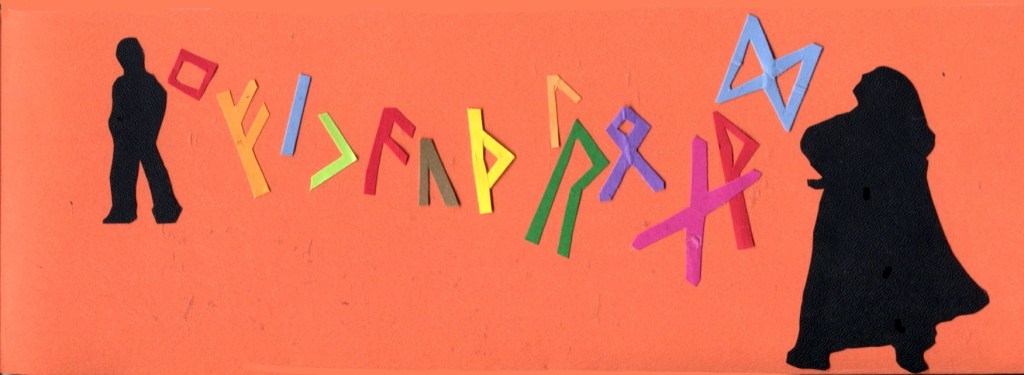
         She raises her voice, “You’re right. We don’t have any rune for this, and even laying one rune on another we have none!”

          “There is nothing to say, Sjókona. I’m grieving.”

         “Consider ‘dagaz’ for light of the gods… You need to learn more before you can know anything. You are walking into a day of darkness.”

         As I set enough distance between us now, I can barely hear her shouting unknown words at me. Maybe they are accusations cursing me with some kind of holy darkness.

         I’m pretty sure a dearth of explanation isn’t the cause of my grief. Grief happens among Christians and Pagens as well. Simply, love is missing. We, who are of earth, tend to make this love thing — this all-encompassing God and heaven who is a god bigger than words can say — into something small and earthly or simply an afterthought to impose a waxen seal on a document of words. If love is real, so is the void when it is gone. And if love is small and manageable, so is the void it leaves. But I’m not managing the void well.

         Walking toward the mountains, what looks to be a river is really a deep bay, a long finger of the sea reaching between the rising mountains. The river of tide water curls into a harbor, here, and even the sea drinks from the fresh springs off the mountainsides.

         As I had guessed a shipyard is here. It is a busy place in this season. Fresh streams, flowing free of ice again, and the wanderlust of human loves billow where the west winds don’t go. So, yes, rowers are needed.  I don’t need complicated words to sign on to this work.

         I find one of the sailors who rode across the sea with Sjókona and I on our journey here. With the few words I know, and some scratches in the sand, I can let them know she’s alone there. Maybe that’s as she wishes to be. If it isn’t, she can ask them to take her home. I will be a rower on a different boat then.       

         There are no expectations or obligations owning me so I’ll take up an oar and go wherever this ship goes. There is very little difference between being free and being lost.

(Continues Tuesday, April 8, 2025)

#67.2, Wednesday, April 2, 2025

Historical Setting: 793 C.E. Skåne

I just asked to learn how writing is done so I could know more about this new time and place where I am. And the seiðr brought me on this journey to see markings on stones of stories of mythical gods and pagan heroes. Now I know that writing here is done with a chisel and a hammer. And I learn that this woman wants something from me I can’t give her while I am still in the midst of my own grief for my wife and family.

         Apparently Sjókona is going to stay right here to wait for something that may never happen — for an infant to be put out for exposure. She seems intent on leaving this shore with an infant in her arms or in her womb. But my yearning is only for what I once had — for belonging — to love and be loved. Even if I could get beyond my own grief, her desire for an infant seems as though it is really to own a little person. She perceives relationship as possession. To be a part of that would cost me too much.

         The wind has shifted. The clinging stillness of the east wind lays the waters flat. An east wind brings the first black flies of spring looking for spoils, buzzing, biting, setting the earth with maggots.

         “You can’t leave,” she tells me. “You have no place to go.”

         “I’ll find the mooring place for the ships and I can go anywhere.”

         “And then I will follow you and I will tell the rowers not to take you because you are a sailor’s curse.”

         “I’m no curse against anyone and ships always need strong rowers.”

         “Not all of the ships that travel the sea will go back to the land of our home, you know.”

         “It is your home. I’m yet a stranger there. But I can ask which ship is crossing the sea straight toward the west and I will tell them you are alone here and need to be carried back to your home.”

         “That’s ridiculous! You don’t even know the language. How can you talk to anyone! And I haven’t told you of the bind-runes yet, and there is even a Christian bind-rune. You have so much more to learn. You can’t leave!”

         “So much more to learn.”

         I turn toward the east and set out walking, following the waters that flow back into the sea.

(Continues tomorrow)

#67.1, Tuesday, April 1, 2025

Historical Setting: 793 C.E. Skåne

Sjókona is no longer known to me simply by her purpose, seiðr, she is a human being with a name, though not a name given her by loving parents as a birth gift.  At least it isn’t a statement of utility; it is a name. But it is a name that reeks with purpose in myth – mother of sea creatures. And here she is grieving for a child she never had. Maybe it’s always true that a woman is burdened with purpose even when the world fears increasing the generations of people could cause famines.

         Low tide now, so I kneel to search the tidepools. She comes behind me and lays her hands on my shoulders, maybe a kindness, maybe to ease my stiff shoulders. But in my own grief it is the terrible dream over and again of the gentle touch, the fragrance of woman, then I wake prepared to set my gaze on Ana, warm and familiar and here is this stranger. I stand and step away from her, scowling…

         “What? You are afraid to be touched?”

         “My grief is too raw.”

         “How ridiculous! Your old life was long ago and far away now. Here you are free from obligations of any Christian rules of chastity.”

         Sjókona believes “father” means nothing more than planting the seed in the womb. And maybe she wants that from me. She came to this house to wait for a child to be discarded so she could take it up and have it as her own. 

         She argues, “Think of the wonderful infant he would be, son of an eternal time traveler and a seer – he would be a god.”

         “No, I can’t even think of that now, Sjókona.”

         “Don’t worry. I will rescue the child myself, just place the seed. You can just be on your way and never look back.”

         “No. I can’t do that Sjókona. My grief isn’t resolved.  Always I find my way following that fine silken thread of love, but it seems out of reach for me, right now.

         There are some crabs and shellfish in these rocks that can be eaten without the need of a fire. I break them with a rock, so we sit out here on the boulders and share breakfast with no Christian blessing on this food, and no word spoken.

         Now she says,  “You can’t leave now, because you have yet to learn of bind runes.”

(Continues tomorrow)