#42.8, Thurs., March 16, 2023

Historical setting: 602 C.E. On the path to Luxeuil

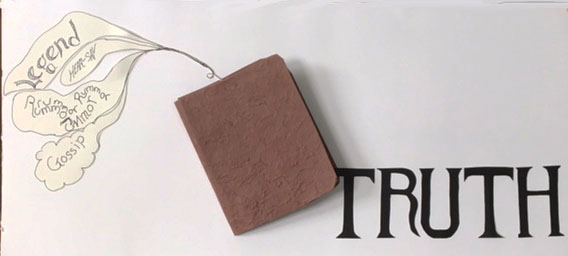
         As we walk toward Luxeuil, my boys are exploring the nature of rumor and the power of the written word. Gabe says a rumor isn’t true unless it’s written into a book.  So no wonder Gabe finds his voice by practicing letters on the wax tablet. It may empower him to make imaginings seem true.

         My years are no longer driven by a need to strut virtues for others to see; but these many years of life also give me empathy for life stages I’ve already passed through. So I understand twelve-year-olds are in a place where they are more needy of the opinions of others and practicing literacy gives them voice with peers.

         And what is it that sets the standard for peer acceptance among the barbarian hunters they befriend? Is their needy drive to impress others forged with intellect or might? Do they awe their friends with the power to kill an auroch or perhaps to confront an enemy soldier? Or do they see their virtues academically?  Both boys are strong in body and mind, yet they have compared themselves to one another and they share a secret between them that Gabe is the writer and Greg the bowman even though both are equally skilled.

         And now they are explaining to me what virtue can make a king into a saint. Apparently a dead king is called “saint” when some amazing goodness is attributed to him then written in a book in order to become ‘true.’

         So King Guntram turned saint when he died and a rumor was circulating that mere threads from his clothing healed a child of the plague. Gregory of Tours recorded this into Book IX of his History of the Franks. [Footnote] Now it seems this earthly king is a saint even though he did many bad things – like executing his own servant for killing an auroch on the royal hunting grounds.

         Greg asks if Bishop Gregory of Tours might show up in this pilgrimage to Luxeuil because the boys have heard even a “better story” of Guntram that still needs to be written to make it true.

         Bishop Gregory is Frankish, following the Roman order. His contemporary, Guntram the saint, may never have mentioned his royal support for these Celtic missionaries so I doubt we will see Bishop Gregory at Luxeuil. And I doubt the late earthly king could elicit a “better story” but my boys want to tell it anyway.

[Footnote] Gregory of Tours, A History of the Franks, Book IX, 21, Translated by Ernest Brehaut, reprint First Rate Publishers.

(Continues Tuesday, March 21, 2023)

#42.7, Weds., March 15, 2023

Historical setting: 602 C.E. On the path to Luxeuil

         Gabe and Greg passed along stories from Charlie, our neighbor, who is now a hunter in these woods.  I had a guess these were the king’s hunting grounds, but in his old age I’d never known him to hunt here. Now my boys are calling Guntram “saint.” I didn’t even know the king was dead, and I surely never would have guessed the king was a saint. I ask.

         Greg tells, “He was fighting the war with the bishops against the heretics of Brittany.”

         “He was fighting a war with the bishops? Against the heretics…?”

         Greg wonders, “Papa, how was it that you once met the king?”

         “I delivered a message for Father Columbanus to King Guntram. It was the king who allowed the Father to use Annegray; and then, in learning of the popularity of the Celtic way he sent Columbanus on here to Luxeuil. But how is it possible Guntram is called a saint?”

         Gabe suggests, “Kings can be saints, can’t they?”

         “Guntram was very clear that his kingdom was the earthly swath of Burgundy, and bishops only held sway in heaven.  He raged at bishops of lesser noble birth than he for infringing on the earthly domain — building castles, keeping wealth, making earthly rules. He scoffed at Roman bishops who took issue with the Celtic Father’s hairstyle and dates for Easter. He felt these earthly rules were his to decide.  And that was the essence of the messages I was delivering. So it is odd you would call him a saint when Church rule says saints are of heaven.”

         The boys tell me, “Guntram was friends with the Bishop of Tours.”

         “I know, but Guntram’s relationship with churchmen was usually purposed with diplomacy. For Guntram “friendships” were strategic – in order to secure his temporal power over the bishops. For example he granted the land for the monasteries in order to maintain control over contested borders of what you have called his ‘hunting grounds.’ He supported one bishop over another to keep the Roman bishops from unifying power. This last son of Clothar the elder, used every earthly means to keep power. But the church rules demand heavenly miracles of saints. So how could Guntram be a saint?”

         Gabe tells something of miracles, “Maybe the miracles were only rumors but when Gregory of Tours wrote them in his book, they were transformed into God’s truth. Books are like that.”

(Continues tomorrow)

#42.6, Tues., March 14, 2023

Historical setting: 602 C.E. On the way to Luxeuil

         Today we walk toward Luxeuil with nothing but our fleeces for bed and a loaf of bread and wedge of cheese for the sharing. We are barely halfway to Luxeuil when the boys suggest we stop and eat the bread and cheese because they are hungry, and with everyone fasting as I said we all would be, Greg and Gabe mention it would be rude to eat our food in front of the others. But I expected they would be fasting too and this little food we have would be for sharing at a Feast of the Resurrection. I fear they are missing the point of actually partaking in a pilgrimage not just observing from afar.

         When we stop along the way Greg again makes his plea, “Papa, if God wanted us to be hungry we wouldn’t have been supplied with cheese.”

         I lectured, “God expects we will put the needs of others ahead of our own. Food is for sharing.”

         And suddenly the earth rumbles with the weight of hoofs in a wild stampede and crashing through the thicket only a few yards from us is a huge bull auroch as tall at the shoulder as my full height standing.  I’ve never seen this before. This enormous horned bovine is as surprised to see us as we are him. He stops for a moment, and lowers his head, and paws the earth, as another beast breaks through the forest edge behind him, then he turns away, and they race off together.

         For a moment we are speechless and staring off at the dust cloud.

         Greg says, “Papa, we should have brought bows!  This was surely a sign that God wants us to eat on this journey.”

         Gabe argues, “That was an auroch and it is forbidden to hunt them.”

         These boys know something I’ve not been privy too.  I’ve never even seen an animal this large with such massive horns, much less considered hunting it.

         Gabe explains it as he has heard it from Charlie.

         “Our forests here are the hunting grounds for the kings. It was said that when St. Guntram hunted these forests the auroch was considered a rare prize, so when one of his own hunting party killed one of them Guntram had the man executed for it. It is always the kings’ rule that only kings may hunt an auroch.”  [Footnote]

         Such strange things my children know — I ask, “St. Guntram?”

[Footnote] this legend attesting to the cruelty of Guntram is recorded in O’Hara’s findings: Said to have been recorded in the history by Gregory of Tours.” though this blogger didn’t find that in the edited English translation available.

(Continues tomorrow)

#42.5, Thurs., March 9, 2023

Historical setting: 602 C.E. The Cottage a few miles from Luxeuil

         Ana answers the boy’s query for stories of their mother’s adventures with royalty by asking them to imagine a king’s library and name some books.  Naming books they’ve never seen? Impossible.

         She hints. “The Lord is my shepherd.”

         Gabe announces, “Psalm 23!”

         Greg adds, “A Psalm isn’t a book it’s a chant.”

         Ana affirms, “It is a chant from a book of scripture, and Gabe was right to name the book and the chapter: Psalm, 23.”

         So she has turned her amazing adventures riding through Gaul to visit kings and bishops into a lesson. Even though we live in a world of great oral recitations of legendary saints and royals, actual literacy and real books are rare outside of monasteries. Ana and I still demand these academic lessons for our children. My obstinacy about this is probably an anachronism she blames on my oddity of life and life again. But I’ve seen in other generations that literacy is how commoners become secretaries for counts, and how a woman raised as a pagan healer is privy to a king’s library. Literacy is how my children will always be safe from the fetters of autocrats – be it the rule by bishops or by kings.

         And maybe I’m caught out of step with time, but my own yearning to visit the temple at Passover seems sated in joining with the pilgrims that visit Luxeuil each Lenten season. Now we are in that season and Simon and Hannah are old enough to take on the chores and help Ana if I wish to take Greg and Gabe with me to Luxeuil.  It is an easy walk, only part of a day, hardly an actual pilgrimage by distance. But they would have a chance to see that great wonder of all the pilgrims wandering there from far places simply to join their voices in the mighty chants, to feel the common prayers moving through the crowds and be at one in the scents and the silences of worship.  I’ve long imagined this day when my sons could share in this. Dear God, stay close.

         The boys find packing for a pilgrimage very different from packing for a hunt. Christian Pilgrims share in a unity of poverty, while hunters are burdened with the dream of carrying more on their backs than they might need. Both find hunger, then by the grace of a loving Creator, are fed.

(Continues Tuesday, March 14, 2023)

#42.4, Weds., March 8, 2023

Historical setting: 602 C.E. Cottage in the Vosges

         I’m watching ten-year-old Simon trying to teach his little four-year-old-brother Haberd to stack stones into a cairn.  Haberd teases him by collecting misshapen, nearly unstackable stones, then he makes the tower tumble.  Simon chooses another flat rock and little Haberd finds a big round pebble and sets it on top. Simon puts another flat one on top of that and Haberd knocks it all over with his next weighty orb of stone. Haberd laughs his silly teasing laugh as Simon worries Haberd will never learn a thing.

         Simon understands lessons gone array entirely too well. He is one who is overwhelmed with making sense of letters on the wax tablets.  It is his empathy and his patience that make him a good teacher but maybe not a witty intellect. And his cleaver little brother basks in the empathy and tries the patience of Simon.

         The two youngest of our children are two-year-old Brandell, another little boy child, and now, at Ana’s breast is dark-haired baby girl named for the beautiful night when she was born just five months ago, Laylah.  I’ve added a wide sleeping loft to our cottage now.  

         Though all of these babies were baptized at the little church I still visit Luxeuil often.  Ana still finds her spiritual welcome more amid the earthy fragrances of the altars of the secular church so it is there where our family worships. 

         Our neighbor boy, Charlie, at sixteen years old is a hunter now. But when they were small children Greg and Gabe and Charlie and Charlie’s younger brother would wander the woods with their pretend bows and come back with wondrous tales of adventures of royal hunts. Greg is enamored with horses and royalty. When he learned that the mother of our mule was a horse that his own mother once rode he pressed Ana for stories of the days when she would ride through the hills of Gaul, windswept as a legend.

         “Momma, have you ever met a real King or a Prince?”

         Ana answered, “I’ve read the books from King Chilperic’s own library. So it is a good thing to learn to read even if our ‘books’ are only on papyrus scraps.”

         These boys never have success at diverting Ana’s attention from their lessons.

         “So,” she asks them, “what books do you suppose a King would keep in his library?”

(Continues tomorrow)

#42.3, Tues., March 7, 2023

Historical setting: 602 C.E. Cottage in the Vosges

         The pagan-like secular church has become a true sanctuary for our worship through these years. The shrine in this place of worship in the woods is made of forest things. A twig, in front of the candle flame on the Christian altar spreads a fully embracing shadow of a tree, overwhelming the sanctuary in the forest pattern of branches across the ceiling all from shadow in the flickering light.

         It is the nature of humankind to respond to the astonishment of the grandeur of Creation with an unquenchable thirst to create, in a human way, a touch or a voice or a god, to look beyond a small self for a god to worship. It is the creative response to Creator. It comes in patterns, ritual, redundant celebration, holy gesture to thirst for God.  She has the unspeakable name, and yet we name God: Diana, Artemis, Mother Nature, Thor, Father, Son, Holy Spirit, Yahweh, Lord, King, god, God.

         Sometimes we create an image with our little fingered hands. And sometimes we create music with a range of tone so sparse even the creatures of the sea and woods know the wider songs. And sometimes we create a love of it, and God who is God answers our tiny personal creation of question and captures us completely in an unbounded, unsorted universe of love – tumbling us into so many facets of joy we had never even imagined. The human longing is to own this, to tether it to us, but when it is contained for keeping it seems to vanish, though really, it has become all there is. 

         So after the armies leave, and the church rulers rule, and song is a music lesson, the old gods are set in the niches with new names to fit the new times — then we are at worship.  The people come and go welcomed, forgiven, restored, amazed, beloved – there aren’t words to say it. Worship is silent. 

         And Ana and I still hide our grief from all our other children who live. 

         Dear God, thank you for these children.

         Just now I’m watching that ten-year-old Simon, the twin who survived, as he is watching over his four-year-old brother Haberd. We wait for the older boys to come in from the new planting so I can tend to the mule while they get to their lessons with Ana.

(Continues tomorrow)

#42.2, Thurs., March 2, 2023

Historical setting: 602 C.E. Cottage in the Vosges

         Always changing, always new is the constant of a farm. Thole brought us a mule the summer after the twins were born, the foal of Ana’s Teardrop and Colleen’s donkey, Jack.  With a mule for the hard work of it and a cow for the milk and cheese, and the tiny little donkey taking us where we want to go in a little cart we’ve always been able to keep the farm and its people and critters strong and fed. What else is there to say about a good life, but thank you, Dear God.

         Ana is still straight and strong and wise though by now her childish ways have turned to ageless grace.

         Strange as it may seem to have two sets of twins, after Gabe and Greg another pair was born. That was a difficult birthing and Ana blames herself for not taking the same care with these twins that Colleen had required for her with the first twins. But how could she spend all those weeks sitting in bed spinning yarn while we had two toddlers to keep watch over?  I alone couldn’t do everything for the two babies and for the farm chores as well. So maybe it was my fault more than hers that she couldn’t take the rest that was needed.

         We named that twin who lived after my father, Simon*. The other child named Samuel, is buried with a raw stone for a marker in the beautiful place behind the well where only flowers may grow. Ana chooses to hide her grief from the children. But we still grieve for him. It was two years before we dared take a chance on setting another child into life. Then, after the boys, a girl was born to us. I thought she was a baby Ana.  She was blue-eyed and fair — always aware of faces — early with words. She was always naming things and searching out reasons. But Ana chose her name despite my wishes. So we know she is Hannah – Hannah beautiful and wise. Ana nurtured that little Hannah baby thinking always of how long she waited for the girl child and how often she sang Hannah’s song for justice. [I Samuel 2] 

       We often take our laments and our grieving, along with so much gratitude to the altars of the little secular church in the woods.

*A note to followers — Simon’s story is also a novella which mirrors the April through July blog posts this year. This blogger hopes to make that available, either in an e-book format or as a pdf to be a free gift to followers of this blog. (More info. to come in April.)

(Continues Tuesday, March 7)

#42.1, Weds., March 1, 2023

Historical setting: 602 C.E. Cottage in the Vosges

         Change is the nature of things that grow and things that heal and living things we come to know. Twelve years have passed. We know how it was, and how it is and there is a big difference between the “was” and the “is” but these deep changes happened in God’s time, barely noticed by Ana and me. Yet all this growing new and healing is significant and in fact, world-changing.  Poets call it the “fullness” of time, or maybe in everyday human terms it seems the absence of time.

         Ana is seasoned now, having born our eight children, and seven of them have lived into their childhoods. Well, Gabe and Greg don’t think they are yet children. They believe they are fully men, even though Ana and I know them for who they are. They look at one another and are assured they are simply small-statured, barefaced men. They push themselves to be the wonders of humankind they believe they already are.  If I do say so, as the father of these “men,” they are exceptionally brilliant in their studies and each has his own beautiful gifts in music and rhetoric.

         Yes, we did have those two babies baptized soon after I last wrote in this journal. We took them to the “secular” church where Mater Doe gave them a proper Christian sprinkling. So we have been off to that church in the hills above Annegray for all these holy days since. At special times, as with the Mass for the Blessing of the Hunt and the Christ Mass, we take Colleen’s donkey, Jack, who lives in our stable now, towing the cart with Ana and the littlest children while the rest of us walk over the hills and into the forest for worship.

         We share in the breaking of the bread with the family of hunters we met so many years ago when Colleen was with us, just before the births of the twins.

    Colleen is living as a nun now, at Luxeuil, but our nearer neighbors still stop off at our cottage on their trek back from church to their woodland home.  We dry shoes of all sizes on the hearth and we still share the porridge or possets according to the seasons.

         The child with the wet boot we first dried at our hearth is named Charlie. Now he is an older friend, like a big brother, to our boys.

(Continues tomorrow)

Catching up with the plot


NOTE TO FOLLOWERS OF THIS SERIAL STORY — Thank you for following. If you are human, and lose track of the story from time to time, the “catching up with the story line” is posted monthly on the home page. This month begins a whole new century skipping a few years. So it is a new start for all.

The February Chapter (and before) concludes the 6th century part of this saga and sets the scene for Ana and Lazarus to enter a new era. The magical wonders of tribal Paganism and the Celtic influence on Christianity continue to exist into the 7th century and even today, but are less evolving having been etched in stone as tradition. Symbols of Christmas, popular adherence to Creed, liturgical practices and structure have become the foundation stones of a religion.

         The March Chapter “Passing Time” begins twelve years after the February chapter ended, and now it is 602 C.E., with Laz and Ana’s boys, Gabriel and Gregory, twelve-year-olds, nearly adults in that time. Now there are seven children in all. Going forward this family of farmers picks a pathway through new power structures rising from the dank tunnels and dungeons called, by some, the ‘dark ages.’

#41.12, Tues., Feb. 28, 2023

Historical setting: 590 C.E. Cottage between Annegray and Luxeuil

         Brother Servant arrived here with a bird to send messages to Luxeuil.  So our message announcing the births of our sons probably set the dovecote at Annegray atwitter but never actually reached any human eyes.  Colleen is serving our guest while in the other room Ana and the Sisters of Laon are preparing the babies for the grand entrance. Colleen is asking the monk about the general requirements for becoming a nun. He told her of a teacher available, but he knows her question is personal and he answers her directly.

         “By the grace of God, you will find you belong there.”

          “Why would you think I was asking for myself?

         Brother Servant answers, “When I said we have a teacher I could see in you a holy twinkle of hope. I knew you weren’t just asking on behalf of the two Sisters from Laon who already read and write.”

         Now they are all here in our midst. Brother Servant leaps to his feet so fast his sitting bench tips backwards and startles the sleepy little Gabe in Ana’s arms. Sister Marcella brings Gregory right behind Ana and Gabriel, and Sister Paula closes the door behind them. The monk is truly agape at this beautiful procession of women and babies. Surely the Irish monks had a thought of it, but they received no message to confirm.

         He captures his awe back and makes his thankful prayer, “Dear Holy Creator God, thank you for sending babies to Ezra and Ana after all. In the name of the Father the Son and the Holy Spirit receive our gratitude, Amen.”

         God has heard that same prayer over and over again these last few days, and now it is repeated with all the unctuous verbiage of a holy man. It is nearly like a baptism, but not. And that begs the next question, probably most fittingly my place to ask.

         “Brother Servant, would you suppose Father Columbanus would baptize these babies, or is the parish church behind Annegray the recommended place for that?”

         “That secular church is closer to you than is Father Columbanus, now that we have moved, so I can understand why you ask, but that place is rumored to be a cauldron of hellish Paganism.  Until it can find some saintly purification and sanctification it might be a snake pit of heresy. It is no place for practicing Christians.”

(Continues Wednesday, March 1, 2023)