Post #10.9, Tuesday, July 21, 2020

Historical setting: 563 CE, on the Bay of Contabria (Biscay)

Nic and I are exploring our deep hurts and differences. This ship is too small for a war, and with these calming easterlies we could be face-to-face for a very long journey.

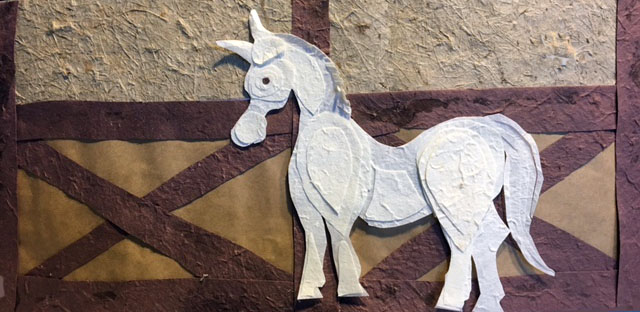
         I’ve asked Nic to explain why he thinks Jews have horns. And to my surprise, his answer is as reasonable as my opinion that Roman armor is vacant of any God beloved human person.

          Nic explains, “Buff and I were trained together in broadsword. We were both equal in our skills — the best of the class. In fact, the Roman officer training us wanted to put us in a more elite unit with spears, but I chose to stay at the oars on the Saxony Shore because I had no longing for faraway lands at that time. Buff went and fought the Persians and the Jews, then he came back to Gaul at the oars. He knows of all those strange peoples of enemy lands.

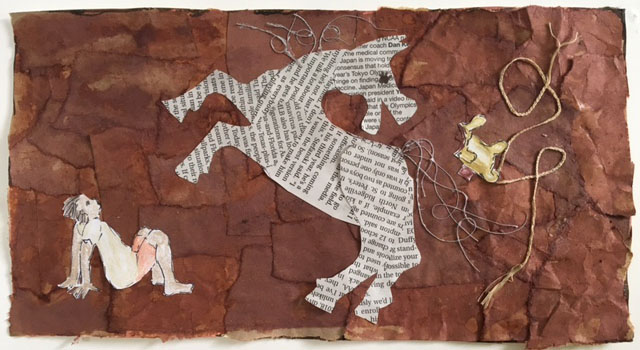
         “In broadsword training we used an effigy. It was called ‘The Jew.’ It was a black-haired goatskin stuffed with sand and chains, hanging from scaffolding by cables that could be used to draw it up and down to fling it away from our swords; then it would swing back and wallop us with its full weight. It always seemed to be attacking us, even in our worst nightmares. Our hatred filled our waking hours with plans to do harm.  It was the relentless great black goat, ‘The Jew,’ hurling himself at us, slamming us to the ground.  Again and again we came at it with our swords shouting our war cries against The Jews. We were the best, Buff and I, the best.  Surely it would take The Jew even now, to make me trade off my armor for fancy clothes and passage to Hispania. It would take The Jew to turn me against my brother at arms. I expect your horns were ravaged and lost in the attack, isn’t that right Lazarus? It was your horns that were stolen from you, but deep down you are still The Jew.”

         My only defense, “Jesus was a Jew.”

         Nic answers, “The Jews killed Jesus.”

         “No, Nic, the Roman soldiers killed Jesus. I saw it.”

          “Your mind is scrambled, Lazarus. It is written in the gospel, ‘The Jews Killed Jesus.’”

         Dear God, thank you for my clarity of mind. Now heal our broken hearts. Amen.

(Continues tomorrow)

Post #10.8, Thursday, July 16, 2020

Historical setting: 563 CE, on the Bay of Contabria (Biscay)

Nic is still burning over my failure to assure everyone I’m not a Jew. If that is what is needed to make peace, it isn’t peace. But he brings all his hurt and pain begging me. Regardless of what his friends think he still wants to hear me say it aloud, that I am not a Jew. And maybe it’s true that I am not a Jew; I’m a Christian now. Maybe it’s true the Jews would have no use for me in these changing times when Christians no longer honor their inheritance, but I was born a Jew. I joined with the Ebionites[Footnote] when a certain scar marked a man’s adherence to the letter of The Law. My strange gift of healing took my scar, and every scar and brand and tattoo that could mark any kind of belonging to a tribe. But even after all these centuries, I cannot rightly say I am a Jew.

         And I can’t say aloud that I’m not a Jew either. To say that would separate me from my ancient faith, and it would separate me from my family who were Jews, and it would separate me from my dear friend Jesus. Jesus was a Jew. Jesus is a Jew. It is our people and our tribe.

         Dear God, in my mind I know I belong to no one but to you. Amen.

         I still seem to be wandering after my human place of belonging. Is it even possible for a human person to see wider than his tribe?

         “Nic, we are bound together now on this journey to find my life forgotten, and for that I’m deeply grateful to you. But it concerns me that we have some deep roots of hate between us. I know what it is to hate based only on the look of a man. I’ve asked that you shed your Roman garb, so I may know you as a man beyond my own harbored prejudices.  Now I ask you if we might talk frankly about this.” He doesn’t answer. So I ask, “Do you know any people who actually are Jewish? Or have you just heard stories?”

         “So you are a Jew. Your horns were beaten in when you were attacked.”

         “I am a Christian, Nic, like you. But why would you think Jews are an enemy, and where did you get the notion Jews have horns?

(Story continues Tuesday, July 21, 2020)

 [Footnote] The Ebionites were a sect of Jewish Christians who adhered to the ancient Hebrew Law and also, particularly, an Aramaic Gospel of Matthew sans the Virgin birth. In the early Second Century they were already considered outcast Christians as anti-Semitism was spreading among the Gentile sects.  The Ebionite Christology emphasizing the human nature of Jesus set them in opposition to the Orthodox Creed and they were also shunned as heretical. This is explained in detail by Bart D. Ehrman, in his book Lost Christianities; The battles for scripture and the faiths we never knew, Oxford University Press: New York, 2003. (Pages 100-102)

Post #10.7, Wednesday, July 15, 2020

Historical setting: 563 C.E., on the western shore of Gaul

         Nic hands me his dagger before he slumps into a faint. I hoist him onto my shoulder, iron shirt and all, and I’m handed his sword and girdle from the heap at the entrance as I leave.

         It’s not a long heft to the inn. The innkeeper supplies the needle and gut thread, bandages and the ewer and basin so that this healing will leave only a fading scar marking the face of a man who no longer owns a helmet.

         If it wasn’t the cold water, it were the pains of my needle that aroused Nic to open his eyes and stare straight at me still in his attack mode. I promise him a good night’s rest will center his pain and may help ease his wrath. And we will need to soak the bloodstains from our new clothes.

         The wind turns from the North, and a crispy cool night speaks of a better day tomorrow when the winds will be right to begin a brand new journey.

         Dear God, thank you for this promise of new, and while I can so easily offer gratitude for this changed wind, may I also beg for eyes to see beauty as you can see me and Nic, and his friend, Buff, with love for all people beyond our labels for one another – Imperial soldier or ancient Jew. Amen. Yes. My prayer seems like a simplistic solve just now, but what else do I have?

         On this new day the shift in the wind brings the breeze to fill the sails for our crossing of this usually angry bay. This morning we board the ship to Hispania as the last heap of goods is laden into the hull. The captain is pleased he doesn’t have to wait for us, after all, humankinds are so less reliable than one hundred amphora filled with wine.  We secure our packs on deck to join into the familiar symphony of sea travel: the rustle of the sheet, the creaking lines, and the lapping of the great and random waters, now so gently nudging at the hull — the groaning of wood on wood as the ship awakens for journey.

         Nic still stares at me in silence. The pack of gauzes I tied to his face last night hones his stare from rage to helplessness, but he has no words. I try an apology.

         “Nic, I am so sorry my presence sent your friend into his angry rage; were it anything I could change, I would. But I can’t change another’s attitude as much as I wish I could.”

         “You could have just said you aren’t The Jew.”

(Continues tomorrow)

Post #10.6, Tuesday, July 14, 2020

Historical setting: 563 C.E., on the western shore of Gaul

The pig on the spit looks familiar. Is this creature one-in-the-same as was choosing a rotted rutabaga instead of chomping into my nice and meaty man-foot just last month? [post #9.1] I think I’ll pass on the pork. Maybe it was my ancient Jewish upbringing but I’m not much for pork anyway. This is an abundant feast with fruits and cheese and bread. No one will leave hungry. So like the roasting boar himself, I bite into an apple. Our host notices.

         “Hey, Nikolis, what’s the matter with your young friend?  Why doesn’t he stuff his jowls with the best meat of the forest?” Buff sounds jesting at first, but then he becomes accusatory to me. “So you come to a pig roast and don’t eat the pig? What are you a Jew?”

         I answer, “There’s such plenty. This is truly a fine feast!”

         Nic spits on the ground then answers, “Maybe my friend is just too polite to take something he will only spit out on the ground. Your pig is a burnt crust of tough hide, if you ask me.”

         As with any polite party of soldiers the swords were left by the entrance but no one has abandoned his dagger. After all, knives are the necessary utensil at a pigfest. Nic already has his blade in hand dripping with bacon grease. With a flick of his wrist toward his host, Nic seems ready for a challenge.

         Buff taunts, “Oh yes! That’s it. This boy Laz of yours is a Jew!” Nic is seething in the stance of a wild bear up on two legs starring at the prey dancing the death circle around the man. Buff has his knife drawn now also, and continues his racial taunts at me, but directed toward Nic.

         “Yes!  Lazarus is The Jew!  Look at all his black locks hiding his horns, no doubt.  Look at him!  He has those dark eyes and a goat face!  He’s a Jew!”

         Before I can even think of a way to explain that I am a Christian now, or “you know, Jesus was a Jew,” or “what’s wrong with being a Jew?” Nic’s face his a river flowing red, dripping down onto Buff, who is on the ground now with Nic’s dagger at his throat. Nic won the brawl. Buff pleads for mercy. Others around us are closing in a tighter circle with blades drawn.

         “Let’s go Nic. Let’s mend your face while you still have strength for healing.”

         (Continues tomorrow)

Post #10.5, Thursday, July 9, 2020

Historical setting: 563 C.E., on the western shore of Gaul

         Nic has met an old friend, another who is retired from the Imperial Navy.

         “Hey, Brother Lazarus,” Nic calls me into the reunion. “This is Buff; he was once a rower for the fleet also!”

          “I just figured Old Nik was ready for dry dock when I saw his helmet here for trade.” Buff offers me his weapon’s hand for the handshake — gesture of peace. “Glad to make your acquaintance, Laz. If you’re his friend you’re my friend. And like they say, Mi casa, su casa.  I’m having a pig roast tonight. There is plenty for all.”

         He gives directions to Nic to find this great party in the wood.

         Nic is keeping a watchful eye on the maneuvers of small boats around the moorings. He points out to me that one such small boat was just lowered from one of the merchant ships at a mooring, and … He recommends we go to the wharf where the goods are stashed bound toward Hispania.

         Indeed, he meets with the captain and the mate of a ship bound for Iberia. He pays our passage, so we have assurance that we will be riding the next northeast wind across the wide Bay of Contabria to an Iberian port.

         Buff’s pig roast in the wood provides a welcome chance for Nic to see some of his old friends from his many years in the Navy. It gives me a bit of a view of a community I never knew existed. These older men are lone, like Nic, having no wives or families after all their years at the oars. I don’t think these veterans of the Navy have taken a vow, as one would find among monks. Rather their life pattern may have been something of the happenstance of years at the oars with so many ports and rarely a home.  (Footnote)

(Story continues Tuesday, July 14, 2020)

(Footnote) Fiction allows assumptions based on nothing more than logical conclusion. So this blogger concluded some who completed their years in the military might have been alone in those later years. But in our world of fingertip facts how can a blogwright resist scouring the internet for actual studies on the lives of ancient soldiers in retirement?  With less clarity for 6th century rowers, 110509.pdf was retrieved 2-26-2020: Scheidel, Walter, “Marriage, families, and survival in the Roman Imperial Army: demographic aspects Version 1.0” Princeton/Standford Working Papers in Classics, November 2005, Walter Scheidel. scheidel@standford.edu

Post #10.4, Wednesday, July 8, 2020

Historical setting: 563 C.E., on the western shore of Gaul

I climb the cliff alone for a vantage point for my prayers.

         Dear God, Please help me as I’m trying to loosen myself from deep prejudice I once thought was a virtue.  Amen.

         “…Perfect love casts out fear.” It serves me well in the practice of love to look instead for fear when I feel a need to identify a hurt as a hate. And most often it seems possible to dispel hatred by facing a fear.  But it’s quite another thing to let go of an obstinate valuing of this hurt, identifying myself as a hater (for me, of soldiers), as though hate were a virtue. It is maintaining an enemy, even when it is destructive to both the one who fears and the one who is feared. That’s what hatred must be: Hate is claiming as personal virtue, the ownership of fear.

         I promise again and again not to be one who could nurture hate. And yet, for centuries now, it’s been my habit when I am passed by on the road by plumes of glory pretending to be powerful, I draw my spit and spew it purposefully on the ground wherever I’ve seen the soldiers  pass. I relish the skill of targeting the spittle to make my statement, but always behind them so not to cause trouble. Now I’m suddenly aware that under each plume of glory is a human being – the hollow armor shields the heart of one whom God created and loves — the same kind of human creature as am I. First I argue by saying this man is nothing like me. I am good and beloved, and he has fallen under the imperial powers — sold out to the enemy. He is surely something other than my kind of being.

         Just now from this vantage point on the high cliff I see Nic near the market. Several other soldiers are milling through the merchandise.

         Dear God, forgive me for mistaking Nic for a Roman soldier. Or…         Maybe God is expecting me to notice a wider notion of “enemy love.”  Maybe God expects me to love the whole army of them, as though they were each God’s own beloved creation also. I swallow spit. Thank you God for Nic. Amen.

         One of them has picked up Nic’s helmet from the vendor’s table, then places it back as Nic also notices and is rushing toward this other old soldier.  They greet as friends. I had best go back now. My quietude is lost to spying on my new friend.

(Come again tomorrow)

Post #10.3, Tuesday, July 7, 2020

Historical setting: 563 C.E., on the western shore of Gaul

The vendor seems cautious about Nic’s helmet for trade. He’s noticing the grimy leather at the neck edge, the slight bend in the cheek plate and particularly, he frowns at the fade and wilt of the tattered plume. Nic yanks the plume from it’s fitting.

         “I choose to keep my plume of glory.” Nic announces.

         Then the vendor offers his assessment of the helmet.  “It’s very old, before the time of the emperor’s refurbishing of the troops.”

         “It was my father’s. It is hammered from bronze and inscribed with the flourishes of our tribe by the hand of a true artist. You don’t see this kind of workmanship in the Roman conscription helmets.”

         The vendor doesn’t argue. He asks what trade Nic wants for it.

Nic asks to see caplets and cloaks suitable for an Iberian journey in the summertime. The vendor presents an array of fabrics, and I am aware that Nic’s helmet was something of great value. Nic is not surprised. But clearly he is grieving this loss.

         Nic carefully chooses a caplet broad enough to span his shoulders even while wearing his iron shirt. It has lacing loops on the inside to secure a cloak under the caplet, in case he should choose to wear the cloak in the soldier’s style.

         My thoughts and my eyes are on Nic, feeling with him the grief of his sacrifice. He notices my concern and brushes it away with the quip. “To Old Nicodemus Jesus said, ‘ye must be born again!’ (Jn. 3:7 KJV)”

         Nic and the vendor bartered away his Roman cloak and shield, all the while the vendor eyed Nic’s chainmail and sword. The dagger was hidden away in his new pack. The trading ended this day with new britches and tunics for us both – the kinds of tunics with a bit of length to give us a look of scholarship or wisdom. And I now also have a girdle and a pack.

         And furthermore, my pack is large enough that I may carry a heavy load; for example, that weighty shirt of chainmail. Should I be walking a mile with a Roman soldier and I offer to carry his load the next mile. So we are both fit for travel and Nic still has his iron shirt and his sword.  As we are walking off the vendor shouts his “final offer” of a gold coin for the sword. Nic doesn’t turn back.

(Continues tomorrow)

Post #10.2, Thursday, July 2, 2020

Historical setting: 563 C.E., on the western shore of Gaul

         It’s easy to identify when it is someone else’s random hate. But when it is my own, I have so little clarity. When I see the crazies of wrath in others I simply mouth the Christian slogans, “hate is not the opposite of love — fear is.” “There is no fear in love, but perfect love casts out fear. (1st John 4:18)” But now my own taunting hatred of Roman soldiers needs the sermon. So what is my fear?

         My empathy offers excuse after all; it was the Roman military that executed Jesus. I saw it. I remember it. I was devastated by it. No wonder I want nothing of Roman soldiers. Yet I can see also that this soldier is my new brother in Christ, Nic.

         As I ponder a wrong in my own depths, Nic has been standing here next to me with his helmet tucked under his arm, starring across at the vendor of tattered war bronzes.

         “Brother Lazarus, I think I am ready to trade this now.  Why don’t you go on ahead and look at the fine tunics and girdles he is selling.  And they have britches there of finely knit wools. Go ahead and have a look at what you want me to trade.”

         “You should have a new cloak of your own.” I suggest. “One that is light in the day, and shields you from the sun and the wind, and at night is a comfort for you.”

         “It seems wrong,” Nic ponders his answer. “It seems wrong to trade a fine helmet for an old man’s cloak.”

         “Maybe you aren’t old enough for an old man’s cloak. Maybe you can choose something for a man of your age as you are now, just barely silvering. Maybe a caplet with a hood would suit you, so you wouldn’t think of the need for a helmet because the hood would save you from the wind and the sun? Let’s see what is over there.”

         Nic comes with me to the vendor’s booth and sets the helmet firmly on the counter.

         “For trade” he says.

         The vendor examines the helmet thoroughly and with a critical eye.

(Story continues Tuesday, July 7, 2020)

Post #10.1, Wednesday, July 1, 2020

Historical setting: 563 C.E., on the Western Shore of Gaul

Before we are in sight we can smell the fragrant cooking fires, the wafts of plenty along the pathways of these wharves. Everything that was taken from Constantia after the fire is relocated here in this place.  Ships of both navy and merchant are moored in the bay and on the quays merchants have their booths.

         I would’ve looked for someone to ask but Nic knows these landings on this edge of Gaul and he goes immediately to survey the wares and examine the heaps and roped bundles along one of the open wharves. He is looking for shipments that might be bound for Hispania; northern pelts and leathers, amphora and wood barrels of Gaulish wines and mead, things that are common here but valued more in warmer regions. He can guess by observing the cargo going we will find the ship to take us where we want to go. We do find the right cargo but there is no ship at this moment, so we’ll be watching for whatever merchant ship ties here and on-loads these heaps of goods. We will need to keep this place in our sight. Nic has the means now to pay for our stay at an inn with this view of the harbor. They have a sleeping floor in a loft for travelers. The main floor is an alehouse for any thirsty souls both traveled or stayed. Such are the comforts of plenty.

           From this distance at the Inn’s doorway Nic points out the merchant’s booth where trades happen with soldiers. In the display of wares hanging from the canopy over the bric-a-brac there are other worn and cast off military accoutrement. I know he has heard my prodding, and is imagining his own armor hanging there for sale — things his father wore after his tribe sided Roman; then for all the decades of his adult years these were the things that clad him also, with safety and identity. 

         Maybe I’m asking a large sacrifice of one simply willing to be my patron. I wonder if my anathema of every soldier is rooted in virtue? Am I driven by the cause of pacifism that Jesus taught, or am I simply rekindling my own warring prejudices against Rome?

         Dear God, Let me be thoughtful of this hard thing I may be asking of Nic — to give up his armor. Guide me, and lead me toward one day discovering wisdom. Amen.

(Continues tomorrow)

Post #9.13, Tuesday, June 30, 2020

Historical setting: A dark age on the Saxony Shore of Gaul

I know people move from one age to the next in slow stages, maybe with the exception of birth and death that always seem to take us by surprise. Yet, I guess I had been expecting Nic to step off the dromon and immediately transform his useful life as a Roman soldier into an imaginary image of an old and wealthy benefactor sponsoring this heretic.

         Dear God, thank you for giving me a gentle thought of forgiveness for Nic’s need to wear armor. Amen.

         “I didn’t mean to sound so much opposed to your armor. I can get used to it.”

         “Not to worry Brother Lazarus. I can see that these scarlet plumes and cape of old Rome make you uncomfortable. And now I hardly require a legionnaire’s shield to hang on the shipside. When we reach the market where I found your sandals I can trade these Roman accoutrements. They trade with the soldiers all the time and they will be glad to take these things that mark me as a soldier. We can get you your own pack then.  The leather worker there does fine work for the soldier’s trade.”

         “That is thoughtful of you, Nic. I have to admit I was bothered by the Roman Soldier style, even though you surely wear it well. So many years ago I was witness to a horrific execution of a dear friend by Roman soldiers, but perhaps now, even if you choose to wear your armor I may be able to forgive in my heart and one day make peace with my hate, simply by having another good friend who wore that same uniform.  It’s a hard lesson to let go of my old bias of hate but I need to do that just to set my heart right with God who loves everyone.”

         “It’s okay.  I will trade off the Roman gear.  But Brother Lazarus, you need to know since I was a young man with nearly ever step I’ve taken on land I’ve been clothed in the colors of Rome and looking out at the world through the window of soldier’s helmet. I don’t even know who I am now as this old and worn man mingling into the civilian milieu as though I were no one special. So you must become my shining reason now.”

         Dear God, help us not to fail at all the forgivenesses needed for friendship. Amen.

(Continues Wednesday, July 1)