#71.5, Wednesday, August 13, 2025

Historical Setting: 793 C.E. Marmoutier on the Loire

         Tonight, I’m staying in a guest room at the monastery near the shrine of St. Martin of Tours waiting here for the king’s scholar, Alcuin, to prepare his answer to Bishop Higbald’s letter with news of the Lindisfarne raid.

         It is the dark of morning, the prayer time when monks stagger from sleep with their worries to hear God’s answers and receive anew the creative “ah-ha.” In this thin space of night before dawn the teacher Alcuin has been mulling the tragic words in the letter I delivered here from Bishop Higbald. 

I was awake and reading the psalm for this day by candlelight when a monk came to the door of this guest cell. He said Alcuin requests the presence of one who knows the depth of the sin Bishop Higbald spoke of in his letter.

         “Depths of sin” isn’t normally my morning nourishment. I am friend to Jesus whose message was love, though it is often wedged awkwardly amid human fears of sins, hates and end times. And Jesus was a follower of John, who preached the turning, the repentance and the cleansing in baptism. So, the popular rise in sin-wallowing doesn’t much appeal to me. Maybe it is spoken often by holy men in these times because it lays the emphasis on human control of our own circumstances. By blaming our own behavior, we can blame sin as a reason for things we otherwise can’t control. Then human beings are empowered to heal the woes of the world, simply by un-sinning, confessing, repenting…

         As I follow the monk down the hall to Alcuin’s chamber, I am thinking through the details of blame/sin in Higbald’s letter.

         Here at his door –

         “Ah, good messenger for my dear friend the bishop. I apologize for waking you at this hour.”

“I was already awake for prayers.”

“I’ve not slept with my worries over my friend’s plea. And I need a listener to hear my words as Higbald would hear them.”

         “I know he wrote to you to hear words of God’s forgiveness for what he called the sins of Lindisfarne.”

         “Please try to listen to my answer with his way of hearing it.  He speaks so much of God’s retribution for a particular sin. What possible sins are there, that could be committed by a whole monastery?”

         “I do know of the incident that concerned Bishop Higbald.”

(Continues tomorrow)

#71.4, Tuesday, August 12, 2025

Historical Setting: 793 C.E. Marmoutier on the Loire

         Alcuin, one of the king’s chosen intellectuals, receives the letter I am delivering from Lindisfarne, now shadowed in tragedy.  He seems hesitant to open the seal of his friend the bishop. He holds it in his hand and studies the seal and folds of the envelope. Then he asks me.

         “So, you, yourself know the contents of the message?”

         “I am aware of the news it brings.”

         “Are you literate?”

         “I am indeed, Sir. But I assure you, I didn’t break the seal on the envelope to read the letter. I was already aware of this terrible news of which the bishop is informing you. If you care to be alone, I will wait outside for your return message.”

         “No no, wait here. I don’t want to read bad news alone. Will you stay and read it to me?”

         “Of course.”

         The teacher opens the bishop’s letter and hands it to me to read.

         He sets his gaze beyond the walls here, on the river running by.

“On the day of June 6, in the year of our Lord, 793, heathen Vikings came ashore at Lindisfarne near the shrine of St. Cuthbert…”

As I read to the teacher of the foreshadowing of the raid, the drought and the hardships, the wonders and portends seen in the heavens, remembering a recent tragedy, the teacher stares through the window slit, with his jaw tight, clenching and releasing his fist. There is a long pause after the letter ends, and I fold it back to its closed form. Then he turns to me.

“Were you there?”

“I was, Sir. The monk who rings the hours, Brother Ealdwin, was witness to the raid. I was a slave with the boats of the marauders on the beach. Then I was sent back, set free from possession as a slave, freed for the reason to return the Gospel of Landisfarne to its proper stand in the priory.”

“So, the Gospel wasn’t taken?”

“They didn’t understand its value, Sir. Brother Ealdwin and I buried the dead, and, on the third day we welcomed back Bishop Higbald and the brothers who were spared. The actual Shrine of Cuthbert was spared desecration, though other treasures were taken, probably it was spared because the shrine itself was not encased in gold. When the bishop returned, I was sent on with this letter.”

“I’ll prepare an answer to the bishop. Thank you.”

(Continues tomorrow)

#71.3, Thursday, August 7, 2025

Historical Setting: 793 C.E. Visiting the Monastery of St. Martin

The monastery, Marmoutier, named to honor St. Martin whose shrine brings pilgrims to Tours was also renovated to keep up with the times. It is fully following the Rule of Benedict now. Even in places once Celtic, Benedictine Rule is used, because revisions in the rule now allow, and even assume, an individual’s mystical relationship with God. Maybe it is no longer about enforcing the power of abbots and bishops over the monks and naming requirements for obedience. These were worthy changes in my opinion. But the written Rule now calls for a longer page to read, laid out here on the entryway bookstand. It is a good read while I wait for this teacher to the King’s children, Alcuin. 

He was already informed a messenger is here and I am told he is lecturing, just now, on logic, a favorite subject of his. He’s known for making some intriguing puzzles for his students. [footnote] 

I hear classroom noise echoing down these otherwise solemn hallways — young voices — a billowing teacher and now there is laughing.  Where is any laughter in the strict rulebook posted on the bookstand here?

         While I wait a matron brings two little girls with wax boards and styluses for practicing letters. Waiting together here, I ask the matron if it is usual here, for girls to learn to write.

         “Their father is King Carulos, and he wants all of his children to be fully educated.” [footnote 2]

         “So, this Frankish King values education, even for girls?”

         “Of course.” She seems to wonder where I’ve been that I know nothing of King Charles. 

“It isn’t unusual at all. Are you not aware that in these times, even the Byzantine emperor is a woman, Irene?”

         The teacher comes to the hallway arch, his solemn face is creased pontifically, until he smiles, then that air of omnipotence melts with the warmth of his presence.

He says to the little girls, “Good morning Huldrud and Thedrada. We will start our lessons in moment. Practice your letters until I get there.”

The matron follows them down the hall.

         “Ah, Father Alcuin…”

         “It is ‘Deacon’ I am a teacher not a priest…”

         “I was sent with a message from Lindisfarne.”

         But this teacher, Alcuin seems much too cheerful for this letter I bring.

         “Ah, the seal is of my dear friend, Bishop Higbald. Is he well?”

         “He was well, when I saw him last, Sir, but I am sorry to bear the sorrowful news this letter brings.”

[footnote 1] https://en.wikipedia.org/wiki/River_crossing_puzzle

[footnote 2] Charlemagne’s view of education, https://courses.lumenlearning.com/atd-herkimer-westerncivilization/chapter/charlemagnes-reforms/  retrieved 6-2-25

(Continues Tuesday, August 12)

#71.2, Wednesday, August 6, 2025

Historical Setting: 793 C.E. Visiting Tours
 

This journey, visiting the bones of my loved ones along my way, is really about finding the spiritual life and life again of those I once shared bread with. It is the joyful side of life — the weedy overgrown vines of remembrance.

Dear God, thank you for this happenstance to take the message I am assigned to carry on to Marmoutier. Thank you for these generations of shared times with loved ones and my gift for remembering these things. Though, I have to say, remembering often feels more like grief, revisited.  Amen.

         I choose my route to follow the Loire to Tours, passed the fields I once planted, and the houses with roofs where I laid the thatch. In those times we first learned of plague in the worst way. So many died. And the Roman rule of the ancient times was waning. Then it was the Christian Church, not the kings as much, who were stretching to fill the earthly power vacuum. Maybe that didn’t change, as we simply became accustomed to some rulers claiming castles on earth and others, in miter hats, claiming heaven. Yet the tender prayers of children soar to heaven naming gratitude for mothers and fathers and loved ones though rarely for kings or bishops.

         I slow this horse’s fast trot, and dismount. I walk along with the horse, beside this river I remember.

Here, where houses once stood are paths that in another time marked the journeys of friends and family coming to our door. Then these stones were stacked to enclose the gardens we kept. Here, these wild tangles of vines that make havoc with the landscape on the untamed edge of the road, speak remembrances of the vineyards filling the wine cups of the generations who once lived here. The river still runs its path, and the Church, the basilica at Tours built into the city wall, still stands as it was rebuilt after a fire. Keeping things the same is always a matter of rebuilding. What once seemed new is always another time’s relic.

Tonight, I stay in an inn by the river. Maybe this innkeeper is someone’s great-grandson I might have once known. Even if this inn is made of fresh cut wood, nothing is really new.

Tomorrow I will deliver the letter to Alcuin.

(Continues tomorrow)


#71.1, Tuesday, August 5, 2025

Historical Setting: 793 C.E. Visiting Metz
 

         Before I leave these hills and ride off on that journey to Tours, I take this day to follow the familiar creek and visit the hill that was once my family home.

         Mostly the stones that marked the fields are scattered now, and the house is in ruin. But the stone I named for Ana is in place, still incised with the lines that are the letters of her name, though the incised lines are worn by time. The chiseled scars of my grief are still deep in my heart.

Further on, the secular church is overgrown in forest and vines. I find hardly a trace of the building. But here, where the clearing was cut behind the church are more named stones of my family.

         I see that Brandell passed before Gaia, though the stones aren’t carved with dates. I know that because the engraving for Brandell’s stone is cut deep, and it is decorated with carvings of birds and flowers, hardly visible to the eye, but to touch it is an abundant garden of all things beautiful. And next to Brandell is Gaia, and next to Gaia is Mater Doe. The two women’s names are together on one stone. Other markers here are names I’ve never heard spoken, but they could well be grandchildren I’d never met.

         Having the blessing of life and life again might seem to be all about finding names on stones and grieving for loved ones.  But I know something else about my strange circumstance of ever renewing life.

         Jesus made me a sign.  Of all the seven signs, not miracles, I am the sign that was given to speak of death though really of life.  A sign is a physical image, visible and tangible, that speaks of a spiritual reality, invisible but true. The sign I am is the physical life and life again, announcing always the spiritual life and life again. So here is spirit.

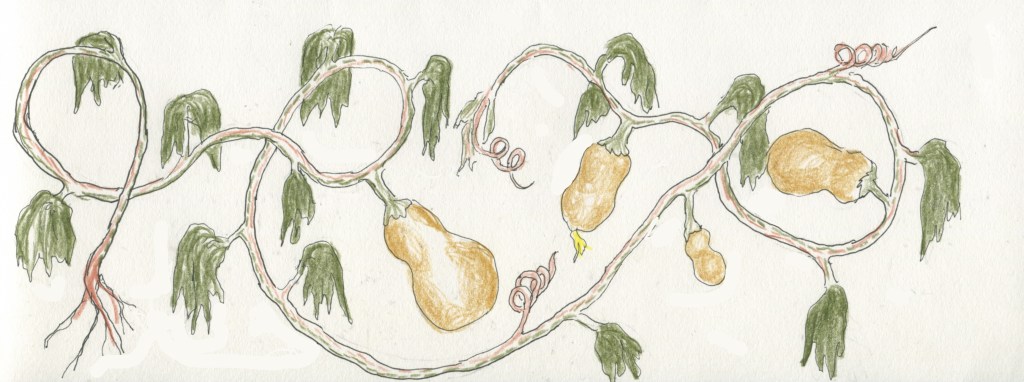
         This place where we once danced at the wedding is now completely overgrown with thickets of vines far beyond any earthly vintner’s imagination. Called weeds now, it is really just a garden we have yet to understand.

         Dear Jesus, my friend, I’m the sign of earthly life, finding little shoots of vine we once nurtured, are now this wild thicket filling all the empty space with huge greenery, twisting, wandering vines rich with leaves and ragged bark and little clinging curls reaching, clasping, like a baby’s fingers around her parent’s touch. Thank you.

(Continues tomorrow)

#70.15, Thursday, July 31, 2025

Historical Setting: 793 C.E. Metz

         Metz is hardly as I remembered it.  There are new walls and towers, and the once mud streets are paved in stones. But musicians still test their songs in the town plaza and probably the commoners still come dancing for the mid-summer celebration. It was a favorite venue for my son, Brandell, the poet, so many generations ago.

Now this village has booths for vendors and craftsmen. The public stables are as I remember, but with more stalls.  The stable hand tells me this fellow Odo plans new constructions and he sells his ideas to the rich.

He directs me to Odo’s house.  I see here old Greek notions for buildings are remembered. It is created first, not of stone and mud, but in the imagination of a mathematician, as a drawing on parchment. And that seems to be the function of Odo’s workplace where I wait for him. Here is not one stone or chisel, but rulers and inks. The worktable is spread with parchment. The book stand is overflowing with ledgers and maps. And here is Odo in a builder’s leather apron, but a demeanor clothed in the finery of a nobleman.

         “I have a letter for Alcuin from Bishop Higbald.”

         “Alcuin, the scholar for the King?”

         “I was told you would know where the king has his court in these times.”

         “Yes, but Alcuin is the teacher for the King’s children. So, he isn’t traveling with King Charles at this time. The children are at Marmoutier Abbey.”

         “Thank you, this is very helpful.”

         “That is near Tours on the Loire…” [Footnote]

         I knew that. I used to live near there also.

         “So, you would go all the way to Tours, just to deliver a letter?”

         “I find that travel a blessing.”

         I go on my way, passed the Waldelanus castle fields, where my son-in-law was a serf along with Layla and their children. There are standard shelters for serfs now. But here the burial place for all those who worked the fields has only nameless rocks left in places by loved ones. Even in death serfs are nameless.  I travel on, and tonight I will stay at Luxeuil.

         The monastery is the same as always. The guest rooms are unassigned monk’s cells. Brandell’s artwork isn’t in perfect condition, but it is still here, at the healing pools. And I find the grave of my son Gabe, marked only with a carving of a dove. That suits him well.

[Footnote]plodding through history, this blogger finally has come to an era when actual details of names and places were recorded and still available for us to find. So, Wikipedia searches found Alcuin at Marmoutier, and Odo of Metz in the record, and the route of this journey didn’t have to be contrived as fiction. Bishop Higbald’s message was sent, but finding no record of the messenger who carried it – Lazarus’s part in this is still fictional.

(Continues Tuesday, August 5, 2025)

#70.14, Wednesday, July 30, 2025

Historical Setting: 793 C.E. Aachen, Francia

         When I was a hermit at Tours new to the lands of Gaul, before the Merovingian kings were steeped in their own fratricides, Clovis was the head of that clan. He ruled from Aachen. And now these centuries hence, the lands of Burgundy, Aquitaine, Nuestra, and Austrasia are bound together again as Francia. The boundaries are easily lost in this unity. So, I’ve been sent to find the wise man for the king of all of Francia, who is known as Charles. Apparently, King Charles has chosen to restore the palace of Aachen and rule from that place once again.

         Here, now, I find the old palace a construction site. Walls are dreams marked with scaffolding. The population is men in leathers cutting and hefting great stones quarried up from the bowels of the earth. It has no intricacies of a royal court. Only a plan.

         I ask. “Where will I find Alcuin, the wise man for the king?”

         “The king isn’t here.”

         “I don’t need to see the king.  I am looking for the scholar of his court, Alcuin. I have a letter to deliver.”

         “The king isn’t here.”

         This is not a problem of language. We speak the same words here.

         “I do see the palace is under construction. So where is the business of the king being done?”

         “We work for Odo of Metz. He will know where the place to put messages will be someday.”

         “Is Odo of Metz here?”

         “No.”

         “Where can I find him?”

         “In Metz.”

         “Of course. When do you expect him here?”

         “He will inspect on Friday in a month.”

         “So, who is in charge here while Odo is in Metz?”

         “I am.”

         “Of course.”

         Riding on to Metz is no obstacle for me.  I wanted to find a reason to travel that way and perhaps wander through my lost homeland.

         These summer days I follow rivers with familiar names. And so many years ago I knew the names of the innkeepers on this path, and they gave the wines their family names. All that is left now of what I once knew are the names of the rivers. Even the river path is called a particular road with a name. This road laid low in the river’s edge will soon carry the king’s entourage to the renovated palace.

(Continues tomorrow)


#70.13, Tuesday, July 29, 2025

Historical Setting: 793 C.E. Francia

         This horse and I are strangers to one another yet, so my traveling chatter is set loose on Creation itself.

Dear God, thank you for the eternal flow of goodness – the river running down, always – the winds coming new across the grain fields – the stars and the skies, — the patterns of caring for one another, always growing richer in love and beauty, despite grief. Thank you.

When last I was crossing through this land it was peopled with common farms, cottages, forests, simple paths laid among old Roman ruins. But now, the patterns are of changing ways of farming. The start of the change I’d seen at the Waldelenus castle fields with rich land-owners dividing the lands to be worked by the poorer classes.

Now everywhere are castles surrounded by smaller and smaller parcels of agricultural land farmed by those without the power of choice called serfs. As happens in patterns of power, the arrangement isn’t as we’d thought it would be when it began. The expectation was for the plenty to be shared. The ones who turn the soil would share with the Lords of the Manor who provided the land and the safety. What seemed like a good plan, sours when lived to become simply servitude and more poverty for those who till the soil. It is just more wealth and power for the already powerful. The rich get richer, and the poor get poorer. Now castles are being stacked in stone everywhere.

It is a very old story, older than all my lifetimes. I first saw it as Roman. But it comes around again and again. Wealth seeds greed. Then when greed is perceived as normal, even the poor believe the flawed notion that wealth is an earned accomplishment.  But wealth is a striving not an end. Because there is no definitive amount it is always simply, more. Like a mirage, wealth is always beyond and never attainable. The aspiration is a famished dead end.

 Jesus wasn’t being absurd but truthful saying it was easier for a camel to go through the eye of a needle, than for a rich man to enter the Kingdom of Heaven where love and joy are the measure of success.[Mark 10:25] That is not a curse on the rich, it’s a simple fact.

Passing through this land now, I wonder if these serfs ever gaze into the heavens or see beyond the mountains and bask in the beauty of this earth. Do they see this most beautiful day?

(Continues tomorrow)

#70.12, Thursday, July 24, 2025

Historical Setting: 793 C.E. Francia

         With the good fortune of finding a ship and fair winds I am a passenger on a trade vessel. It is less arduous than was the clandestine journey to Lindisfarne on the Longship — catching only storm winds, and rowing much of the way. Now, fully into the summer season a good wind still blows. We land in the lowlands where I spent my last days with my son, Greg, and his partner so many years ago. At that time this place was a newly rising market, now it is a city with established buildings, steeples and houses. It has accommodations for travelers with abundant stables and the custom of providing travel advice.

I’ve been told, the King’s palace has returned to the ancient city of Aachen now, north and east of my old homeland near Metz. Bishop Higbald knows this wise man from Northumbria, Alcuin, who is now a teacher in the King’s court here in Francia. And Alcuin is the man who is to receive this letter from the bishop informing the world of the Lindisfarne raid.  It isn’t a spy’s secret. I’m free to speak all I know of the desecration, telling it to every cook and stable-hand and fellow traveler along the way. It is truth to spread.

A horse will be ready for me at first light. So, this afternoon I walk through the marketplace wondering if I will see the reliquaries and fabrics stolen from Lindisfarne already on sale here. But not so. There are lots of other stories among the merchants about raids by the Norsemen but only a few survivors have witnessed these things. And no one before Bishop Higbald ever wrote of it. The bishop’s letter I carry now will help those who must protect Francia know the threat is real and not simply made of rumors among commoners. I know it was more than a century ago that the King of the Franks sent his spies to learn of this.

Those spies, Greg and Gaillard, did not get the warning of it sent off. And I still grieve for them and for the others who are gone who were once my family.

This morning, here is a good horse already fed and bridled ready to take me on to the King’s palace.

Dear God, thank you for fair winds and beautiful creatures and for people I find along this way who remember ancient kindness despite the fears and worries we have this day.  Amen.

(Continues Tuesday, July 29, 2025)

#70.11, Wednesday, July 23, 2025

Historical Setting: 793 C.E. Lindisfarne Monastery

         Bishop Higbald prepares to bless a new abbot chosen from among these monks. A stranger here would assume I am a monk, but of course, all here know I only wear a borrowed robe so, I simply observe.

         I see that the bishop has the full administrative duties for the shrine also, and now, the role of the abbot is simply to give voice to the few monks who will stay. The bishop oversees the judgment and it is the sins of Lindisfarne that are at the forefront.

A monk is chosen as the new abbot, then the bishop asks for parchment and ink as he prepares to send a letter to Alcuin, a friend and scholar now in Francia. I’ve found a few things while looking for salt, so I bring inks and vellum to the bishop and I offer to be the messenger who will carry this letter.

With my circumstances as they are, I am still groping for this future I have awakened into and I would really like to journey to “Francia” as it is now called.  I would like to visit, once again, Frankish Gaul, and learn if the changes that make all things new are a matter of time; or is it only power and wealth that change the world?  I don’t expect my old homeland will be the same.

Now I will be traveling from Northumberland then across the British Sea by ship. When I reach the Lowlands at the mouth of the Rhine, I will use a fast horse to take me on to Aachen Castle to deliver the letter. The bishop provides a purse for my costs and for my expected return with a response from Alcuin.

It will be good to cross through the lands that were once my home, and now are my own places of grief.  On other journeys I’ve visited old homelands and I know not to expect the longed-for familiarity, except maybe the scent of the land itself and the same skies everywhere and always. I once visited Bethany only one hundred years after the destruction of the Jerusalem temple and there the old battles between Romans and Jews were still simmering deep in the earth and the Christians, in their own little groups, had simply wandered off.

When Ana and I traveled, before the children were born, we saw the place near the Loire that was her childhood home. We found it to be a garden of stunted memories.

(Continues tomorrow)