#78.13 Tuesday, March 31, 2026

Historical Setting: Jarrow, 794 C.E.

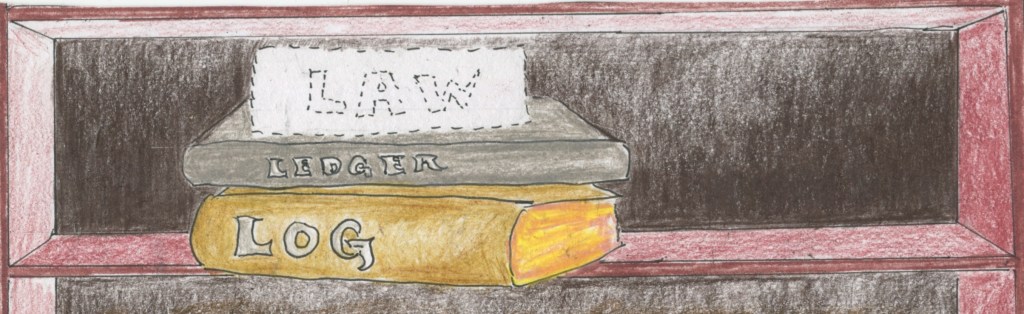
The ealdorman’s assigned house, (or “castle” if you are a pauper and have never been in a simple cottage) was purged of the fellow who had been appointed to this seat. The log book he kept for the king was taken away as evidence against him, along with all his personal belongings — all loaded onto a wagon and gone now. 

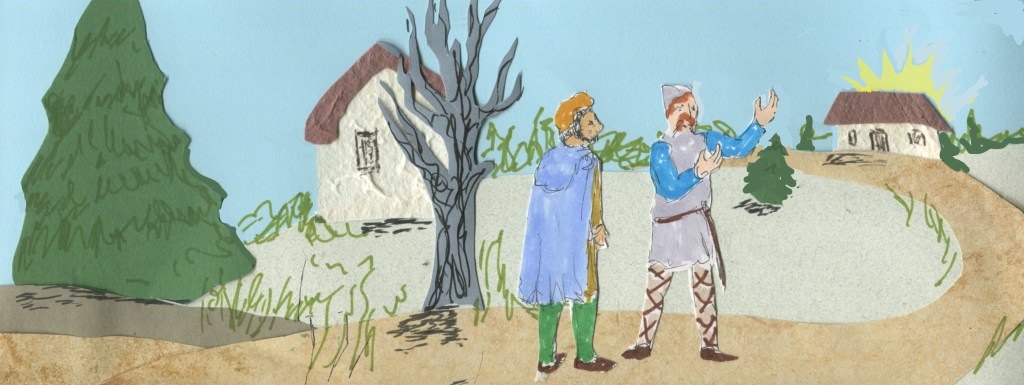
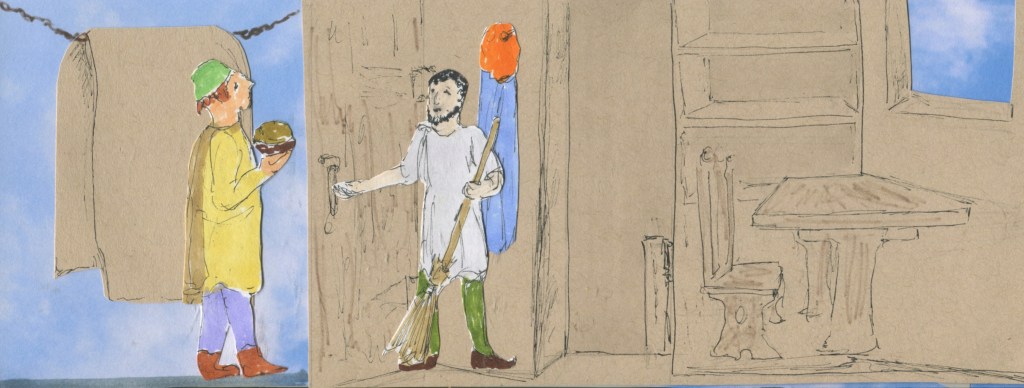
There is a tattered broom left in a webby corner, so I sweep out the floor of cob webs. What else was left here was more dust and dirt, table, chair, oil lamp and straw tick for a sleeping mat. First thing, before nightfall I shake out that linen tick and acquire some fresh straw from the public stable. The stable hand also lends me a rag for wiping down the near empty book shelves, and he offers advice.

         “When your work is as mine, dealing with the public, you have two masters: the king who owns the building, and the strangers and villagers who come to you. Do as the villagers say because they come with food and the gifts. The king just demands things from you.”

         “Thank you.”

Listening to that, I can understand how it is complicated serving two earthly masters.  For me, I serve only one master who is God. It would all be so simple if I wasn’t famished and didn’t just now find the baker bringing a fresh loaf of bread, then asking if he might come tomorrow to speak with me about his complaint against a neighbor. I find I am enjoying the bread, though maybe it was a bribe.

The bread is so fresh and soft the fragrance of yeasty warmth fills the house and overtakes the rancid of the old dweller who was here once. When the baker comes for the basket first thing tomorrow, the bread will be gone and I will be completely at the mercy of hearing his side.

On this new morning, the baker is at my door again and I return the basket he brought, empty now. But I tell him I will need to listen to his complaint with his neighbor later, because this morning I have to go to the monastery for supplies of parchment and prepare the inks and quill to begin this work. He says I really need to know who his neighbor is. He will be back.

         Dear God. I intend to judge fairly. Enable me to see beyond the tastiness of the loaf. Amen.

(Continues Wednesday, April 1, 2026)
#78.12 Thursday, March 26, 2026

Historical Setting: Jarrow, 794 C.E.

Asking Ousbert for a King’s law written for ealdorman to know and use, he scoffed at what he calls an “outdated” reliance on books, reminding me in these times kings are made on the battlefield, not amid the dusty law books. Kings are, after-all. appointed by God.

We differ.

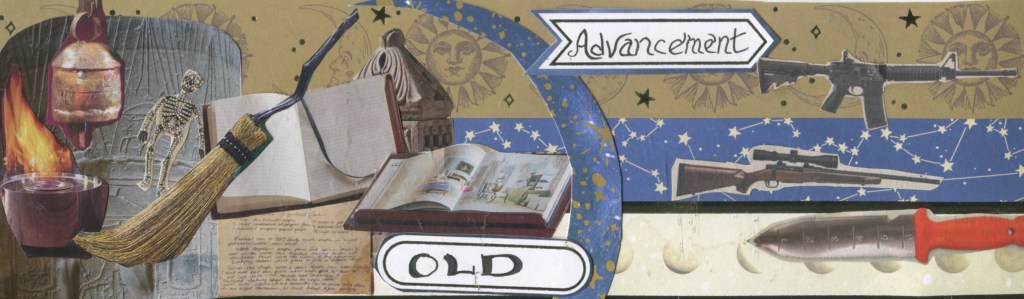
I can only wonder how history can advance if books are outdated and rulers are only named by wins in war. If we don’t value the old, a book or an ancient tool or a story repeated and kept from one generation to the next — the foundations for future good will simply be lost. Building new ideas on old wisdom is how human beings are different from the wolves and the whales. Books have a power that wars fail. Wars don’t keep us human.

         He argues, “The really good books tell about wars.”

Dear God, in your holy ways every creature and individual is beloved, but humankinds accumulate ideas from one generation to the next. We are always striving, reaching, building those towers of Babel. Forgive us, and give us peace.  Maybe remembering is our human nature, if the tower rises to heaven or if it crumbles into a stinking heap of bitumen we still gather up the understanding and pass it along. We so easily lose sight of goodness and justice, empowering the novelty of the shiniest oddity. Teach me the endurance of simplicity once again, that I may see more clearly…

Ousbert interrupts my silent thoughts and prayers just now.

         “Surely, Eleazor, you can make righteous decisions without the use of a book. You have far more wisdom than that man who was taken to the dungeon and is awaiting his trial for grift.”

         “I guess I was looking for a higher standard. But if the king didn’t choose to write down his law, knowing books as I do, I guess I can just rule by biblical mandate of love for neighbor.”

         “That sounds good. Just use whatever the old bible says is law. That’s what a monk would do if we had a monk to fill this post.”

         Ousbert leaves me here to go manage the work of this office until the king sees fit to send a newly assigned ealdorman, or perhaps until, sadly, the previous ealdorman would have his charges dismissed and returns.

(Continues Tuesday, March 31, 2026)


#78.11 Wednesday, March 25, 2026

Historical Setting: Jarrow, 794 C.E.

Ousbert wonders why a temporary ealdorman, whose task is to settle minor disputes and send everyone’s taxes on to the king, should want to find a dusty old book of laws?

         He asks, “Why a book, when we have a God appointed king?”

         “How will I know what is considered fair? Take the case in the log book where two villagers were seeking a fair settlement over using the King’s road for a livestock path– how can I know the king’s mind on that without any record of the King’s law?”

         “The king’s righteousness derives from his divine power to access God’s righteousness.”

         “I would think it should be God’s rule first, then the King’s interpretation of it. But even that seems random and fickle when it is this earthbound human, who I am, trying to discern righteousness.”

         “And you think that if the king wrote a book, and if every ealdorman over-seeing every little forest and village had a monk’s copy of this book, that would make a difference to how you fill the ealdorman’s place here?”

          “I was thinking a book of King’s laws would be usual here.  I was reading in Bede’s The Eccleasiastical History of the English People that already two hundred years ago, king, Æthelberht, who ruled over Kent, at the cusp of English Christianity, wrote down a Code of Laws so in his new holy rule he would follow the Roman way. [Footnote] I guess I assumed that every king thereafter would provide a written law for the subjects to know and follow.”

I can see this request is nonsensical and exasperating to my friend.

         “And you think a two-hundred-year-old notion is useful in these new times?”

         “I guess I was expecting something I knew of history to be a grounding for these times, so that when one thing is useful we could build from that and we would always be bettering ourselves, from one generation to the next.”

         This soldier argues, “We better ourselves across generations because Kings are chosen by God, they are winners in wars, so they are always stronger and bolder than the last, so kings are always better than before.”

         That is exactly as I had feared.  Here in this raw nature, humankind believes human advancement can be made through warfare. But if people don’t use books or runes, or works of art, inspired, to carry forward the advances made from one generation to the next, the goodness of old isn’t a  foundation for betterment in the new. We simply relive old hates through wars.

[Footnote] Bede, The Eccleasiastical History of the Englis People, New York: Oxford Classics, pp 78

(Continues tomorrow)


#78.10 Tuesday, March 24, 2026

Historical Setting: Jarrow, 794 C.E.

The king’s man, Ousbert, assigned to Jarrow to protect this monastery and village from Viking attack is now focused on saving the village from the graft of an ealdorman also assigned his post by the king. Yesterday this ealdorman was carted away to the king’s dungeon along with the evidence of his injustice to await his trial before the king. The immediate need for Ousbert to properly serve the king requires a temporary replacement for the vacated post — someone honest, fair and literate.

I think it would be best for Ousbert to speak to the abbot of St. Peter and St. Paul, and fill this vacancy with a monk. But Ousbert is on tenuous terms with the abbot after he placed his soldiers as armed military guards over the monastery. Dressing them in monk’s robes didn’t really preserve the tranquility of the monastery. Regardless of their misfit appearance, the presence of swords is anathema to the abbot here.

So, here I am, a foreigner with a Hebrew name, Eleazor, dressed as a scholar and a guest of the monastery just to use the library.  I’m surely exempt from local politics. But Ousbert sees me as the perfect temporary ealdorman. I remind him I am a Frankish foreigner here.

         I argue, “How would I know these people to judge them fairly?”

         “Knowing the people only tangles the grift.  It’s good to have a stranger in that place — fresh eyes. You can be fair.”

         “And I should stay in that tawdry house the paupers call a castle?”

         “What? You think an ealdorman’s mansion is beneath your dignity?”

         “I already know too much of the hurts and horrors of that place.”

He ignores my reluctance. And now I find a temporary assignment here more and more repugnant as I learn the duties not only entail being a fair judge for disputes among neighbors, but I am assigned the task of tax collection. Ousbert shows me the method for keeping that record. This is a different book than the log book. This is a property ledger noting the land parcels and the taxes that are due from each of these peasants.

         “But, Sir Ousbert, the book I don’t find here is the one that tells me the king’s law. How will I will know what is fair? I really need to know what the law is.”

         Ousbert asks why.

(Continues tomorrow)  

#78.9 Thursday, March 19, 2026

Historical Setting: Jarrow, 794 C.E.

         On this morning, my new “best friend,” Ousbert, is tapping on my door.

         “Eleazor!  Wake up!  I have a great idea!”

         “I was already awake.”

         “Let’s walk back to the ealdorman’s quarters and I will tell you what I have in mind.”

         I wonder, why me? His mind is always on the assignments for soldiers. So why am I the first one in a morning to hear this military officer’s mind, inspired as it may have been by the matin hour of inspiration.  Of course, Ousbert isn’t a holy man, so how would he know that inspiration is assigned at the darkest hour?

         “What’s on your mind, Captain Ousbert.”

         “Well, yesterday I spent the day picking through the ealdorman’s log book, knowing what I did about his untamed ability for discretion.  I worried all night about that vacancy, and the present king’s lack of concern for justice in a simple peasant village.”

         “Yes, I would suppose the king has more immediate and deadly concerns, being thrust, as he was, from battles and murders into the seat of divine authority.”

         “Yes. Whatever, but I fear he will be slow in appointing a temporary ealdorman as busy as he is. And what’s worse, anyone who knows that post will assume the nature of the work is to use that charge for his own personal advantage by whatever means he wishes.”

         “I know what you mean.  If he decides he needs an heir to extend his power, even though no woman would have him, he just plucks a girl from the pauper’s woods to serve his purpose.”

         He explains, “And what would stop the substitute ealdorman, knowing the history of that post, from himself taking similar advantage? I considered begging the abbot to loan us a monk, temporarily, to fill the vacancy. I know he won’t. But then I had a thought!  I could take the post myself. These guards I’ve posted know well the pattern of their duty. But then, how can I abandon my duty to the king and my true assignment.  But here you are, literate with the clarity of a stranger’s vision. Think of the good that can be done by bringing fairness to this post that only requires someone who can read and write; and I already know that your own handwriting is so fine as to impress the king.”

         “I can’t take that post.”

(Continues Tuesday, March 24, 2026)

#78.8 Wednesday, March 18, 2026

Historical Setting: Jarrow, 794 C.E.

Ousbert and I return to our cells in the guest quarters. Tonight, I don’t light a candle. There is nothing I need to read and nothing else that needs to be written. I can just sit here in the darkness and sort through the shady corners of this day — the ealdorman’s empty house — the pauper’s wood– the letter, bartered for a girl giving permission to the paupers to hunt rabbits. But for the illiterate, a letter could be anything. So, the paupers believe it is from the king and it gives them dominion over the whole woods.

I know so little about dominion. Is it God who assigns kings their dominion?  Or does God just get blamed for the fact that the most ruthless one on the battlefield wins the throne? Or why, in that Genesis story, did God hand off dominion over all of Creation to mere humankinds? Dominion over all the earth would, it seems be far better handled by the gentle sea creatures. But who am I to judge? Or maybe this is a case where humankind miss-read the letter, believing we owned the whole woods, when actually, all we were given was permission to hunt rabbits. We do seem to assume human beings rule over all the forests and the sea as well.

My questions become my prayer.

         Dear God, once again, I guess you are reminded of human striving whenever you hear our prayers: we humankinds try to make ourselves sound favorable to you by bowing low, and addressing you with superlative honorifics fluffed to be whatever we can only imagine is beyond our own understanding. Awed we say, “Creator,” “High King of Heaven,” “Wonderful counselor,” “Almighty,” “Your Majesty,” always high and above. But I know you also as knowable love — a loving parent or the hen who stretches her wings to cover the chicks sheltering us from the shadow of the eagle.

I see that even through my own ignorance I don’t need to yield to any high rank simply to create humility. I am already humble. Now I’ve come here to this land of the Anglia and settlements of Saxons, and I see with every division of land, people seem to think a king is necessary. And with every king comes more definitive divisions between kingdoms — borders and defenses — us and others.

So how can love prevail with so many little human kings always in need of enemies as proof of power?

Surely, we miss-read the dominion permission.

(Continues tomorrow)

#78.7 Tuesday, March 17, 2026

Historical Setting: Jarrow, 794 C.E.
 

Ousbert and I are walking back to Jarrow passing through the pauper’s wood, this night. This is the path no one chooses. It is that dark place, imagined, but never visited — a wilderness of poverty that wilts the wings of angels and dirties the hems of their gowns.

We’ve been confronted with an elder in this tangle of vines who claims to have a letter from the king granting him dominion over this place. He unrolled a scrap of parchment he claims is from the king.  It is written in the scrawling hand of the ealdorman. This letter was apparently traded for the orphan girl and now, this fellow claims the letter gives the paupers dominion over this entire wood — “to rule every tree and beast and man crossing over this path.” By the light of the lantern, we are able to discern what it actually says: “Permission is granted to hunt rabbits here.”        

And who would deny them that privilege particularly when the dead rabbit he has draped in his sash is actually a rat?

The pauper begs a “toll” from Ousbert and me, claiming that collecting tolls is his privilege of dominion. So Ousbert picks a sticky blob of beeswax off his sleeve. It was sticking to him there after cleaning out the drawers of the ealdorman’s desk.

         “What’s this?” the pauper asks.

         “It is a valuable seal that we can give you now to grant us passage on this path.”

         “It’s all sticky.”

         “This once had the stamp of the king. It was a seal used on an important document. And now it is yours. You can use it to seal your letter.”

The gnarled hands of the pauper are ill-suited to sticking a blob of gooey wax to the letter. Ousbert helps him. And now he seems pleased that his precious letter sticks closed, and it unsticks for the unrolling. This was a valuable toll to collect from us, and it allows us not only to walk the path through the wood, but allows me to ask the questions I have for the pauper.

         “Who is Old Ma? And was the orphan girl beloved, here?”

I learn these people are glad to be rid of her. When she was an infant here, she was adored. But the elderly paupers were not prepared to deal with the needs of a teen. They’re happy she is gone and apparently, the letter traded for her was a blessing all around. They await the return of her as a wealthy princess now.

(Continues tomorrow)

#78.6 Thursday, March 12, 2026

Historical Setting: Jarrow, 794 C.E.

We are approaching the pauper’s wood, now in the dark. It is our instinct to follow the river more closely here to avoid crossing through this dreary wilderness at night. Watching our steps with the light puddle of the lantern, Ousbert’s soldier’s boots and my finely stitched shoes seem ill-suited for a visit to the paupers. Yet we carry a lantern and speak in our normal chatter so we must be a bold bright noise interrupting anyone who would be sleeping here this night.

We are confronted immediately. An old man is standing in our path, leaning on a stout, pointed stick, either a cane to support him, or a weapon to ward us off — I’m not sure of the purpose of that stick — but it is a solid branch.

     “Ahh!” He speaks. “Not the King’s wood now. ‘Tis ours nee!”

Ousbert hands the lantern to me, as his right-hand rests on the hilt of his sword. He answers calmly.

     “These forests are all the King’s lands.”

     “Nay, no more! See this letter from the King?”

He reaches into his sash as though he has a dagger prepared for a confrontation. But Ousbert chooses to listen before he brings out his sword. And that’s good, because what the old man fumbles to finally bring forth is no knife. It is a scroll of parchment, dirty and tattered as is the man himself. He unrolls it and holds it up for Ousbert to see. Oustbert reaches for it, but the man pulls it away from him.

     “It’s upside down.”

     “It is a writing from the King.”

     “May I see it?”

He holds it closer to Ousbert. By the light of the lantern, even though the man is holding it upside-down, it is easy to see it is written in the same hand as that ealdorman’s log book we’ve just been reading.

     It says, “The king permits paupers to hunt rabbits in this wood.”

     The man says, “Ye can’t read? It’s them scrawls in King’s ink that say the woods is ours. It were a deal we made.  We traded the orphan girl for a King’s litter given every tree and beast in this wood to us. So let any man or beast that walk this path, beware!”

     “It says the rabbits, in particular, should beware.”

     “No, it says now we takes the toll from thems that passes this way.” 

(Continues Tuesday, March 17, 2026)

#78.5 Wednesday, March 11, 2026

Historical Setting: Jarrow, 794 C.E.

Ousbert and I make our way through the dark, step-by-step with only the light of his lantern. We are considering the nature of the King’s justice.

         “So, you would say that the people who know very little of this king trust him to judge righteously; while you, who are his own man don’t trust that judgment to be fair?”

         “It would be so fine if every soldier could trust his king.”

         “But that isn’t so?”

         “It should be. It should be true that if a man defeats a king, or even his brother, in a battle, the will of God can be seen in that victory, so the King has the divine rite; and the proof of it is that he rises to take the throne. It was true for Clovis and Constantine.”

         “So, whoever has the throne, represents the will of God?”

         He answers, “So they say, but who am I to know the will of God?”

         I say, “In the old stories from the days of Samuel, God’s prophet, visited the house of Jesse, prepared to anoint one of his sons, apparently pre-selected by God to be King. David was anointed by Samuel, [I Samuel 16] then in the next verse David slew Goliath [I Samuel 17].”

         “I know. I’ve heard those stories.”

         “But in Christian times the sequence seems to be the other way around. First comes the win in the battle, then comes the anointing by the bishops. So, this supposed holiness of a king is won with the sword, not given by the grace of God. I have to wonder why anyone would trust a King to rule justly.

          “The people don’t see that. They believe a King’s justice is the same as God’s justice, simply because it is the King who makes the rule. They think the king speaks for God.”

         “And you don’t?”

         “I obey the king because I’m a soldier. Then I live with that gnawing issue of God’s will. I sometimes worry I am like Uriah chosen by a king’s human greed to die a hero in a battle. But gratefully, I don’t have a beautiful wife, and I am not a threat to take the power a king would want for himself, so maybe the King’s orders I obey actually are the will of God. I guess I just have to trust.”

         “And yet you make your reports to the King to appeal to his compassion and care for the poor. You did trust his judgment and this time it was righteous.”

(Continues tomorrow)


#78.4 Tuesday, March 10, 2026

Historical Setting: Jarrow, 794 C.E.

Ousbert finished emptying the ealdormen’s house and now his men have left with the full cart of the squandered and pilfered remnants of his loveless evil. All the people’s losses were the shabby little treasures that this ealdorman had collected from people seeking justice in their times of hardship.

It is getting dark and I need to return to St. Paul. Ousbert is staying there also so we walk together with the light of his lantern revealing only the next step before us and only as we need it. Empathy gnaws for the wrongs done to the people here by their own protector, this ealdorman.

Evil is reality even on God’s love-born earth. It isn’t a demon, to be exorcized by holy magic and driven into the sea. And it is a different neediness than the cold and hunger of poverty that can be resolved with empathetic generosity.

Evil is the greed that occupies the hollow place in spirit which was once a child’s longing for love. True evil is the warp of the golden lie of greed, empowered to obscure love’s healing power. It is as impossible for a rich man to enter that kingdom as it is for a camel to go through the eye of a needle.  I didn’t just think that up. [Mark 10:25]

Ousbert and I stumble through the darkness with no words spoken. We are both mulling in silence all that was revealed in that log book until Ousbert breaks the silence.

         “When I came with soldiers to take that ealdorman away the people came out of these houses and hovels thanking me. I told them we were only taking him to appear before the king. The king would need to rule justly. I’m not even sure that King Ethelred can rule justly. He, himself, may believe mere power makes one impervious to evil.”

         “I know when we prepared that vellum page to unfurl at his court, you were concerned over the appearance of the page, saying that the look of it mattered more than the truth of it.”

         “I never trust this king to have empathy for the poor, so the commendation had to have the lovely appearance, regardless of the truth of the story.”

         “And you still think if the document had simply been jotted roughly on a cleanly scraped piece of parchment the king wouldn’t have cared about the heroic rescue of the girl from the sea?”

He smirks.

         “The people trust the king to rule justly. But I am the king’s man. I’ve seen things.”

(Continues tomorrow)