Post #11.8, Wednesday, August 19, 2020

Historical setting: 563 C.E., Iberia

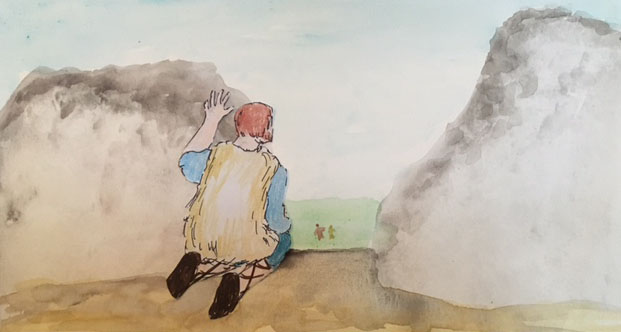
         We are preparing our horses for the day’s ride. The Great Rose has already tossed his saddle once and now Nic, the least horse experienced of the three of us has taken on the project. Nic proceeds first to be sure I am holding the rein close to the bit. Then he puts his leather shirt back on and struts it in front of The Rose. With the scent of leather on himself he picks up the saddle so the horse may see it as he prepares to lay it on the horse’s back. The boy cautiously steps back. Apparently The Rose has no objection to the saddle now, so the boy comes up and fastens the straps with a braid of leather both front and back. Even a rearing horse can’t loose the saddle. We all hope for no more rearing horse. Nic may be a horse owner but he’s hardly a rider. As for Umber and me I use only a rein and a girth strap, so Nic doesn’t have to pay for another saddle. I haul myself unto Umber.

         Nic’s plan is to mount by standing on the gate rail, explaining that Calvary soldiers are taught to vault into the saddle. But he acknowledges he has had no training in that – yet.

         We start down the road like two heroes bound for adventure. I think it’s The Rose who’s setting the pace.  It’s a slow walk, probably good for balancing an upright human, stiffly perched on a strange new saddle. Nic knows I’m ready to jump in and offer a riding lesson so he provokes a talking point on another subject.

         “So tell me about that forbidden fruit in the Garden, Lazarus.”

         “Yea, last night it bored you right into snoring.”

         “I forgot what you said the sin was. You said it isn’t disobedience after-all but what is it? Oh, never mind, I think I know. Original Sin is sex, is it not?”

         “Nic, if I’d said that you’d have laid awake all night with your mind wandering. You know that notion of Original Sin is one of those inventions that comes with reading epistles with a punitive eye. It has no grounding in God’s love. I mean what kind of world would we live in if sex were a sin?”

         “A very chaste one, I would suppose, wouldn’t you think that Lazarus?”

         “A very bleak one, with either all sinners, or no children.”

         “Given the choice, I guess I’d prefer a world full of both sinners and children.”

(Come again tomorrow)

Post #11.7, Tuesday, August 18, 2020

Historical setting: 563 C.E., a stable in La Coruña

The stable boy arrives with the rising sun this morning and shows us things about feeding these horses.  The gray is a bit picky about the proper distribution of oats and my horse just takes whatever is in the trough. Umber trusts me to get it right. The Rose is questioning. Nic understands the boy’s barbarian gothic so it is Nic who receives the instruction, as it should be.

         As Nic puts on his leather to keep the iron shirt from his skin the boy has a new thought. He brings out a leather saddle and sells it to Nic for some coins. It’s well padded for the horse’s back and has a seat for a man on the topside, with four horns posted – two in front of the rider and two in back to steady any Roman soldier who might be using a weapon. Nic is very pleased that The Rose will have some leather protecting him from the iron shirt as well.

         The boy throws the saddle onto the back of The Rose but immediately the horse rears tossing the child aside as the saddle slides off down his back. I take hold of the horse’s rein near the bit and he accepts my calming pats as Nic gathers the child to his feet. But The Rose is not without empathy.  He takes notice of the boy, and also of Nic’s gentle nature toward the child. Then Nic turns his attention back to the horse.

         I suggest Nic show him who is in charge. My thought and The Rose’s instinct would be that the horse will receive a brutal reprimand. So Nic’s tone is scolding as he picks up the saddle though I’m not sure if his cursing is toward The Rose or for me. I just assume Nic will toss the saddle back onto the horse and let the mighty Rose know a horse has no say in this.  But that is neither the way of Nic, nor the way of The Rose.

         Nic lays the saddle in the straw where the horse can see it and investigate this strange new thing. Now Nic removes his chain shirt, revealing his own leather gambeson, then he removes this leather padding he wears and lays it in the straw next to the saddle. The Rose takes notice.

         What is this strange dialogue between man and horse? Do neither of them know of the traditions of master and beast?

(Come again tomorrow)

Post #11.6, Thursday, August 13, 2020

Historical setting: 563 C.E., on a beach in La Coruña

         We walk the horses back to curry them and bed them down for the night.  We’re told that Nic’s horse is named “The Rose” because the dapple looks like dew on rose petals, and mine is “Umber” because it is brown.

         Nic is as excited as a child with a new horse of his own. He really doesn’t want to leave the stable so here we are spreading our cloaks in the straw. Now the horses must think humans have strange murmurs into the night.

         Nic starts the chatter, “So what is the heresy that threatens the lands of Iberia and called you here to rescue them by delivering the Gospel of John?”

           “Don’t worry Nic. I was just yammering on. Goodnight.”

         “How can I sleep when you started talking about a deadly heresy and you don’t give me a clue how to stay safe from it? What is the mortal hazard of mysticism?”

          “It’s not mysticism that makes the Gnosticism of the Manichean heresies like Priscillianism dangerous; it’s the problem of denying the goodness of Creation.  Beyond believing in the spiritual nature of God they were taught that the whole Creation is not Holy. They spread a lie that the things of earth are not the work of God, but are of an evil power. This heresy longs for the Spirit yet denies the sacred nature of earth and sky and trees and all the creatures of the earth, ignoring all the signs of beauty that draw me and you into our thanksgivings so easily.”

         Again the wisdom is in Nic’s simple logic. “If the Gnostic is attuned to the Holy Spirit would she not hear the Creator God speaking ‘it is good’ at the end of each day of Creation in Genesis?”

         “This particular cult didn’t even acknowledge Genesis as a part of the bible. They simply denied the goodness.” [Footnote]

         “Whatever would draw someone to that?”

         “You know, Nic, there are two Creation stories in Genesis. The second one has Eve and Adam eating from the tree of Knowledge of Good and Evil.”

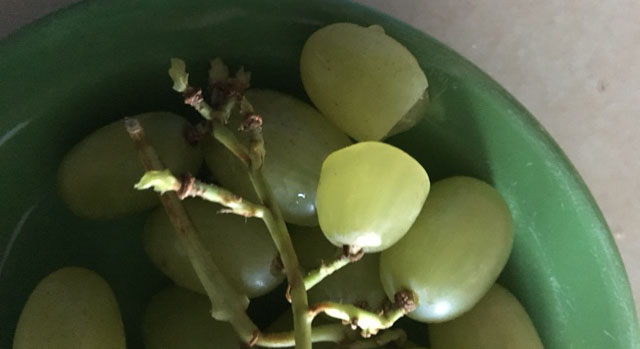
         “I know. They erred by disobeying and eating forbidden fruit.”

         “But Nic, what if the error were not so much the disobedience but was in the fruit itself? What if things went wrong when humankind started making judgments based on this stolen gnosis of good and evil which they took from God when they stole the fruit?”

         Nic is already snoring.  “Goodnight Nic.”

(Continues Tuesday, August 18)

[Footnote]

These doctrines [Priscillianism] could be harmonized with the teaching of Scripture only by a complex system of exegesis, rejecting conventional interpretations and relying on personal inspiration. The Priscillians respected most of the Old Testament but rejected the Creation story. They believed that several of the apocryphal Scriptures were genuine and inspired. Because the Priscillians believe that matter and nature were evil, they became ascetics and fasted on Sundays and Christmas Day. https://en.wikipedia.org/wiki/Priscillianism#Writings_and_rediscovery 

Retrieved September 20, 2019.

Post #11.5, Wednesday, August 12, 2020

Historical setting: 563 C.E., maybe, a beach in La Coruña

Just now there is a rhythm of hoofs, galloping, pounding as though it were coming up from under the sand! There in the distance on the edge of the water are four horses at full gallop. Nic and I step back as they go right by us. Two of the horses have riders and the other two are led but seem to be fighting lead-lines made for tamer footings and a slower pace. They slow to trot after they pass, then turn back to this place. A young woman slides off the dapple gelding in the lead and her great and glowing smile assures us that with the appropriate exchange of coins we, too, may gallop this seashore.

         I suggest we walk the horses a bit to cool them as we talk this over. The boy who rode away on the sag-backed mare slides down from one of the bays, and it is clear we were not delivered the gentle ox Nic requested. The boy hands the lead of one of the horses to Nic, and he doesn’t seem the least bit skittish – neither Nic nor the horse seems skittish. But the huge dapple-gray senses Nic’s apprehensions and arches his neck and rolls his eyes, stepping sideways to get a good look at this man who is so kind and yet awkward in his horsey greetings. The young woman tightens her hold on the gray’s lead, and he pulls back clearly disproving of her defiant hold. She offers me the choice of another fine bay or this feisty gray for our cooling down walk around. I choose the gray. Maybe I’m just strutting my feathers for the girl – it’s an instinct or a bad habit. But I went straight for the challenge.

         It’s a beautiful horse, and Nic is very aware of this and believes that I’m choosing this one for the purchase. But Nic is the one who is buying the horses. It’s his money. He should have the finest of the two horses we choose; so for safety sake I suggest we stick with two of the brown ones. He invites me, then, to pick the brown one I want and I choose one of a good spirit, but a bit less stately than the more elder and gentle bay Nic is walking. I thought Nic would make the safest choice and take the most gentle bay for himself; but the deal made, we had the brown horse I chose for me, and the feisty dapple gray for him.

(Continues Tomorrow)

Post #11.4, Tuesday, August 11, 2020

Historical setting: 563 C.E., maybe, a beach in La Coruña

We‘ve found a stick to mark the sandy beach with a timeline of history while we are waiting here at La Coruña to look at horses. 

         “Laz, obviously a single timeline fails us. You’ve added all these branches for so many philosophies. But what if history comes at us not aligned like an army of ants moving evenly in a single direction, but more like waves of sea? What if events and understandings rise and sink in importance like swells on the ocean? One appears essential, then another even greater rises in another place, only to sink back into the churning current; or maybe it all dissolves into the great smooth calm.”

         “Yes, that does seem the more likely pattern. I’ll just scratch out our useless timeline with all these specific years.” 

          “Well, I thought it might help us clarify your strange memory problem. But now Laz, I’m more curious about this budding heresy starting when all varieties of mysticisms were rising to the surface one on the next like waves on the sea.” He interrupts my breath to answer. “Wait don’t tell me, Laz; let me guess. This heresy of mysticism started when people began noticing the invisible nature of Spirit so the old idea of believing only in tangible things and things seen becomes the anathema. I mean, what would be more heretical than not noticing the invisible nature of God? I guessed right, didn’t I Brother Lazarus? Once people learned to be mystical, denying the invisible became everyone else’s heresy!”

          “Oh that you were right, my friend.” Dear God, thank you for the company of this strange old soldier of simple perspective. Amen. “But if believing only in the material nature could be considered heresy everyone would be a heretic at some time in every life.  We all so easily believe that the only reality is visible and tangible. It’s a normal human perception.”

         Nic’s imagination keeps turning. “It would be so fine if you and I were the bishops declaring the heresies. Then all Creation, even Jesus would be the physical sign for the spiritual reality. And anyone who doesn’t think the Heavens and the Earth and all Creation and every creature living is actually Holy Spirit is anathema!”        

         “Sure Nic. Write your ideas in the sands that change; just don’t carve it in stone, or write a creed of it because all life ever grows new. Ideas come and go, and flatten and rise like dunes in the desert.”

         “… or waves on the sea.”

(Continues tomorrow)

Post #11.3, Thursday, August 6, 2020

Historical setting: 563 C.E., Remembering 452 C.E. Hispania

“Nic, I should tell you about this land where we are. This dot on our map of sand is the location for the Bishop’s see of Bracara Augusta. I was called to bring the Gospel of John by the Suebi Christians, who were in need because there was a deep and relentless root of heresy gnawing and sickening the Christian faith here.”

          “I’ll bet it was the heresy that says Jesus was a human person of flesh and blood and pain and joy.” Nic assumes it was our own heresy named after Arius.

          “No, I’m not talking about a heresy against substance of Trinity. Here it was called Priscillianism. It is a mindset that separates people from the love of life itself; those stricken are lost from noticing the love of the Creator who yearns for us to live and to love one another. This was an ancient and deadly heresy of extreme sacrifice. And like a plague it keeps returning.”

         “Was it grounded in a Gospel teaching?” Nic asks.

         “Not in the orthodox list of gospels we use. It was in some of the early gospels that were hidden away after someone with wisdom enough argued against it.”

         Now Nic takes the stick and draws a long line across the sand. He says, “This is the line of your lifetime; at one end you were born, and the other end is now.”

          This is the test that will surely expose my scrambled mind, not to mention the strange circumstance of my life that he already considers is only the product of a scrambled mind. So I choose to avoid the problem. 

         “For our purposes, Nic, let us rename this the timeline of Christian History.”

         I start by measuring it off into its, what is it, four or is it five centuries? Then I add ancient emperors hoping that either my memory is immediately returned or that Nic jumps in to mark the ‘now’ of it all and saves revealing my loss of memory of recent years. I go down to “day 1” the birth of Jesus (and of me) and I start adding branch-lines, above and below the line: one to show the rise of mysticism among Jews; and there are other branches for mysticism among pagan worshipers like the Greeks and the Persians. Nic seems not particularly interested in this detail but it shows an amazing synchronicity in the rise of mysticism. All these added branches converge as mysticism.

(Continues Tuesday, August 11)

Post #11.2, Wednesday, August 5, 2020

Historical setting: A Dark Age in La Coruña

The public stable is just where I supposed it. Nic assumed my memory had not failed.

         “We will need two sturdy mounts.”

         The dark-eyed child caring for the horse seems vacant. Perhaps he’s not used to the vernacular. I know this part of Hispania was recently overtaken by Suebi people from far north of Gaul. Of course, when I was here before those who didn’t use the vernacular were using the Suebi language. My memory does serve. I remember enough of that barbaric tongue to ask for horses. But still the youth seems vague. Nic steps forward and speaks to him in the language of the Goths – Nic’s own tribe. The boy understands and explains they have one horse, and it is only let for a day at a time. Two coins to take it, and one coin is returned when the horse is back. Gentle, she is, though she seems old, and probably a bit too worn for hauling the weight of the two of us.

         Nic asks me why we need a horse at all.  We are both fit for distances walking, and besides Nic says he isn’t accustomed to horses. He’s been at the oars all these years, and before that oxen were more common in his childhood village.

         “Nic, this is a land of villas. We won’t find churches and monasteries spread by a day’s walk for travelers. But stables are available everywhere. Horses are most common here.”

         “Then,” Nic uses his edge in language to tease, “I will ask the boy for the biggest, wildest horse for you and something closer to the earth for me, maybe wide and brown resembling an ox.”

         “Sure, Nic. There is this one gentle horse here, though she may be a bit frail for all of you and your iron shirt too. Ask him how we will find the one who raises horses.”

         Nic speaks to the boy again. The boy affirms, then mounts this elder mare and rides away.

         Nic explains, “He told us to wait; he will fetch the horses for us to choose and will meet us on the beach before sunset.”

         The beach is like huge blank tablet waiting to be marked with sturdy stick. This square is Hispania. I mark it with a dot for Bracara Augusta to gather perspective on the opened ends of our wandering.

         (Continues tomorrow)

Post #11.1, Tuesday, August 4, 2020

Historical setting: Maybe 6th century, off the coast of Galleacia

Maybe Nic has the same worry. What if we land here in La Coruña and I still have no memory of place or time. And all I know is I’m looking for a wife with yellow hair who might be waiting for me somewhere.

Watching the coastline, preparing for the landing I ponder this worry and harbor this fear. Relieved now, I know I’ve seen this Roman lighthouse before. I know I have a memory at least of this. Maybe I’m only missing the year. What if I’ve lost my sense of century? Nic has no idea of this possibility of vagueness. He’s testing me to see if my mind is still scrambled and he asks me if I know what day it is.

“It is August 4.” He accepts the easy answer. But I still wonder which August 4? 

My worry goes unspoken.  All he is asking me is to recite a numbered day and month named after a Caesar. He has no thought that it’s always been human imagination that numbers the sun’s risings and settings and measures them into distributions of sevens to make weeks. Weeks are an odd commodity of mysterious completeness — odd because weeks are contrived by ten-fingered, ten-toed humankinds, with no sevens at all in our digits to guide the count. Seven is the Godly number of completion – the perfect. You can’t count to seven on fingers, toes or even on a cube with six sides of dots for tossing, so we expect our numbering of days into weeks must be mystical, beyond human ability to understand. We place our Sabbath aside for God on the uncountable rest from work. I guess once it was noticed that the moon patterns were chaotic and the cycles of life sporadic, counting weeks into months is best kept mysteriously unpredictable on charts drawn up by ancient emperors who declare the “is” of knowledge without even a fact.

Now Nic tests me on the current of time. We both hope I have clarity. Yet I know if I can answer his quiz it will only be because I’ve been paying attention to recent things, and still I’ve noticed time has gone by me in the rotting of the boats, the wearing of the roads. Is the emperor still Justinian, who is newly failed at restoring Rome?

We are both hoping I have some idea of where to go and what to do when we land.

(Come again tomorrow)

Post #10.14, Thursday, July 30, 2020

Historical setting: 563 CE, in sight of Iberia

         Nic asks, “So which version of God assigned me to be a patron to a scrambled minded Jew? I wonder. Am I stuck with you because God teaches us by using fierce and horrific punishments for all my innocent years of listening to a heretic priest, or are you supposed to be some kind of gift of a loving God?”

         “What do you think Nic?”

         Again, he answers only with his intense stare. In his mind he still searches my tattered head for horns, and what we both see of the other now are the scars. Healing as we both are, our scars will always speak of our vulnerabilities but maybe it won’t always be a loss that is measured in absent horns or traded helmet.

         Now he answers with his words, “I know what I wish it were, but if we are wrong, this hot, calm sea is only the gateway to Hell.”

         Nic already knows it. I don’t need to speak it in words.  The old priest planted it deep in his heart. If I were to say it, it would only be so we both know it was spoken.

         “Nic, we both know it already don’t we?”

         “You know, Brother Lazarus, it is so much easier to jump in the soldier line and be the best of the best in the win, or die. But the Jesus unto life rules are so hard: love God, love the stranger, love the neighbor, love yourself, love your enemy … Its nearly impossible, and at the same time it’s also annoyingly insignificant in the eyes of other humankinds. There’s not even a plume of glory to hold onto, just that one ravely strand of love, the frayed thread, the remnant that is connecting me to … to what, Lazarus? To a needy Jew?”

         “Yea, that and the whole universe and all the people in it, and to God and to the love of God… I would suppose, though I myself have only seen a few hundred years of healing and the love.”

         The rising west wind filled the sails and brings relief from the infernal stillness but it riles the sea. We cut sharp and fast through the wave crests here with relentless rises and falls pitching our craft long and hard, until even the most seasoned of sailors are heaving and retching over the sides.

         “No one lands in Hispania with a full belly.”  Yes, I do have memory of coming this way before.

(Story continues Tuesday, August 4, 2020)

Post #10.13, Wednesday, July 29, 2020

Historical setting: 563 CE, on the Bay of Contabria (Biscay)

         Nic asks me, “Did you ever hear the poem about God, like the good shepherd who leads us beside the still waters and restores thirsty souls?”

         “Yes, of course!  That’s a Psalm! And you know that also?”

         “Yes, Brother Lazarus, I learned it as a child.  There is a very strange verse in that poem that makes no sense unless you are in the middle of a war, and also, if you happen to be loosing that war. It goes, ‘A table is set before me in the presence of my enemies’. I was thinking it is about the wolves and the lambs eating grass together.”

         Dear God thank you. Amen. I’m so glad he has found us a tiny piece of common ground, “Nic, I too know that poem! But how is it that you learned it in your childhood, amid so much illiterate encouragement to forget the ancient epic and even the metaphor?”

         “Lazarus, it was the elder priest of our tribe who taught me so many things.

         “In the war where our tribe lost to the Franks my father was killed, but also our chieftain was killed so the rule of the tribe fell to our Christian priest.  I was the infant son of the last war hero – you know, the one last hope for our tribe — the remnant. For all the years of my childhood which were the rest of years of the life of that old priest, I was taught to read and to practice with the inks. He taught me things he recalled of the bible, though our tribe owned no book except for the pages he himself remembered and then wrote down.  When that old man passed away our tribe was assigned a right and proper orthodox priest who promptly discarded ‘heresy’ and the ‘scribbles of our heathen priest.’ And I was told all those things I had once learned as bible stories of the Old Testament were only there to foretell of the Christ; they were not to be taken as worthy teachings in their own right. But I couldn’t forget some things.”

         Thank you God, for holding tight to our thread, for giving us a remnant of your truth. Amen.

         I don’t want to taunt Nic with my centuries of observations. It could only speak to him of my scrambled mind. But I too have seen divergent Christianities colliding in these Roman lands.

(Continued Tomorrow)