#52.6, Thurs., Jan. 11, 2024

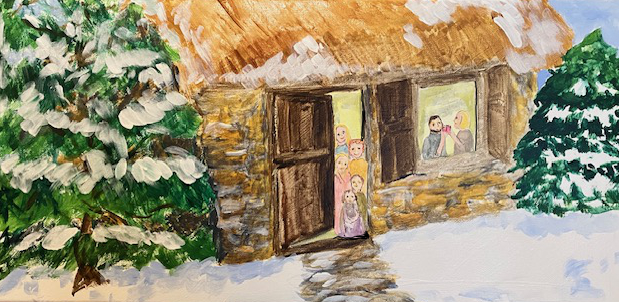
Historical Setting, 626 C.E. The farm in the Vosges

         Ana is telling me of the criticism Brandell heard from the Church. “It isn’t the Pagan root the Church authority was concerned about.” She tells me. “It was the Jewish root. They told Brandell his creative whims are the devil’s work because his newest song put a Jewish grandpapa in a favorable light.”

         Oh, now I understand, this is not about some poorly worded phrase in a little song for a Pagan celebration; this is a very deep and personal criticism of our own heritage.

I ask Ana, “So he made up a song about a Jewish grandpapa?”

“Apparently, he thought of it and imagined your father dining with Jesus, as a message for the peasants to celebrate that God loves all people. Brandell was thinking you, especially, would like his song. But the Church authority said you, especially, would be angry with him for it. That was the hardest part of the criticism for Brandell to hear. That’s why it is you who needs to talk with him.”

He is still sitting here alone with his harp and sorrowful discord is dripping from his fingertips. The music is morose.

“Brandell, your mother said you have a new song and it is very popular with the commoners.”

         He puts his harp aside when he sees me waiting to hear his song.

“Papa, I have to tell you what I’ve done. It seems to be a sin. The Brother who teaches Doctrine at Luxeuil said the devil is using my songs to set hellfires on earth.”

         “That is a terrible thing for him to say.”

         “But it might be true, Papa. And I have to atone for it. I have to tell you what I’ve done and please, believe me, I meant no harm by it.”

         “What is it, Brandell?”

“The song the people like and the Church has banned is about my grandpapa.”

         “By ‘grandpapa’ do you mean any grandpapa, or particularly yours?”

         “The one that is named in the bible ‘Simon the leper.’  In the song I said he was a ‘Pharisee, fine’. And that he was an ‘obedient Jew.’ The Church authority thought I was making a Jew sound like a good thing to be, and also that I was promoting that Lazarus rumor about you, Papa, and he said that you would be angry when you heard my song. I didn’t mean to say anything wrong, Papa. I just hope you aren’t angry with me?”

(Continues Tuesday, January 16, 2024)
#52.5, Weds., Jan. 10, 2024

Historical Setting, 626 C.E. The cottage of Ana and Laz

         Brandell’s newest song is raising the ire of the Church over issues of doctrine and of course politics. Brandell asked Gabe if this was a serious charge. Gabe said to go immediately to the authority on Church Doctrine. Now Brandell’s returned smothered in a dark shadow completely unbefitting his cheerful nature. He’s come to our cottage to be alone. Even his music is discordant and plodding. Ana sat by him listening then they talked quietly. Now Ana wants me to come outside with her so she can tell me what this is about. She thinks I need to talk with him. 

         I can’t imagine what could be in poetry and nonsense words that could please whole crowds of peasants and yet be a pariah among Christian leaders. At least I can’t imagine such a song from Brandell.  He is never one to set people blushing or hating or plot rebellions against the Church. His music just brings people together dancing.

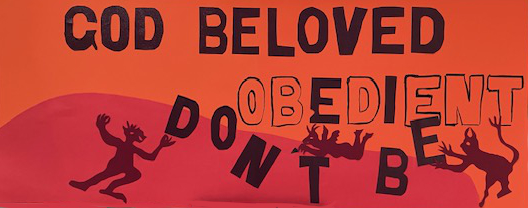
         Ana tells me, the Church authority told Brandell his newest song was “wrought by the devil.”

         I would think Ana would just dismiss this worry as she so often does when she hears “devil” worries.  As a pagan-trained physician she often hears of woes blamed on some contrivance of a devil character in order to make an excuse for an illness which has a perfectly down to earth cause and an earthly cure. Devil tales don’t usually rile her.  But now, she wants me to speak with Brandell and put him at ease.

         What can I say?  I don’t know a devil. I was raised Jewish, and when I was Brandell’s age Jesus was my best friend and we were both always following God and the Jewish traditions of prayer. In Jewish literature the devil is only a literary device used in some heady debate. As in the gospels the devil tempts Jesus – it isn’t magic, it is metaphor. There is no actual spiritual force at play to be managed by Church magic.

         I just figure Christian devil ideas are embellishments drawn from pagan notions to appease the superstitions of gentiles when Christianity was just starting out. Christianity is filled with Pagan stuff — Persian, Roman and Greek all sorts.             

         “So how could the Church blame Brandell for devils?” I ask Ana.

         “Apparently, Brandell sang a new song at the Solstice party…”

         “Well, there you have it, a Solstice party is surely bedeviled in the view of the Church. The party itself has a Pagan root.”

(Continues tomorrow)


#52.4, Tues., Jan. 9, 2024

Historical Setting, 626 C.E. A creek valley in the Vosges

         Now it’s our youngest son, Brandell, who is first in my prayers. 

         Thank you God, for this beautiful youth, strong and creative, always gentle.

         He loves the arts – anything with brightness and beauty takes his attention – and especially, he loves music. Making up songs and practicing his harp is more important to him than sleep or food.

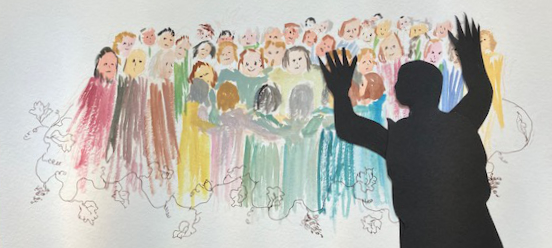
         These days when he brings out his harp people gather to listen. Crowds show up just to hear him unravel some long saga or to sing his newest poetry. His music has a fervor that drives people to sing with him or to join in a dance. They dance all night and when everyone is in exhausted bliss he changes to softness and the crowd of people sing with him slowly swaying together as an evening wave on a calming sea would lap at the shoreline. 

         What he seems to value most with his gift is not simply the appreciation from cheering throngs, he really likes to stir others to take part in the music. He’s always hoping to hear the people clapping with a rhythm or singing the chorus and he loves having other musicians with him for the music.

         Brandell uses his harp for all sorts of sounds. He sometimes taps a rhythm on the resonator gourd, or plucks a string perfectly centered to ring it as a bell, so it isn’t any wonder he has a student.  Brandell considers teaching a very great honor and a gift that the backup musician has asked for lessons. He is always thinking of challenges and games to lull his student into longer hours of practice. And when this fellow has accomplished any little milestone, he tells it to his audience at a performance and the audience cheers the novice as voraciously has they cheer Brandell himself. Simply said, Brandell is the kind of person who just shows up and suddenly there is joy.

         In this season after Solstice, the frozen fields set peasants longing for celebrations with music and dancing so it’s Brandell’s busiest season.

         At least until today. After his performance he was called to Luxeuil to meet with a Church authority. Gabe was aware that one of the new songs he sang at the solstice party was raising the ire of Church authorities and they summonsed him to an accounting of this wayward lyric. 

(Continues Tomorrow)

#52.3, Thurs., Jan. 4, 2024

Historical Setting, 626 C.E. A creek valley in the Vosges

         Haberd is very definitely the head of the household.  He and his wife have taken on the major tasks of the family farm with the others of us helping out as farm hands when needed. A larger table is needed now up at the old cottage, because that is where we all still share the feasts and ale, as family.  Brandell and Haberd tell our old stories now with funny punchlines.

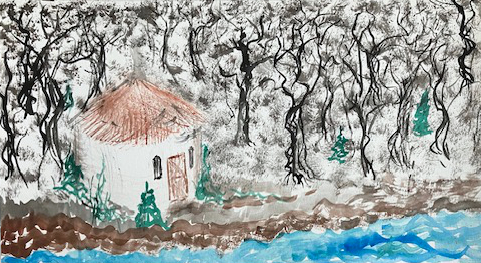
         Ana and I have a small cottage of daub and wattle, with a round of thatch for a roof. It is Creekside in the valley so Ana doesn’t have to end every jaunt to visit the sick by climbing the farm hill. Hannah is keeping the healing gardens. She’s the one called on most often to travel off for a midwife’s duty or an outbreak of illness in a distant village.

          So, what of the youngest daughter?  Layla makes her friends with the castle farmers of Metz. Dear God, be with her. She seems to seek out tales of adventures told and told again by those who have been hunters all their generations.

         But, Luxeuil has changed with the times. Gabe, as the keeper of birds, knows all that happens among the order. After Father Columbanus was set free from prison awaiting execution, he agreed to leave Gaul by ship and return to his native island. He could only take those followers who had first come with him from Ireland. They traveled on to Nevers, then on the Loire to Nantes where his ship was ready to carry him off to his native island, but like Jonah, when setting out by ship to go to the wrong place, the captain was frightened, believing that this was against God’s will so he refused to take the Father into exile. [Footnote]

         In the meantime, the Father’s nemesis, Queen Brunhilde, who wanted him dead in the most brutal Merovingian style, was herself, brutally executed. The change in rulers allowed the Father to renew his mission work in Gaul. He came back to bid farewell to his followers, then continued setting several more communities to life dotting Gaul with Celtic monasteries.

         When all the remembrances are sorted out for the hagiographers to write everything on timeless vellum, it will be known that Father Columbanus continued into the mountain wilderness across the Alps to Bobbio where he established yet another community of devoted Christians nearer to Rome. And it was in Bobbio that he passed away, only a decade ago.

[Footnote]The source from which most other sources are drawn is the Hagiography by the later Bobbio monk, Jonas. This blogger references Munro, Dana Carlton, editor and translator Translations and Reprints from The Original Sources of European History – Life of St. Columban by Jonas.

(Continues Tuesday, January 9,2024)

#52.2, Weds. Jan. 3, 2024

Historical Setting, 626 C.E. The farm in the Vosges

          It was just a little gift that Greg and Gaillard brought with them from their last journey to Constantinople.

         They came leading a caravan with horses and some mercenaries as guards and also with pack animals laden with all varieties of riches. The treasures are being dispersed while Greg and Gaillard are staying in the guest quarters at Luxeuil. But this time, this one gift for our family is very special.

         We are all in awe of this precious little treasure Greg chose to buy for us. It is probably something more expensive than would be an appropriate gift for any simple peasant’s family, but for us it has a particular significance. It is a little box that looks like a personal reliquary. It isn’t gold encrusted or bejeweled, it is simply a finely made wooden box with decorative carvings. Inside the box isn’t a saint’s actual hair or teeth or bones. The box is really a frame for a very small painting, very delicate and exquisitely prepared. It has particularly vibrant colors, with smoothed and finished shades for the flesh tones. The faces and hands of the people seem nearly touchable, as though, if you kissed them, they would turn and smile at you. They tell us this is a style of icon, painted and sold in Constantinople. This one is an imaginative perception of a bible story which is why Greg choose to bring this to us. Obviously one who was there would have seen it very differently, but this shows Lazarus being raised from death by Jesus.

This little artwork brings everyone to our door to see a story with their own eyes. I need to nurture the clarity: Jesus wept. God loves. We live.

 Layla had her husband come with her and they took a Sunday rest to come over this way and see it and hear the story once again. This was the first visit from Layla and her husband since she left. And they are already expecting their first child. Ana is delighted.

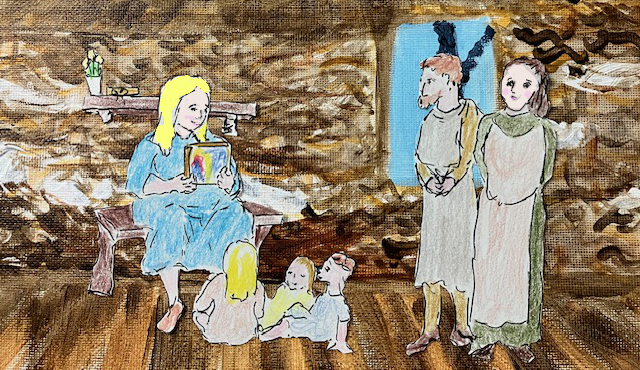
Ana tells the bible story from John 11 to Haberd’s children and she will be so happy to have more grandchildren at her feet when she tells these stories over and over again.

Hannah wants to take the painting with her when she goes calling on those who are sick and have lost hope, because she thinks it is a story that would bring comfort. Others argue we have heaven for that.

(Continues Tuesday, January 9, 2024)

#52.1, Tues., Jan. 2, 2024

Historical Setting, 626 C.E. The farm in the Vosges

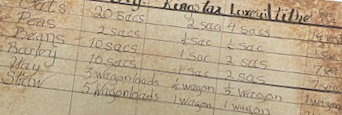
          My prayers throughout this decade and six years have mostly been gratitude. We’ve had no more eulogies for our children, only bits of grieving for the passages of youth. I was last keeping this journal in December of 610. These years have brought subtle transitions. In that span of time my inks and papyrus were spent on tallies of crops and critters and tithes for God’s earthly establishment and for the land itself. Land owners have divided lands and neighbors have set out new fields. Our farm has boundaries and definitive edges now.

Routine gives creativity free play or maybe simply fills the hours.  I see my children finding it both ways. Haberd finds a peace in farm chores always knowing what he is doing next, and Brandell uses routine chores for dreaming and scheming and rhyming. 

Now our own grand babies fill the loft of our old cottage on the hill.

         Ana, whose sunshine hair is mingled with silver threads is a little frustrated that I always look the same. Her always blue eyes still shine from a face with her bright smiles and her eternal empathy — a few crinkles of time enhance the smiling of her eyes, so no matter what her mood we still see her deep joy echoed in the lines of lifetime. Her beauty is not just some passing childish whim, it is woven into who she is.

But you know me, as long as I live, I’m always the same changeless age. Maybe it’s due to my strange gift of healing, and life and life again, or maybe everyone, when they reach a certain age just lets the olding stages of their lives go by unmentioned.

         So, what of our children through all these years?  Our oldest, the twins, Greg and Gabe, are still all about changing the world in their own ways. Gabe is the bird keeper at Luxeuil and Greg is yet wandering the lands to the East with Gaillard. Whenever they learn of wars and politics that could change everything here, they go out as messengers. Once a few years ago, and now, again, they’ve come back to stay a while in Gaul.

          Gaillard’s family has released him from his obligation for an heir so now only family titles are broken by his bond with Greg. Unbroken is his family’s love. I commend the nobility of Metz for the wisdom to see love as a priority. Thank you, God.

(Continues tomorrow)


#51.12, Thurs., Dec. 28, 2023

Historical Setting, 610 C.E. The cottage in the Vosges

         It is the season for epiphanies. How will we see all things new in the new light rising?  What will become of all that we’ve nurtured and things we still cherish? How will we set our sight on new hopes for the goodness, always walking toward the healing place? What will draw us close, and when will we know to travel on? 

         Dear God, we miss the random forests that hid both hunter and beast, the summer fields spread out wide meeting the need for grain, now parceled and owned. Thank you for constant and present love regardless of how we seem lost and always wandering. Amen.

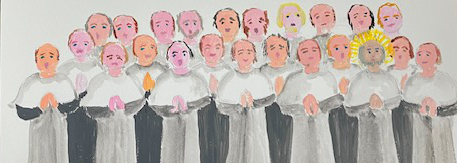
         The communities of monks and nuns saw their founders leave them, and yet they go on.

         In Metz, Bishop Algulif is gone now. The house of Waldalanus sees their hope for an heir ride off into the unknown places in the east, exiled with his lover. Greg and Gaillard leave here with light packs. They will go first to the tribes to whom we gave our charity and they will gather supplies as they go on.

         Maybe it is the golden age that has passed, or maybe the golden age is yet to come. History comes gifted in golden ribbons, wrapping up the remembrances of the last, lost golden age. I’ve always heard the ancient stories, the history of God’s people leading them forever to the brilliance — the shinning temple of Solomon, before the people were captured by an empire in the East strewing the temple to shambles and dispersing the nation. Then it would rise again and they would build a second temple, then… for those who live in mortal generations there is always a longing and the grieving for the golden age that once defined us.

         Now I see the evening skies, ruby streaks across the clouds and the great golden orb brighter than human eyes dare see, and every hill and stalk of grain leftover in the field, every stone, every road is golden for a time, a moment, an hour, a golden age until the long shadows after the gold become the night. And we know that God uses this vesper poetry of Creation to speak of the pattern of it, the coming and going of each golden age beyond our mortal view. We are always promised a new morning rising with the golden eve always behind us. Over and over again, not just once.

(Continues, Tuesday, January 2, 2024)

#51.11, Weds., Dec. 27, 2023

Historical Setting, 610 C.E. The cottage in the Vosges

         Safe at home calls for the great exhale — the unwinding of the wandering and the dare — the hugs and soft kisses — the beverage — the toast — the prayers of thanks — the counting of each person safe. We are all here now, Gaillard and Greg stayed the night at the cottage are still here. Gabe and the Father are safe in Luxeuil. Our stories are spun then told and told again with more finesse at each telling how four of us and a helpful farmer released the prisoners, and brought the abbott safely home. No blood was shed and the violence in the form of spreading fearful rumors — the tales of the demons in the woods — were already un-truths just lying in wait to be believed.

         But the bird that passed over my head as I was going home brought news. This morning the abbott announced he is leaving. A bird’s wing couldn’t bring the tome to explain the details, so Greg and I decided to ride back to Luxeuil this morning and learn more of this. Gaillard loaned me his horse, as he would like to avoid any chance of meeting anyone visiting there from Metz. He will be waiting for Greg here at the cottage.

         It seems the Father fears the new king and his great grandmother and the bishops council are all plotting against him. Staying would endanger his whole community, so he will take those who are still surviving of the monks who originally came with him, and they will go back to the Celtic island. This leaves a deep sadness at Luxeuil. Gabe was not the only one of the younger monks whose offer to go along was turned down by the Father. He wants to know that Luxeuil continues to thrive. [footnote] Father Columbanus notably left his community in able hands, which was his pattern of good organization throughout his lifetime. 

         The great and famous Father shared with so many of us, both monks and followers, his tender and humble prayers for continuing. He prayed for faith, obedience to God, gratitude, and trust that the work of Luxeuil will continue. It was no great, verbose prayer, but many private and personal prayers with each of us.  He took very little with him, but he did take several cages with birds to release so that his travels could be known back here.

[footnote] The departure of Columbanus from Luxeuil is documented in many sources, as he moved on to establish other communities in Europe, but the primary sources for the “Life of St. Columban” used here is “Translations and Reprints from The Original Sources Of European History – “Life Of St. Columban,” by Monk Jonas, edited by Dana Carlton Munro, A.M.

(Continues tomorrow)

#51.10, Tues., Dec. 26, 2023

Historical Setting, 610 C.E. Luxeuil

         The Irish farmer, who loaned his horse to the Abbot for his escape from Besançon answers the soldiers who are now requiring an explanation for the sword they’ve found here in these guest quarters we share.

          The farmer explains, “My farm is some distance from here, so I brought that with me on this pilgrimage in case of robbers. I found the sword on my farm but there was no sign of a soldier who would’ve lost it so I assume he escaped with his life. But if you do know who lost it, please take it now, and return it rightfully to its owner.”

         The soldiers take the sword. Maybe they know how it was lost—that it was once delivered to the demons. They continue down the hallway checking each room. That band of armed men only just left Luxeuil as it is time for the prayers in darkness.

         No one has slept this night, at least no one sleeps now until after matins. We notice there is an extra monk in the choir this morning, gray-haired, familiar to us all, but apparently wasn’t recognized by the soldiers. I wonder what the soldiers thought they were searching for?  Were they expecting to see the great man of God, the abbot here, seated on a throne with a halo shining around his head? Even the presence of Jesus is often overlooked by those who only know the rumors of magic and have no thought of earthly goodness.

Apparently, they searched the study where Father Columbanus was quietly reading a book. They searched each of the shelves in that room, examining every volume, but the studious monk, seated in the middle of them went unnoticed. How will this oversight by the soldiers become known beyond this place is not clear. Was it a joke on the soldiers or a miracle, or a simple fact that ignoring a person makes them invisible? [footnote] Whichever, the father responded to the threat as though the soldiers were invisible, and in turn he was also amazingly unnoticed.

         This morning the farmer leaves for his home with two horses, and I ride home with the mule wagon, alone in the morning light. The creek path is stilled and polished in white with winter. Dancing eddies of snow crystals transfigure an old reliable earthen path into a fantasy. It is the blank slate for the new earth, in case we should dare to take notice. It is the first of the lengthening days.

[footnote] This little story of the guards searching for Father Columbanus who was there all the time is told in the hagiography by Jonas the “Life of St. Columban” used here is from “Translations and Reprints from The Original Sources Of European History –edited by Dana Carlton Munro, A.M.

(Continues tomorrow)

#51.9, Thurs., Dec. 21, 2023

Historical Setting, 610 C.E. Luxeuil

         The Father is back and safely in his library study. But Father Eustasius has already prepared the Christ Mass homily when Luxeuil will have many visitors for worship. So, the vespers tonight are led by Father Eustasius.

         Greg and Gaillard left before dark and will be stopping at our cottage to let Ana and the children know the rescue of the abbot was safe and successful. Greg said they will not be returning to Metz.  At first light in the morning, I will take the mule and the wagon home and the farmer who is my cell mate here in the guest quarters will take both of his horses and start back to Besançon. Everyone at Luxeuil, even us who are guests for the night are given instruction that if it would happen that the king’s soldiers come into this place in this sacred season, we should greet them as we would any other pilgrims, exemplifying silence and solemnity. We should assume they are also here for the worship of the Christ birth.

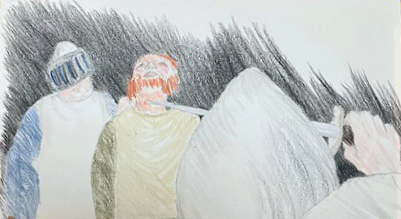
         That instruction was needed. Just as the torches are being lit in the hallways, the silence is intruded with the noise of armor and swords — fast moving soldiers — shouting orders through the halls — demanding that loyalty to the king requires the submission of the abbot. They run rough through the sacred stillness of this night opening every door, searching every cell. The Irish farmer and I are simply pretending they are silent and invisible, as they pilfer through our things here in the guest quarters. Now they find the sword the farmer carried that was taken by Greg from a guard at Besançon.

         We are pushed against the walls and soldiers have blades at our throats. The Irish farmer, who was already straining to meet the monastery rule of silence, is red faced and raging. But before he can shout I answer them in a whisper. “We are guests here, pilgrims, farmers from the outlands. We are peasants, surely not ones to carry swords. Maybe that weapon was one of your own misplaced then hidden here.”

         The soldiers examine the hilt of the sword carefully and discover it was indeed made by the same smith who provides swords for the King’s soldiers.

         Now the farmer from Besançon has gathered his clarity of mind and he also whispers to them his own peaceful explanation. They are requiring an answer from him.

(Continues, Tuesday, December 26)