#40.8, Weds., Jan. 18, 2023

Historical setting: 590 C.E. The church in the woods

         Mater Doe watches me explore this sanctuary with the same eye she watches over the birds searching seeds outside the window.

         I see this Roman statue of Diana looking very much like the goddess of the hunt our visitors mentioned. This is a deeply carved marble image, a youthful girl in a walking stride, wearing a short tunic with a bow and quiver. This seems an artist’s rendition more than an idol awaiting sacrifices. I always think the Greek and Roman deities are simply art shown as gods never present with people, off doing their own godly things.

         Mater Doe asks, “So you wish prayers to Artemis.”

         “Artemis? I see her here as the Roman Diana.”

         “Another altar to Artemis is on that wall.”

         I look at the opposite wall, and there is an altar ready as the flaming platform for a hunter’s kill. It features a collection of nature things undoubtedly honoring Mother Nature.

         My mind wanders to another time and place where an actual carving of Artemis is a goddess with many breasts – maybe one for each species of Creation.

         Mater Doe offers, “She has many names. Some just call her Mother Nature. Is that where you wish to offer your prayers?”

         “I just came to look today.”

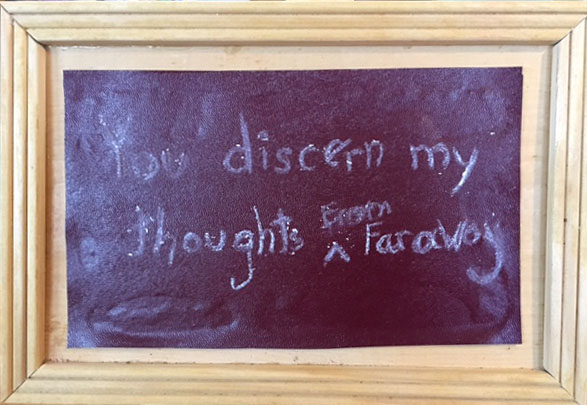
         “Take your time, Lazarus my boy, sometimes the voice of God isn’t in the winter winds, nor the flaming altar, but in the silence.”

         I choose not to shout my affirmation of Elijah’s mention of the “the sheer silence.” [I Kings 19:12] But I do notice the solitude, and my prayer is heard also in the stillness here.

         Dear God, I hear you in the silence among the many ways we know you are touching us with love too vast for the simplicity of two human breasts. Yet we have this little echo, a tiny spark of the great Creative nurture of love and we can do nothing less than create with our little human hands: we sing, we dance, we celebrate the gracious outpouring. Thank you — for life and love. Thank you.

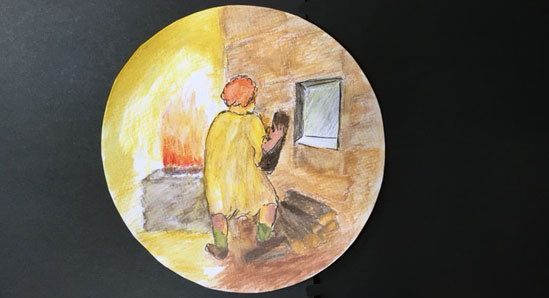
         By the time the tranquility of Spirit opens again to earth I find the sun is beaming through the windows on the west side of the church and Mater Doe has added wood to the warming fire.

         “I have to be on my way now.  But I will come again.”

(Continues tomorrow)

#40.7, Tues., Jan. 17, 2023

Historical setting: 590 C.E. The church in the woods

         I’ve found my way to a little place on the mountainside overlooking the ruin of Annegray. Here the only words the priest can hear from another human is whatever that person chooses to shout to her.  I assume she hears much more of Creation than I allow myself to hear in the milieu of everyday life with mostly people speaking to me.

         I mean to explain my visit.

         “Pastor, there were some hunters who stopped by our cottage, not more than an hour’s walk from here, and they told us they came here for the Christ Mass.”

         “Yes, lots of people came this year. I assumed our numbers would always dwindle, with the Catholic Christians below us gathering so many followers. I’m Mater Doe; when my husband was yet living many hunters came here. Still my own expectations are far less than the grace of God. I have no thought or guess as to who is the church in the Mind of God. But here I am. And so it is.”

         “And so it is.”

         “Excuse me,” She says, “I don’t hear people when they are speaking softly.”

         In a stronger voice I answer, “And so it is.”

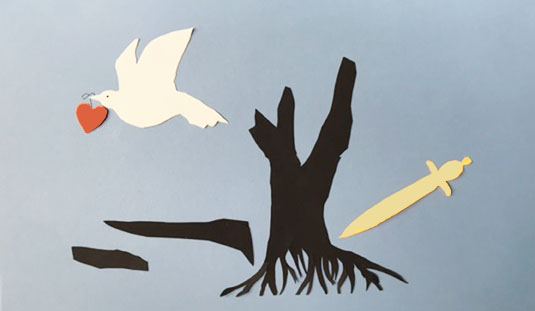
         She clearly hears the voice of the bird outside the window. She turns and looks when it stops pecking at the seeds for a moment to coo its subtle song. She throws another handful of seed to the dove.

         “The Irish Father is named for such a bird as that.  Have you met him?” I shout.

         “I have no need to visit that place. The hunters who come for blessings tell me of them.”

         “The monks will be moving soon, I hear. The King has already granted permission for Father Columbanus to gather his followers at the baths of Luxeuil; so you will be alone here.”

         “I’m really not alone.”

         “Of course, I just meant all the activity there will cease.”

         “I probably won’t miss that.”

         As I explore the niches for various gods I ask, “Are all that worship here in this time Christian? Or do the followers of these other gods also come here on their feast days?”

         “I don’t ask the why of theology of worshippers here. I don’t indoctrinate so there’s no need to pry.  Here we eat together, I say blessings, sometimes there is dancing, sometimes there is quiet prayer. Here we just worship.”

         I find a place to sit near enough that she can hear my questions when I shout.

(Continues tomorrow)

#40.6, Thurs., Jan. 12, 2023

Historical setting: 590 C.E. The church in the woods

         Horses delivered and I start home, but this little church on the hillside captures my imagination. Now I find myself picking through a hunter’s path in the thickets. It’s in disrepair, more in the style of a Roman Pagan temple than either a Christian Basilica, or a Celtic Druid fire pit. Inside, I find the priest is present – a snowy-haired elder — a woman in a ragged white alb. She is sitting, watching a winter bird through the open space in the wall. I see the bird outside the window has found the seeds on the ground, no doubt, tossed from inside this place.

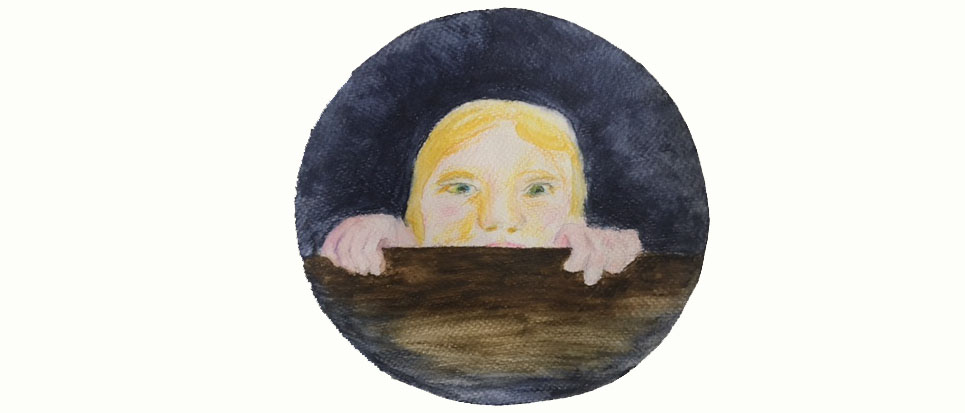
         She didn’t hear me come in.  “Pastor” I announce myself.

She can’t hear me. I speak it louder, and she is startled to find she isn’t alone.

         In an uncomfortably loud voice I introduce myself, “I am Lazarus but the Christians of the monastery call me Ezra.”

         “Lazarus” she looks right into my face. “You are Lazarus, friend of Jesus.”

         “You know the story of my namesake?”

         “I know you.”

         With her sparkling obsidian eyes she looks deeply at me. Maybe she does know me, or maybe she is a bit off. Who am I to judge?

         “You are the Christian priest here?” I assume.

         “Yes, we keep the Christian worship here and the feast.”

         She means mass, I’m sure.

         All around the smoldering altar, central in this sanctuary, are special niches for worship.  A many tiered Jerusalem cross is central, but also is statuary – Roman Gods and goddesses, little giftings of particular things of nature: an oaken burl, and some seeds and husks from trees gathered in a season of abundance. And here is a wreath carved and decorated in acorns and pinecones. I can see I have come upon something of a Ka’ba [Footnote] – a place I had known in the desert in centuries past where wanderers from all ways of knowing God, nomads, Zoroastrians, Arabs of all varieties, found a place for worship.  My thoughts go to that Arab place I saw so long ago when a Persian Empire allowed Christians and Jews to practice their religions, until Rome claimed Christian as an arm of its empire. Then we were purged, persecuted, ravaged, so I’m here now in the fringes of wilderness.

         It was the ancient Roman practice to build a Roman temple on the place of the temple of conquered subjects. So did Christians build over a Roman temple in this place, or are these icons still worshiped here?

[Footnote]Ka’ba or in English ‘the Cube’ is described by Reza Aslan in pages 2-5 of his book no god but God: The Origins, Evolution, and future of Islam (updated ed.) (2011, New York: Random House Trade Paperbacks) Blogger’s note, this book is well worth the read for an outsider’s introduction to the Islamic branch of the shared Abrahamic root.

(Continues Tuesday, January 17)

#40.5, Weds., Jan. 11, 2023

Historical setting: 590 C.E. The path back to Annegray

         Now we are discussing the possibilities that a new bishop of Rome will impose Roman rule on these outlands like Frankish Gaul. The monastic Rule of Benedict echoes Roman order and the Irish Rule has subtle distinctions that, in practice, make a big difference.

         I know this Roman kind of rule too well because so many centuries past I was a son of a Pharisee living in Bethany, a Judean settlement under the Imperial Roman rule. It was the heavy hand of empire that nailed Jesus to a cross. And now even these Christian monks are worrying over how they will be judged under an old Roman uniformity of order.

         Any measure rumored to be “perfection” is likely a human invention. First God said of all Creation “it is good.” So a hierarchy of humanity surely isn’t a God thing, even if rank and structure seem useful. God pronounced goodness but it took human minds to standardize and sort a perfection of it. It becomes a power play of one person over another.

         At Annegray now, I look up across the wooded hills, and sure enough, I see a building not quite hidden in the bare branches of winter. I ask if that is a church.

         Brother Servant affirms that it is a “barbarian church,” as he calls it. It is said to be “secular,” because it is not under a bishop or an abbot so the assigned priest is local. I ask him, maybe rhetorically, if barbarian Christians worshiping where the priest was not assigned by the strictures of the church are less than perfect Christians. “Are they flawed, being as they are, outside of the episcopal structures of Christianity?”

         “I don’t know. Father Columbanus has walked by that place and prayed only that God will sort it all out when it needs to be dealt with.”

         “See what I mean, Brother Servant?  Having a leader who looks first to God rather than speaking as God matters a lot. It matters to us, but also to other people going to a priest at that place, and yet they receive their baptisms and their spoken blessings from God even though it may seem to have no rule.”

         “You don’t know, Brother Ezra.  What if the priest there brings his followers false teachings?  I sometimes worry over the things the father leaves for God to decide.”

         Dear God, this question seems yours alone to answer. Amen.

(Continues tomorrow)


#40.4, Tues., Jan. 10, 2023

Historical setting: 590 C.E. The path back to Annegray

         As we walk the horses back we are discussing the plans for the new monastery. We’ve heard it would be a double monastery with both men and women.

         Brother Servant explains, “I’ve asked Father Columbanus about this because of my particular circumstance.” Brother Servant, it’s been noted before, is a eunuch. 

         He continues, “It’s well-known even by the Romans that men are men and women are distinctly different. But as for me, I was changed by the blade. So how will the Father decide who will live in the women’s community and who will live among the men?”

         “Brother Servant, surely you will be assigned to the men’s monastery, because you already live in a men’s community.” Of course, I can only guess.

          “But what of the one who now lives among us born as woman, but who lives as a man? We have such a monk so this isn’t just a theoretical question.”

          “Surely the father will consider everyone individually.” I feel confident that Father Columbanus won’t abandon his thoughtfulness of these monks. “I can offer this assurance because The Celtic rule begins with obedience to God, not to an abbot or bishop speaking for God. When God speaks for God, the Father can make decisions based on his own human care for his followers so he isn’t required to guess at some kind of holy judgment as though he had special knowledge.”

         The other monk gropes for clarity, but completely misses the point. “So Ezra, you think God would find the abbot’s answers contrary since the Father doesn’t speak for God?”

          “No, no, no.” How can I explain it?  “The Father’s authority doesn’t come from speaking the mind of God, but from his own love of God. He isn’t bound by old Roman ways where rule was once by human authority and authority was given only to men of proper lineage. Under that Roman rule women, children, slaves and servants and all non-Romans had a lesser place. So if one in authority intends to speak the mind of God but finds the love rule hard, he could be tempted to speak instead from the authority of traditions and old hierarchies. By pretending human authority is the same as God’s judgment, dichotomies of petty righteousness intrude and eschatological endings are punitive. But Father Columbanus, speaking only for himself, grapples with God’s love rule as a human being.

         Brother Servant fears, “What if the new Bishop of Rome doesn’t allow Father Columbanus’ rule?”

 (Continues tomorrow)

#40.3, Thurs., Jan. 5, 2023

Historical setting: 590 C.E. The path to Annegray

         On this very cold morning Brother Servant and another monk and I put the silks back on the four imperial horses and walk them back to Annegray. The ice on the creek is solid enough today even for the horses the walk over. 

         “It’s a good thing the messengers had a night to spend with Father Columbanus,” observes Brother Servant. “This envoy will be able to deliver a letter from the Irish father back to the new pope. It will help in our acceptance with the bishops to have the pope behind us.”

         My hope, “Maybe Father Columbanus will send along a scroll with the Irish rule.”

         “Why does the particular rule matter so much to you Brother Ezra?  You don’t even live by it here in your little cottage on the hill. And there is nothing in either of the rules about the proper tonsure or the correct date for Easter which seems to be the issue.”

         The other monk chimes in, “I can’t see how approving of a Rule would solve anything among the bishops.“

         “The distinctions between rules are subtle.” I defend. But when lived out the distinction is huge. Columbanus expects the required obedience to be to God, while Benedict’s rule directs the obedience to the bishop or abbot.”

         “But of course,” adds the monk “In one way or another that becomes the same thing because the one who oversees the activities of the monastery is doing so in God’s name while God is way off in heaven somewhere.”

          “Father Columbanus spends his hours in prayer begging the nearness of God and if God is present with us why would we need the father or some bishop in charge to stand in for God?” Brother Servant speaks my own mind on this and he asks,  “Is that what you were thinking Brother Ezra?”

         “Exactly, I only hope the new pope takes notice of that little nuance.”

         To change to a more agreeable topic I ask if the others have visited Luxeuil yet. “Have you heard it could be a double monastery when they are done?  With baths?”

         “Yes! I’d heard that” answers the second monk.

         “When our midwife spoke with the father he mentioned that they would have both a men’s monastery and a women’s, and I’ve seen the baths there for myself.”

         Brother Servant explains, “They are building separations and planning the divisions for everything but worship.”

 (Continues Tuesday, January 10)

#40.2, Weds., Jan. 4, 2023

Historical setting: 590 C.E. Cottage between Annegray and Luxeuil

         No sooner has the family of visitors left than here again are  monks from Annegray returning up the hill-path, this time leading four horses adorned in silk. We’ve seen this decoration on horses before. 

         “So the dead bishop of Rome sends another envoy and this time he remembered Annegray, I see.”

         “Brother Ezra, these horses bring a far better message than the death of the Bishop of Rome!” answers the Brother Servant.

          “The church of St. Peter in Rome sends word through the lands that God has appointed a new bishop as heir to St. Peter!”

         We walk the horses to the stable to bed them down for the night. We are told the Pope’s envoy will stay at the guest quarters of Annegray.

         “Though the Roman Empire fades,” I observe, “It’s so very Roman of a pope to dispatch messengers on imperial steeds. The face of Rome still shines through the Christian order.”

         “Indeed, Brother Ezra, Christians have a new papa now. He’s a Gregory who hasn’t forgotten to take all his little chicks under wide wings even here in Burgundy.”

         “Maybe, especially here,” I add. “It seems so Roman to consider the whole world near and far. In Rome they must think we are all just waiting to hear news of a new bishop rising.”

         Brother Servant catches my note of sarcasm. “Maybe you weren’t waiting Brother Ezra, but we were. We hope the new Bishop of Rome will put a rein on those troublesome bishops of Gaul.”

         The second monk adds, “as a mother hen gathers her brood under her wing…” [Luke 13:34]

         Brother Servant amends, “But a pope would be more like a father hen.”

         “A father ‘hen’? Is that even possible?  Don’t you see how this might turn, Brother? It may be only a matter of time before every monastery will be under a single Benedictine Rule.”

         “Not to worry,” says the second monk. “Pope Gregory has armies of heretics and a plague waiting at his door, and with no Roman Army left to save Rome he won’t have any time to spread rules and check on distant obedience.”

         The horses will stay for the night and the monks will stay as well, so we’ve the stable full tonight.  We put the horses’ silks aside and give them common woolen horse-blankets for the cold winter’s night. Colleen stretches the pot of porridge for these added guests.  So much hospitality makes a very thin soup.

(Continues tomorrow)

#40.1, Tues., Jan. 3, 2023

Historical setting: 590 C.E. Cottage between Annegray and Luxeuil

         Maybe they are neighbors. A family of hunters found our doorstep on their way home from somewhere they say is a church named after St. Martin said to be hidden in the woods behind the monastery. It seems legends of Christian saints left a sour taste with these neighbors even though they claim to be Christian.

         Colleen was the one of us most wanting neighbors, but now that they’ve heard her Irish twist of words they see her as a foreigner and assume she is here to object to their Pagan glint.        

          The older woman rages, “You think you are the righteous Christian who comes from far away sneering at Mother Nature and claiming only the cross of Christ can bring victory in the war between gods no one wants to fight!  Some monks from the south come with Christ but no Jesus, and some from a western island have a Jesus and a Christ but no Diana. They would all just smash our treasured gods of the forest and give us only the Christian icon of a bleeding man.  When the ancient goddess takes to the realm of the skies, they say, that proves she is evil because only witches fly.  And yet, Spirit is a god in Christian.  It makes no sense.” She abruptly concludes, “There I’ve said my piece.”

         I have to ask it, “Does the priest at the Christian church practice the veneration of the goddess Diana?”

         The visitors talk among themselves in the barbarian language of Pagan hunters. They decide to go on their way peacefully, and never to return here. This “peaceful exit” will take a little while though, because each of the children needs to be bundled back into boots and firs.

         In Ana’s room where the children have gathered Ana is in her bliss, with children all around. The whole wide-eyed brood is captivated by her stories. And now Colleen has a warm pot of gruel and biscuits ready to share, even with the scowling adults.

         The younger of the men takes me aside to ask of my variety of Christian which allows me two wives.

         “No really I have only one wife, Ana, and she is with child so..”

         “I understand, no need to tell me more, my friend.”

         “Really, Colleen is the midwife; I have only one wife.”

         “No need to apologize to me; I’m no priest. But it is a very resourceful plan.”

         “No, it’s not what you think…”

(Continues tomorrow)


#39.13, Thurs., Dec. 29, 2022

Historical setting: 589 C.E. cottage between Annegray and Luxeuil

         I can understand our visiting neighbors are not favorable to Christian Saints and foreign missionaries murdering sacred trees of Pagan worship. And it doesn’t take very much chatter to discover our guests are not the variety of Christians who would make a pilgrimage to a monastery. They’ve just explained that there is another church, the bishops of Gaul would call “secular,” but it is a Christian church with a local priest rather than an assigned abbot or bishop. And I learn that these hunters have simply added Christianity onto their own pantheon of Pagan gods. Clearly they aren’t of a mind to accept the kind of exclusive Christianity that conjures sainthood from chopping down the sacred oak. It’s a strange warp of irony that the church in the woods is named for Saint Martin who was said to have put the ax to the most attributed of the Pagan sacred trees.

         The older man who speaks for the group affirms my guesses. “We aren’t Pagans. The children are all baptized Christian. But sometimes Christian comes with fires smoldering into ashes to the old gods.  If someone would tell the monks something is sacred immediately Christians call it a Pagan idol and it is gets a Christian curse. It’s never a good thing. We hide the charms we keep from saints and monks who are glad to eat the meat we offer, but they would never let us pray to Diana for the bountiful hunt.”

         The younger of the men abruptly asks the yet unspoken question. “You aren’t Christian here, are you?” Then he answers my telling silence.  “I mean, we aren’t talking about all Christians. Only those from far away places. They come here with their foreign monks to change us from our old ways.”

         Colleen is listening to all of this neighborly talk then speaks in her relentless brogue, “But you don’t mean the Irish Christians surely? The Irish Christians surely wouldn’t smash and curse Pagan idols.”

         The silent glances and the scowls make it clear these new neighbors don’t much like Colleen’s ruffling of the shared language.

         “Did you come here with those monks, Girl?”

         Colleen is obviously distraught and excuses herself to go check on Ana and the children.

         So let me intervene for her.  “Colleen isn’t with the monks of Annegray she is of our household. That monastery has only men. I think she was hoping to find neighbors who would be accepting of her.”

(Continues Tuesday, January 3, 2023)

#39.12, Weds., Dec. 28, 2022

Historical setting: 589 C.E. a cottage Between Annegray and Luxeuil

         No sooner were the monks on their way down the hill than a group of people, several children, some women, an old man and a younger man, trudged up the hill through the snow and stopped at our door.

         “Good morning Friends, have you lost your way?”

         Man answers man. “We were walking home in the snow when we came upon these fresh tracks that led us up this hill. We thought it would be a shorter way home except the tracks seem to stop here.”

         “You must be neighbors to us then?”

         “Our house is in the forest near the bogs. It’s a good hour’s walk to the church following the creek.  But maybe it’s shorter crossing over the hills. Do you know of a path?”

         “I know of very little beyond our door.” I notice, “That child seems to have a very wet boot. Did he slip into the creek?”

         The man answers, “I told him his foot won’t freeze up if he just keeps on walking.”

          “You should all come in by the fire, get his foot warm and let his boot dry a bit before you go on your way.”

         There is no argument or hurry among them; they come in. I suggest the children go on into Ana’s room by the warming fire there where this little one can dry his sock and boot. And I know Ana would welcome a visit from children.

         Colleen is especially pleased to learn we have a family of neighbors. She scurries around to prepare a soup from the broth in the cooking pot after the monks left.

         These neighbors are dressed in the furs of the forests not in the fleeces of farmers, so they seem to me to be hunters. They said they’d been to church so I assumed they’d been at Annegray for the Christmas; but that was wrong.  Now we learn there is a Christian church in the hills hidden in the wood not far from Annegray, but apparently I never noticed it for all the trees.[footnote] I’m sure Brother Servant and Father Columbanus know of it as they often wander the forests for their solitude.

         “Has that church a priest?” I ask.

         “Yes of course, but not one of those dreary monks all walled up with their wrath ready to curse the ways of the wood and murder our trees.”

[footnote] Bloggers notes, and sources.  It is the opinion of this blogger that the firm lines drawn between one religion and another are kept by edicts and edits which is how we know history; while the reality of the lives of people would probably reflect fuzzier lines between one religion and another. Irish scholar Alexander O’Hara documented the notes of an 18th Century archeological find of statuettes of Diana and Mercury at this secular church overlooking Annegray. The reference to these tangible artifacts is documented but the purpose for them can only be guessed at. O’Hara, Alexander, Columbanus ad Locum: The Establishment of the Monastic Foundations Perita 26 (2015) © Medieval Academy of Ireland & Brepols Publishers                    

(Continues tomorrow)