Post #28.4, Tuesday, January 11, 2022

Historical setting: 589 C.E. when Brittany was forest

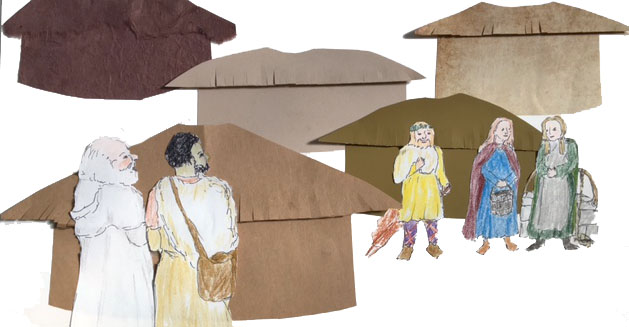
         The Druid is going to make sense of his mention of a folk myth in which a fair maiden kisses a frog. It has to do with Thole being missing. Even though these people know the Celtic lore of “shape changing,” could anyone really believe they’ve made Thole into a frog? I await the explanation.

         The Druid speaks.

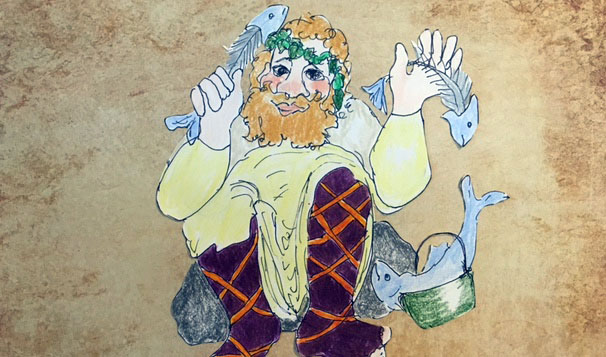
         “Twenty-one years ago I looked over my people and realized a terrible fate awaited us. Younger then, I realized with no new babies born to us our tribe would just disappear from this earth above. We had a few old men, and the only two women who were still of an age to bear children were without mates. So I myself planted my seed, and one of the two women had a child. She was one that would be set out to the wolves. But neither I, nor her mother could bear that thought. For some reason, the poor infant with the clubfoot, my nose, and the chin I hide with beard seemed to us a beautiful person.

         “We hid her in the cloaks of an elder as first she was an elfin size, now she is the size of a small woman and she has become beloved among the whole tribe even though she is gnarled. She has a cheerful and gentle nature.

         “In that way our own fair maiden is the frog in the legend. And your boy Thole is the fair maiden.”

         I laugh.

         Guldilyn snarls,  “A fairy changeling.[Footnote] You had a responsibility to put it out to the wolves when it was still a babe. What will become of your people with such a mother for the new generation?”

         “She was no changeling.” The druid argues. “She was our own child. She is loved.”

         My quiet prayer, Dear God thank you for keeping Thole safe and for giving him imagination to see beauty. May they both discover they are drenched in blessings of your love who are the Creator of all creation and the all-loving parent. Amen.

         Guldilyn argues, “But we get to keep this dark-haired one. He may yet learn to hunt.”

         I speak for myself, “Guldilyn, if I follow your tribe it will be my choice and the only reason would be so your hunters can lead me to the Christian you mentioned, Columbanus.”

[Footnote] Sugg, Richard, “Fairies: A Dangerous History” (2018 Reakton Books) pp. 97-108 documents instances in recent centuries of belief in supernatural abductions and replacement of young children by fairies, exchanging healthy babies for children with various abnormal developmental conditions. The author discusses possible genetic conditions identified by modern science that may have been associated with this superstition and he also discusses the parent’s need this meets to explain their dismay. The fiction of this blog is an atypical example.

(Continues tomorrow)

Post #28.3, Thurs., January 6, 2022

Historical setting: 589 C.E. when Gaul was forest

         I know Christianity runs on rumor too often, but this rumor of pagan human sacrifice has some credence. There have been findings. I ask the druid what is their intention.

         He answers after an uncomfortably long pause for shared grins with Guldilyn.

         “My boy Ezra, our gods would be repulsed if we fed them Christians.”

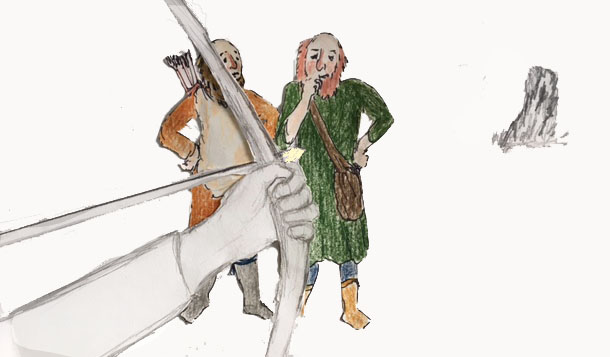
         Guldilyn intrudes, “What burns on our altars are the gifts of our labors. Our tribe hunts the beasts of the forests, and Druid Largin makes ale. But both of our peoples are suffering from need for more people. Christians take from us. We can take from them. And apparently you owe Druid Largin a maiden. What use he may have for a young man, I have no idea.  He can’t breed humans with one fertile male when he has no young maidens. I think he just took your friend Thole to spite us. He says it is justice. I think he is looking for trouble.”

         “Is Thole well?” I ask Druid Largin.

         Again, he draws his lips to make a grin or a scowl and takes a seething moment to answer, “He is fine. He is just fine. Indeed, he is very, very fine.”

         “May I speak to him?”

         “I doubt it.”

         Guldilyn asks it of the druid, “What have you done with that flaming haired lad?”

         Largin answers, “Let me tell the storytellers a story, though you may have heard it. It comes as legend from the forest beyond the Vosges.

         “Once there was a fair maiden. She had a wide imagination for beauty, and one day she met a frog. In her mind he was the most beautiful thing she had ever seen. She kissed the frog, and immediately everyone saw that he was indeed a handsome man and a most beloved creature.”

         I have no idea how that story explains Thole, but it does have a Christian theme flowing deep beneath it, the theme of accepting the outcast.

         Guldilyn asks, “Whatever does that have to do with the young man, Thole? You have no maidens, and he is hardly a frog.”

         The longer he stalls for time the more anxious I am for Thole’s safety.

         The druid speaks, “So let me offer you a clear and straight forward explanation.”

         “Please do.”

         “About twenty-one years ago to the day, I looked over these people and thought…”

(Continues Tuesday, January 11, 2022)

Post #28.2, Weds., January 5, 2022

Historical setting: 589 C.E. when Brittany was forest

         The pagan storyteller and I are discussing the differences of our mythologies, when Druid Largin intrudes to mention what had already crossed my mind.

         “You won’t see your friend Thole again.”

         “I noticed he was gone; what happened to him?”

         “Oh, we know where he is, Ezra. He’s paying the price owed for the missing girl Daniel failed to return after her apprenticeship.”

          I’m pretty certain Thole won’t fill their need for a practitioner of healing, so I can only imagine a worse use they might have for him. Dear God give me wisdom to negotiate his release. Stay close.

         Guldilyn overhears Largin’s taunt and argues, “What have you done Largin? These two young men were supposed to be ours!”

         The druid makes his deal with Guldilyn who speaks for the visiting tribe, “You take one, we’ll take one. You can have this one.  It’s fair.”

         “Thole and I can speak for ourselves. We aren’t slabs of venison that can parceled out. We are Christians. We belong only to God.”

         Both the druid and the storyteller look past me to each other to insure I have no say.

         First Guldilyn says, with a jeer, “So you belong to the invisible, untouchable god? That’s nothing.”

         Largin argues, “You belong to a count and a king and an abbot – by your haircut, I see – also a bishop, and a pope, and Thole said he wants none of that. He told us himself he wants a place among us.”

         “I know. Thole was looking for that, but what place might he find here if he wasn’t born to this tribe? From the rumors among Christians it is said that pagans make ritual sacrifices of humans, and surely he had no intention of offering himself to appease a sacred well or fertilize a tree.”

         The druid is nearly playful in his accusation. “So you’ve been a Christian all your days, and now you are saying it’s us who sacrifice young men on a tree? It’s you who worship the dead Jesus hanging on that beam. And it is your saints who cut down our sacred trees while they are still living and strong. You come up with these strange notions of religious rites and then lay them on others as though all the world but Christian was shackled to archaic ways of old.”

         “So” I have to ask straight out, “What have you done with Thole?”

         My question is answered with more knowing glances between Largin and Guldilyn.

(Continues tomorrow)


Post #28.1, Tuesday, January 4, 2022

Historical setting: 589 C.E. when Gaul was forest

         “So doesn’t that big old Christian story book have any tales of a wild hunt?” Guldilyn, the storyteller, asks.

         It’s only the two of us here because any who would be waiting to hear another tale have simply wandered off. 

         “I think it was the pale ending where, after the birth of God’s own son, Rachel was left weeping for her children. I probably ended it too soon.”

         “Probably.” Guldilyn reminds me, “we all expect Christian stories to be dulled with easy magical miracles; yet in that story there wasn’t fantastic magic, only a simple miracle of love and beauty. Everyone – our tribe, Largin’s tribe, Christians, sinners and monks alike — all of us get love and beauty I suppose, and children, and deaths, and griefs. And everyone knows in the end comes the weeping.”

         The elder storyteller awaits my defense. She stares from her ageless grey eyes at the empty places around the fire circle and I know her expectation was for a popular story.

         I answer, “Maybe the Christian bible does have a story of the Wild Hunt.”

         I’m thinking maybe I could gather up the ancient Hebrew monsters and myths and recite the longing tale of the end times. “There is a big roaring, hissing horror all pieced together from myth with proper acountings of extra eyes and heads and wings measured in magical numbers like sevens to tell the secrets of God if only we could decode it all. And even more popular The Revelation speaks of judgment to rout out sinners.”

         She suggests, “I knew Christians would have a good story.”
         And I’m not so sure either, if the popularity of her pagan story is in the random harrowing, so much as all the noise and destruction it tells.

          I answer Guldilyn aloud, “Do you think people are looking for stories from religion where human behavior empowers the judgments of God or in your case, gods?”

         “Do you mean where human cunning determines the outcome? No, people don’t want that.  They want superheroes.” She consoles,  “Don’t take it so hard young fellow. It was a first attempt. Surely Christians must have something that’s popular. We’ve heard there is a band of Christians with lots of followers. Find out what stories Father Columbanus has to tell. Even though he means to be hidden away in the Vosges wilderness he’s very popular.”

(Continues tomorrow)

Post #27.14, Thurs. Dec. 30, 2021

Historical setting: 588 C.E. Forest Primeval

         My story continues, “What they found was the star shining for the birth of a child. There was a mother and baby, a fire that warmed them, a human fellow who cared for them, a donkey ready to carry them to a safer place later, and they were all bundled up and knitted together into a semblance of family. Even the amazing star would be easy to see for anyone looking, except for this King who never looked up at anything beyond himself.

         “This great hinge that turned the world that night was love come to earth. That magical power for rule was simply caring for a tiny new baby.  But despite all the promise, the only power Herod could muster was to bring death and destruction down on his own people by his jealous rage. So Rachel still weeps for her children.”

         The elder storyteller, Guldilyn, comes to me in the silence of this ending as the people are dispersing. “You know, you could have made that story much better if the newborn baby was a king and he cast a spell and killed off that guy Herod.”

         “Sure,” I argue, “And the ‘Wild Hunt’ could have been a better story if the horde of ghost riders across the sky were only hunting rabbits.”

         “I guess either Celtic-Gaul or Christian, the mother still weeps doesn’t she?” Guldilyn surmises, “But let me say this, Good Christian Man, Ezra, I’ve heard Christian myth before and it isn’t supposed to end like that. Usually it’s about magic done by a saint that just fixes any hurt the story mentioned. Like the story when the saint tore his cloak to help someone then magically he got a completely new cloak. Or the sick child was brought to the Christian bishop and the child was healed. Christian stories are supposed to end with everybody getting what they want.”

         “Everyone?” I ask.

         “Not for us of course. For pagans, Christian saints cut down sacred trees to save us from our sins. We have no fewer sins. Now more Christians come from the island on the sea. They brought not a crust of food with them, so fairies rise up from the earth when they are asleep and boil porridge for them. When they wake they thank God for the miracle. But of course we all know this so-called miracle has a true source. The fairies are helping them.”

(Continues Tuesday, January 4, 2022)

Post #27.13, Weds., Dec. 29, 2021

Historical setting: 588 C.E. Forest Primeval

         The story continues. “I can’t even tell you now how long a journey it was, but it took them from there, wherever that was, to somewhere beyond the huge glittering temple that seemed was the most important place on earth — Jerusalem. They knew that if something is this important on earth, surely it would be a sign of something greater in heaven.”

         Even though I’m just a humble man and not gifted with many voices like Guldilyn, most of these people are listening intently to the story of the star and the magicians who followed it. But I don’t see Thole. I guess he’s heard it before though I do wonder how he can be missing in this crowd. I’ll search later. Right now, everyone is listening to me.

          “In the first portico of the Temple the magi were welcomed by a Jewish priest, so they asked,  ’Where is this new great power of earth and heaven?’

         “Since the high priest was not available at the time they were directed to the palace of Herod the King of the Jews. Herod listened carefully when they explained they were searching for a great new turning of all of earth, maybe a newborn king, or a rapture, or a solstice, or a wild hunt. Maybe it was Herod who put words to what they didn’t know.

         “’So you are looking for the King of the Jews? If you find out anything come back and tell me so I can go and be amazed also.’

         “So, when the wise women and men of magic gave his request a second thought, they were pretty sure this fellow was up to no good. They just thanked him for his hospitality, and slept on his request to return and tell him how to find this new King.

          “Maybe they realized any king who never even looked up at the magical star perched there for all to see, wouldn’t be a very useful King. Maybe they knew such a self-absorbed fellow could have no imagination for a new way of thinking. Or maybe they had a magical dream. But when the travelers awoke they knew to return another way and not to tell anything they learned of the star’s message to this little earthbound collector of garish stuff.”

[Matthew 2:1-18]

(Continued tomorrow)

Post #27.12, Tues., December 28, 2021

Historical setting: 588 C.E. Forest Primeval

         Thole and I find ourselves crowded into thatch houses with huge bundles of mistletoe and pine bows along with all these people from places that are unknown to either of us. All of this feasting and celebration is purposed to consider the thin possibility that life goes on even in the winter’s dark. It seems a last grasp at life in winter.

         Now the wise magicians, the magi of this cult call on us of the Christian label to tell the stories of our own people. It’s an offer to share in the storytelling neither of us expected. Thole begs off.

         But I accept. I would like to speak a Christian story as I do know some of them, and I’m reminded of the oneness of all people by all of us gazing into the same winter sky. This story might have a common thread with these Celtic-gothic tribes.

         Christians tell this story often and it is lettered into scripture in Matthew’s gospel [Matthew 2:1-18]

         “There was once a group of seers and magicians who could read the depths of sky to know the things of all the created universe. They knew what people needed to know to plant crops at the right times, and to find the critters in the hunt. Christians also called them pagan though they were Zoroastrians from the East. Like the Celts they had the powers to know more than was ever written by human hands, even more about the skies and nature than is told in the most holy scrolls.

         “This was a time when the world was at a great hinge – a turning, a repentance, a solstice. The heaven’s promised a new power rising with a new sign, a new star. So these who were magi gathered all of their brightest and wisest; they packed up a variety of gifts — gold, frankincense and myrrh — and they prepared for a very long journey.  Who could know how long? They were wise, but how far they would travel was a geometry problem that would require knowing either how high the star, or a distance on land. All they knew for certain was the starting place. Yet they set out anyway, knowing only that something beyond themselves was significant. And it was a very long journey.

[Matthew 2:1-18]

(Continues tomorrow)

Post #27.11, Thurs., Dec. 23, 2021

Historical setting: 588 C.E. Forest Primeval

         Druid Largin rules a truce, “Very well, Dietrich and Theodoric are one king with two peoples saying his name each in their own way. In this legend Theodoric has conquered the Huns, and now he takes on Sigebert.” The crowd howls and chants against King Sigebert!

         So what if legend is made of pieces of actual history? Druid argues with Druid over details of name because they have no ink or scribe to set it down once and declare historical fact. When heroic name migrates from one tribal fire to the next possibly speaking of it sounds different, and it’s possible the foe becomes a known tribe at one fire, while a mythical antagonist is at another.

         By my strange circumstance I happen to know Sigebert was a 6th century Merovingian King, the son of Clothair who always seemed to be in civil war with another son of Clothair, Sigebert’s half brother and Count Bertigan’s royal endower, Chilperic.  Now here that name Sigebert or Sigurd .[Footnote] is called out as a devil before this riled horde. And in some way the hero of this story is named Theodoric the Great, who fought the Huns, or maybe, made peace with the Huns, or maybe mingled all of these people with the Huns, all the while Attila and his horde were blazing through the dust clouds of war in the 5th Century.[Footnote]

         Christians and Jews and even the old Romans and Greeks use parchment and inks to set notables into a form of facts onto which we pin our histories. But in this world we can only depend upon one day having it said by a poet or sung as a song to set things in place.

         In this telling souls gathered up in the wild hunt are a nameless scramble of the lost, neither sinners nor saints, they are taken up to the world above as a lot unsorted by any virtue or sin. I can hear echoes as cosmic, communal omelet, but this is not that nameless heaven, so much as a nameless grand finale of souls. It seems by shear random chance that one is taken up and another left behind.

         And all this starts me wondering of the times like these before something is scribed as fact. How many names and places swirled into the porridge of the ancient story while the tale was wandering freely as myth? And really, does it matter? Indeed, it does matter because it is the story that makes us one people together.

[Footnote] https://en.wikipedia.org/wiki/Sigurd, retrieved 6-4-21

(Continues Tuesday, December 28 2021)

Post #27.10, Weds., Dec. 22, 2021

Historical setting: 588 C.E. Forest Primeval

         The old woman, Guldilyn, who starts the story gathers everyone close and invites us all to watch the clouds swirling intensely into this golden winter’s sunset.  The storyteller is nearly still. Then she speaks in a voice strong and slow spreading through the gathered crowd with a story greater than any single voice.

         “When you see the clouds gathering in gray wads like dust, turning and rising, moving together, spreading wider than you thought was ever the full breadth of sky, you might be looking up at dust rising under the hammering of silver hoofs, the howls and the bellows of one hundred bowman riding into the hunt, or is it an army of a thousand with swords?! Five hundred thousand with steel hooves – dust swirling, smoke rising in billows after the roiling clouds, wild, raging riders on the wild horses — it is the hunt!

         Now all of us who were watching are absorbed into the story –closer we move in round the fire finding safe places in the darkening night. Someone starts the chant — meaningless syllables of galloping, galloping, set off by shouts and hollers of huntsmen – ghost riders in the sky!

         “You!  All of you, who think you are men of courage, women of strength!  Are you afraid to look up at the turning churning skies over us all, because you know this is the night of the Wild Hunt?  The race across the reaches above us has begun! The horde of hunters are gathering up the souls, whisking off the nameless dead of the forever of wars and eternal losses, plucking up the living souls among the throngs.”

         One man stands up, starring at the darkening sky. “It was the Hun up from the East, comes reigning the terror of full war!”

         Another stands, catching a full bowl of ale in a single swallow – not his first.  “See there in the mist!  Atilla has met his match in Dietrich von Bern!” [Footnote]

         Druid Largin argues the guesses of ale. “Dietrich? ‘tis Theodoric the hero of the hunt.”

         “Twas Dietrich.”

         “Theodoric.”

         “We say Dietrich!”

         “You visit us by the river here and we say Theodoric.”

         The storyteller steps between them. “Don’t you hear that Theodoric is the same name as Dietrich? But in this snatching of souls the warriors are nameless – no one comes from death with an earthly name in the wild hunt across the heavens.”

https://en.wikipedia.org/wiki/Dietrich_von_Bern retrieved 7-20-21

(Continues tomorrow)

Post #27.9, Tues., December 21, 2021

Historical setting: 588 C.E. Forest Primeval

         As the Yuletide is upon all of us, Druid Largin and another priest bring their tribes together at this village for the celebration. The guests come shouldering venison from a hunt and driving another white ox bull for the sacred sacrifice. Here are several of the kinds of oaken barrels Ezra uses for wines; only these have ale. Here hospitality is stretched so wide to include even us who are ill-prepared Christians. Here are these traditions, Christian and pagan together. [Footnote: Interpretatio Christiana] 

         So we’ve packed up our camp and returned the fleeces and deerskin. And now we’re guests at these fires of hunters and circles of thatch.

         The divine law that rules is hospitality. Even a whole additional tribe, men and a few women and elders, along with the two of us all have places inside these thatch circles safe from the winter’s howl. And every cranny of unfilled space in any of these houses, from the slope above us under the roof to the seams at the door is filled with green bows of pine and bundles of mistletoe; everything is green and living even in this season when sacred trees stretch naked limbs.

         This, being a great feast, allows no famished or starving guest among us.  And may I not dwell too long on my accolades for the endless flow of ale so Thole and I are learning that all the world is not just drinking wine and mead this night.

         These other guests are Britanny pagans from these barbarian lands between the rivers well north of the Loire. They claim to be neither Arian Ostrogoths nor Frankish Roman Christians of the creed. To me, they seem much like those Celts I’ve known of in Ireland resisting Christianity before Patrick brought them the loving Jesus. I mention this, because what I would call history is really the heroic tales that mark this celebration of the Yule. Maybe these tribes have a common myth.

         I’ve heard it said that the story of the Wild Hunt that marks this night is meant to terrify children so that they will stay inside for the long winter’s storms, but I’ve not known children who were more driven by fears than their elders, so it hardly makes sense. And here for the telling of these tales everyone is gathered around the bon fire at the center of the village. But I see no children in these tribes.

[Footnote: Interpretatio Christiana] The letter from Pope Gregory I to Mellitus copied by Bede continues thus:[3] …And because they are used to slaughter many oxen in sacrifice to devils, some solemnity must be given them in exchange for this, as that on the day of the dedication, or the nativities of the holy martyrs, whose relics are there deposited, they should build themselves huts of the boughs of trees about those churches which have been turned to that use from being temples, and celebrate the solemnity with religious feasting, and no more offer animals to the Devil, but kill cattle and glorify God in their feast, and return thanks to the Giver of all things for their abundance; to the end that, whilst some outward gratifications are retained, they may the more easily consent to the inward joys. https://en.wikipedia.org/wiki/Interpretatio_Christiana  retrieved 8-20-21

(Continues tomorrow)