Post #6.12, Thursday, March 26, 2020

Historical setting: 562 C.E. Gaul

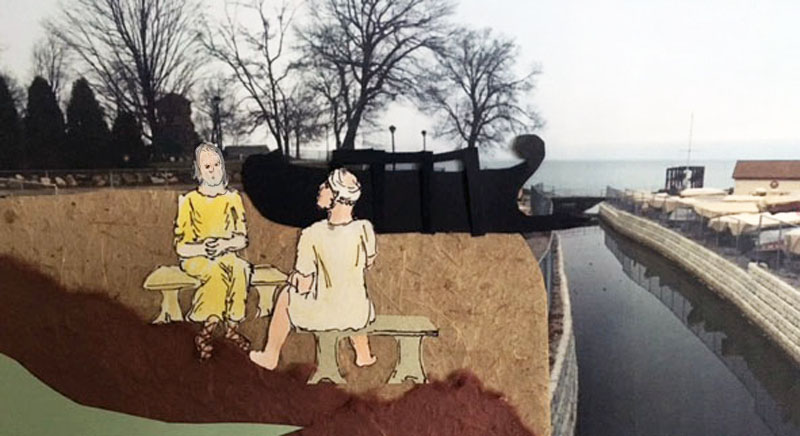
As when I arrived here, I’m granted audience with the bishop. He greets George with a familial hug and to me, he nods politely. This time the abundance of robes filling the throne seems buoyed by our presence. And I see it is because of George.

         “So my dear cousin George, have you made proud the scholars of Latin with your fine use of words?”

         “I hope I have, Your Excellency. But also, I would like to gain your respect not only as a writer and a scholar but as a candidate for ordination as a priest. I think you will find I have been able to completely cleanse Lazarus here of heresy. Would that not qualify me?”

         I feel I must answer for myself as I will surely fail any heresy test. “Your Excellency the technique young George used for my instruction was devised to set my prayers toward a saint with the use of a relic.”

         The bishop seems impressed and does not quiz me further on my thoughts of a three-headed god. He doesn’t even ask that my relic produce a miracle so Georgius Florentius Gregorius will indeed be assigned to the seminary to be educated as a priest. A messenger is sent on a fast horse to George’s family requesting they dispatch four horsemen to accompany him on this journey to assure his safety. 

         The bishop now turns to me to explain that the departing Roman army has left the wealthy aristocracy vulnerable to attacks by highwaymen so horsemen and weapons are needed for those certain few. Had I a longer tunic or a golden chain for my relic surely I would already know well of this terrible fate of privilage.

         He now addresses my request and assures me I have a place at a scribes bench with the inks going forward.

         “That is a kind and generous offer Your Excellency, and I do wish to make good use of the scriptorium in the summer season. But now it is time for plowing and planting and I have to go to help my family at the farm and vineyard.”

         “That seems a menial pastime when your abilities are with the inks.”

         “It is my humble choice, Your Excellency.”

         “Of course.”

         So George and I have both succeeded yet neither seems to have changed the other and the ancient church is still in ashes.

(Continued Tuesday, March 31, 2020)

Post #6.11, Wednesday, March, 25, 2020

Historical setting: 562 C.E. Gaul

The Shrine of St. Martin is a hub of activity. The basilica also here is the see of the Bishop of Tours, Eufronius. The longest line is of pilgrims awaiting the blessings and their touch of the Saint’s relics. Certainly each is seeking a personal miracle. From my ancient view barely bent by pagan tradition it is hard for me to see a use in the rotting physical remnant of saint as a source of great wonders of fearlessness when all around us are the wonders of Creation itself. Yet, here they pray loud and long and in proper form and gesture that they no longer fear pain and sickness. And so may spiritual woes once bestowed upon them by devils and demons be turned toward hope –empty hopes or fulfilled — all hopes are of the same substance.

         This is the trading floor where humankind come as wads of damp clay to bargain for a tad-bit more of life. The woman with her sons whom I had noticed on the river crossing is waiting here to touch something of a dead saint. The expectation is from ancient religion that winning favor with deity yields an outcome of personal benefit: fertile fields, many children, strength and health, healing… whatever.

         I personally don’t think that God makes choices of who would be healed and who would be passed over to come again. In my opinion God just journeys with each of us through our happenstance. But who am I to know?  All any of us knows is our own experiences and whatever we learn from empathy.

         I do wonder will either the hurts or the healings ever turn anyone from old patterns of fear? Are we required to suffer for goodness sake? And who here will take notice of their own healings? Aren’t we all in a continuance of healing? How will we find the complete grace in the everyday beauty that surrounds us all in the breath of God like the very air we all breath together? Are the only true miracles those that are specified in human prayers, or does God’s grace get noticed too?

         The large but frail matriarch with the sons notices my stare. I smile toward her. She recoils our gaze, not returning at all a smile for mine, but alerting her sons that we have seen one another before. Who am I to be feared by them? Surely they recall I was the one with the so-called “miraculous walnut” on the crossing, was I not? I avert my gaze to ease the moment.

         George and I are in a lesser line here – we are simply waiting for a moment with the bishop.

         (Continues tomorrow.)

Post #6.10, Tuesday, March, 24, 2020

Historical setting: 562 C.E. Gaul

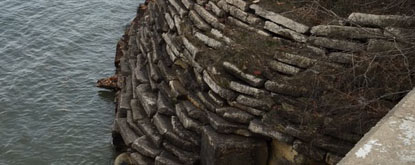
         This river — the Liger or Loire as it is known — marks the tangible edge of old Roman power. The abundance of massive constructions with its bridges and aqueducts gave Tours a wall and roads but failed to cross this river here with a bridge. So for crossing back from the monastery to the shrine or the city we must sail the river on the currents of springtime.

         Our boat is filled with a crew and all varieties of passengers. Some may have business in the city and others surely are on their way to the shrine in hopes of healing. George and I were nearest a large but frail woman being carried by her two adult sons on a pallet stretched onto frame with handles.

         Now, the winds of the ragged divide between the seasons leave our sails luffing then billowing at every wind-shift; and the rudder seeks a path of swift spring flood water rather than minding the choice of the sailor’s hand on the tiller. An anxious heel toward the starboard sets all our superstitious mouths to prayer.

         George clutches the chains about his neck and he demands that I retrieve my walnut from my bag and make a bold prayer to my patron martyr also. “It is nearing his feast day – March 27 — and surely St. Lazarus will be listening.”

         My prayer is silent though the people on this craft anxiously watch my raised walnut and study my face for moving lips of prayer.

         Dear God, let my prayer be heard, not by selfish fears and sufferings but by the loving hand of your care for all people. But only if it is your will. Thank you. Amen.

         As spring winds will do, after each gasp of winter’s rage comes a new gentler breeze of southern air. And timed to my gesture of drawing forth my walnut, all on board this frail craft believe we just saw the calming of the Sea of Galilee as Jesus himself is awakened from his rest.

         “Your relic has brought us a miracle Brother Lazarus, as though the saint himself had risen up from the grave to guide our ship!”

         Even the pagan sailors and heathen passengers took notice of my wondrous possession. I tucked it back into the pouch and we landed safely on the south bank as I supposed we would have done safely with or without relics. Thank you God.

(Come again tomorrow)

Post #6.9, Thursday, March 19, 2020

Historical setting: 562 C.E. Gaul

         The writings of young George seem to me filled with notions of an awkward triangular god-head working in pagan magic. In his naïve drafts I read an old legend of an ancestor to Merovech born of a tryst between monster and human. Perhaps maturity will bring him edits of believable fact.  While this young author so astutely names ecclesiastical dates for saints, he seems not at all concerned about placing the whole history of the Franks within the time frame of Roman Christianity. Yet the patriarch Clovis, a brutal warrior, was baptized Christian with not the slightest nod to love of neighbor. Apparently, whatever god wins his war is the one who earns his allegiance. [Footnote] Dear God, did you know about his contest? Was it your purpose to win? Probably this is not for me to know. Amen.

         I fear with so much reading of this I’m falling into Barbarian rhythms of story and my assignment to Romanize the spellings and manage the tenses may be letting go of the flavor of story.

         George argues that thought as well.  He has demanded that I not mark the actual parchments anymore but only note his errors separately because there may be some of these strange usages he wishes to keep as they are.

         “Why would you deliberately leave errors in your writing?”

         “I write not for the eyes of scholars but for the reader who be Frankish and cares not for tense. When I write for my own family who are of the most noble of the Franks, we sit very close to one another because we are family and we read best our own comfortable words. But I promise I will always try to speak to you and other heathen with my best pluperfect.”

         His writing clearly goes faster without so much scraping. So believing my work should go no further as also is George’s task to align my prayers with creed, we plan to report our successes to the bishop. We both hope to be released from our obligations to change the other.

         As we are nearing the equinox that marks spring planting I hope to take a leave from inks and ash and return to help Ezra plow and plant his fields.

         So tomorrow George and I sail back across the river to meet with the bishop at the basilica of the Shrine.

 (Continued Tuesday, March 24, 2020)

[Footnote]

Gregory of Tours, Origins of the Merovingian Kingdom (Book II). (ed and Trans. By Alexander Callander Murray) “If  You grant me victory over these enemies, and if I experience the power that people dedicated to Your name claim to have proven in Yours, then I shall believe in You and be baptized in Your name.” excerpt from a prayer of Clovis to “Jesus Christ” (II 30) from Readings in medieval civilizations and cultures: X  series editor: Dutton, Paul E. Broadview Press, Ontario, 2000.

Post #6.8, Wednesday, March 18, 2020

Historical setting: 562 C.E. Gaul

George is determined to beat the life from Christianity and sanctify the deaths as he foists upon me the necessity for rotting saints. “I can assure you Heretic Lazarus, St. Lazarus was a true martyr for Christ.”

         I rebut. “They only died because the emperor of Persia feared Rome.”        

          “Your mistake, my friend in err, is in ignoring the sacrifice. The cause of veneration of saints is not of earth but of miracles. Consider the wonders in such things as the dust you claim to own. The very life energy of the suffering martyr is present within that walnut casket. The power is in everything the saint touches so even the mere hem of a saint’s garment can bring a great miracle.”

         He mentions the touching of a garment’s hem and I recall the Jesus story of such a healing. But in the Jesus story the spiritual energy in that moment was not some magic that can be mined from a corpse as it rots. It is the energy of love and life itself. [Luke 8:46] And surely it is not a tangible substance or a commodity to be swept up after a beard shave or a burning. That same energy I claim as Holy Spirit moved among the crowds when Peter preached on Pentecost. [Acts 2] No relic was needed; it can move like a breath of life among people. It is always with us, and moves away from death toward life and away from fear toward love.

         He badgers me on, “Ask your saint to show you a miracle with your relic. Hold it up in the face of danger and pray to your saint.”

         His instruction seems as meaningless as an empty shell. But that moving Spirit, breath of life, has for me, a voice of empathy for his plea so I hold my walnut of whiskers up.

           “Now doesn’t the dust of that suffering bring a great and holy miracle?”

         I see behind my elevated walnut the anxious face of a youth wishing upon me a moment of miracle. I see in his gaze at my relic his inheritance of an ancient, innocent faith rooted only in the material things of earth. It is no wonder God’s loving Spirit demands my empathy and openness, not an ah-ha of righteous win. He sees the wonder in my face as I see the anticipation in his and we are both awed by God’s beauty as we see it in the other.

         “So you have seen the power of the miracle now.”

         Dear God, how can I win this when you only fit me with empathy? Amen.

(Continues Tomorrow)

Post #6.7, Tuesday, March 17, 2020 (St. Patrick’s Day)

Historical setting: Remembering 5th Century Ireland

         Today, I venture again into young George’s crumbs of Latin, and I’m reminded of another Christian of awkward tenses whom I only caught in a glimpse about a century ago.[Author’s footnote] He cut a deep swath of Jesus’ love through the middle of the once pagan Ireland. But his sainthood is not because he died a martyr. He didn’t. He died as an old man among the friends he had gathered along his way. Yet it is very clear to me why he is called a saint.

         The story is told that Patrichus was captured by an Irish raiding party and taken from his life of privilege, his family and his home in Celtic Brittany, when he was a teen. He was sold as a slave. In his rare bits of writings he portrays this captivity as a time of cold and suffering, isolation and days-on-days of thankless work tending herds. He allowed himself to listen to God’s relentless presence and was driven by a voice of promise: first the promise to leave that place; then, some years later, forgiveness transforming his hurt and loss into the yearning to return to the people of Ireland as their faith leader. He brought the simplicity of the ever-present, loving God of Creation.

         He guided peacemaking among leaders in a warring land. He established and rekindled Christian monasteries into communities of caring for people.

         His magical or, call it miraculous power to bring Jesus’ love to the pagan world came through his gift of empathy — not by ecclesiastical councils or by winning arguments or wars. He brought order and guidance through caring and spiritual presence – not by rule and punishments.

          The trail he left was of love for all people and sacred appreciation for Creation. It’s still there, planted deep in that land forever. The music and the art of the people are never stifled by punitive order, rather the creative chaos is simply turned so people can see it clear and shining from the face of our one Creator, parent of love and life.

         I suppose, with the help of God, I do know of saints, so I ask young George “What do you know of St. Patrick?”        

         “Were he Roman or Frank?”

         “They say he was Celtic.”

         He asked, “Do you want to know how God made the Franks beat the Goths?”

         “Will I have to edit your grammar in that chapter too?”

         “Sooner or later I’ll write it all down.  It will be significant.”

(Come again tomorrow)

         [Author’s personal note] Before I started this blog, my spiritual journey into Christian history took me more deeply into 5th Century Ireland. I wrote a book After Ever, about the poem attributed to St. Patrick, “Breastplate.” I have no plan to market that book so it is a little read manuscript, never even run through the printer on my desk. But in 2018 and ‘19 I did a lot of research about ancient Ireland and set my Lazarus character there. Some of the things in this day’s blog (the basic facts) I learned from that research, and some conclusions are drawn from inferences of changes in Irish Christianity after Patrick.  

Post #6.6, Thursday, March 12, 2020

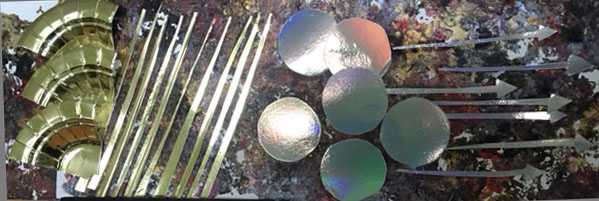
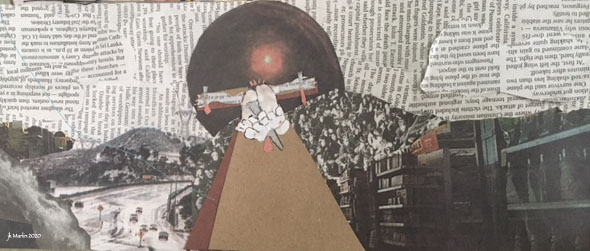
Art Note: This paper-cut-collage w/ink was inspired by a photo of an ancient bas-relief retrieved from Wikipedia, (and licensed for common use)  File: Nowruz Zoroastrian.jpg.  The English translation explaining – “the lion-bull combat in Persepolis” – has been variously interpreted, including as the symbol of the Nowruz (the Persian New Year’s Day) – the day of  spring equinox power — eternally fighting bull (earth) and a lion (sun) are equal.

Historical setting: 562 C.E. Gaul

         I’ve had this lingering question all these years. I ask George, “When I first learned of these persecutions I didn’t hear what happened after the deaths. I know that two other Christians visited the nine monks on the night before the executions and they were surprised to find the monks had been tortured. They brought comfort. I‘m sure they also witnessed the executions. But I wondered if there was any record of what happened next to those two?”

         “You mean St. Jonas and St. Barachius?”

         “You call them ‘saints.’ Were they martyred also?”

         “Of course you fool. How could you know only part of the story?

Two days later they were also tortured and executed.”

         “Oh no, I feared that. They were true martyrs while the others were just a happenstance of the politics of the day. Jonas and Barachius came to the jail because they were acting on their Christian duty to share God’s love.”

         “How can you say the first nine didn’t die for their Christian duty? And what of the thousands more Christians persecuted by the Persians?”

         “There were so many?”

         “The named saints were only the first. Obviously they were martyred for Christ not for any kind of politics.”

         “So George, I imagine for all you know of this you would also know the date of this execution.”

         “Of course, it were March 27, 326 A.D.”

         “You are very knowledgeable, young George.”

         “Yes, I am. And that were the same year as the Creed be born in the same council that declared Arius a heretic.”

         “Indeed Brother George. The sameness of that year is the matter of importance in knowing the reason they were not martyrs for Christ but simply victims of earthly power plays. I’ve long pondered this, and there was nothing holy in these deaths. It happened when Shapur II, the Persian emperor heard of Constantine’s declaration to make Rome Christian. He believed a Christian Rome was a trick by Rome to takeover the Persian territories. So he broke the long tolerance the Zoroastrians had for Christians. The executions were a political move against Rome. Would you also not say this was strangely ironic? The reason these Christian refugees fled into Syria was because they shared the same enemy with the Persians — Rome. They weren’t killed because they professed Christianity but because Christianity became Roman. T’was a very strange paradox don’t you think? They shared a peaceful fear of the same enemy until it became one of them. How does that make them saints?”

         “Of Course, Heretic Lazarus, this is not about earthly politics. They clearly died as Christian martyrs. They died for their faith.”

         “No. Actually, George, they died for Rome.”

 (Continued Tuesday, March 17, 2020, a brief thought of St. Patrick)

Post #6.5, Wednesday, March 11, 2020

Historical setting: 562 C.E. Gaul

         I don’t have to wade far into this lad’s scrawling inks to know my assignment is no less insurmountable than his. He is trying to lead me through the complexities of a religion laid out like a bridge of loose boards onto the wavering back of old paganism – Roman, Barbarian, Frankish with a tad of the Arab and African varieties. And the maze I have for his lesson in language is likewise woven of threads of cultural variety.

         First he must know how to scratch his Frankish errors from the parchment. With so many errors he will surely accomplish this skill but the work is tedious and takes up our whole day just in scraping errors away.

         Meanwhile he yammers on about my patron saint. “It be significant..,”

         I correct. “You mean ‘It is significant’…”        

         He accepts the correction. “It is significantly essential that you acknowledge the mortal suffering of your saint. Your prayers should pay homage to his sacrifice.”

         “I understand well the brutality and the suffering. And you must already know that this Lazarus…”

         “Saint Lazarus” he corrects me again.

         I hardly accept his correction. “This fellow was not alone. There were nine Christian monks taken that day and flogged.”

         “Yes,” Young George knows this history. He names them. “St. Zanitas and, of course, St. Lazarus of Persia, along with St. Maruthas, St. Narses, St. Helias, St. Mares, St. Abibus, St. Sembeeth, and St. Sabas.” [footnote]

         He calls out each with the same hollow rote he uses reciting conjugations. But with each name sliding too easily from his Frankish tongue I picture each human person of them in my mind and recall their preaching in the peaceful times and I hear again each of their voices crying in agony but there is nothing I can do for them as the lashes fall across my own shoulders the same.

          “I am not numb to their suffering Brother George. Each bore witness to the other’s suffering so that their own helplessness to care for one another was also a terror each endured. Are you asking that my prayers are directed to renew the hurt I feel through my own empathy with them?”

         “How quickly you learn Brother Lazarus. I have no doubt you will soon be washed clean of your heresy.”

         “There is something else about that time I have longed to know. Perhaps you have read of it in your studies.”

(What is he longing to know? Continued tomorrow)

[footnote]https://en.wikipedia.org/wiki/Shapur_II Excerpt “Relations with the Christians.” (This article sources 5th Century historian Sozomen, in his Ecclesiastical History, Book II, Chapter XIV) retrieved 10-8-2019.

https://en.wikipedia.org/wiki/Zanitas_and_Lazarus_of_Persia

(also listing Sozomen as a primary source) retrieved 5-17-2019.

Post #6.4, Tuesday, March 10, 2020

Historical setting: 562 C.E. Gaul

I asked the young gentry, “Shall I open the reliquary so you can see the my relic for yourself?”

         “No, that won’t be necessary. I’m just surprised.” Young George does seem miffed.  “You do know veneration be needed before dust can be a true relic.”

         “So you are saying that an Aramaic speaking Persian Lazarus can be called a saint but his dust is a questionable relic?”

         “Yes of course he be a saint. He be canonized after his death so his language and lineage and all that stuff he did in his life don’t even matter. He died a martyr for Christ so he truly be a saint.”

          “Yea, that’s not a tactful way to describe an inconsequential life. And I would also suppose my namesake Lazarus was Arian being Persian and all. Knowing of him as I do I am amazed he would be a considered a dead saint.”

         “All saints be dead; do you know nothing? So how is it that you know of this saint at all? He’s obscure and nearly unknown among the saints.”

         “Yet you, my friend George, knew he was a Persian Martyr?”

         “It is my gift of knowledge. I’m writing a book of saints and miracles. But how be it that you know any of this?”

         “Lazarus is my namesake so of course I would have his relic and surely I would know of him.”

         “It be Saint Lazarus, mind you. So you be named on purpose after the saint? Your family had knowledge of the saints when they named you and yet you still be a heretic?”

         “Stranger things are true. Shall we consider your grammatical frailties, Young George?”

         I’m weary of his lectures and ready to play the teacher now. I suggest we look at his beginner’s works that I had called “great literature” in jest. Luckily George can give sarcasm, but has no ear for receiving it so he missed my joke. That’s good. There is really no harm in him thinking I have high regard for his writings.

         Dear God thank you for humor in this and for letting it go unnoticed and then for reminding me to be kind to him anyway. Amen.

(come again tomorrow)

Post #6.3, Thursday, March 5, 2020

Historical setting: 562 C.E. Ancient Tours of Gaul

Outside the monastery walls are those caves where I’ve come for long months of healing. Ascetics, seeking solace in hermitage come to these caves for lifetimes of prayer and fasting. I was here healing from death of plague most recently. Then two centuries before I came up this river to this very place after a long journey by sea, wounded from a brutal death I sought solitude for healing. It seems some come here to pray sacrificially unto death; but I come to pray unto life through healing.

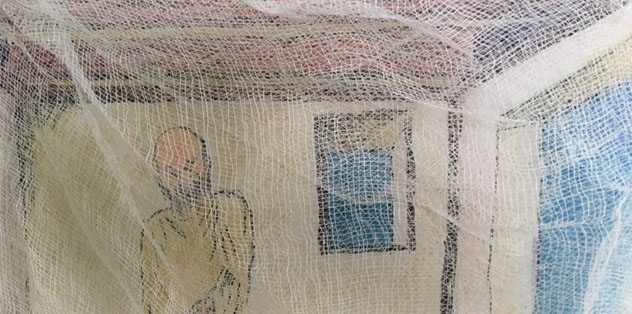
         This day I requested a cave from the bishop but this time I’m assigned a monk’s cell in the monastery. Young George and I are each assigned to solitary cells each with bench and an opening – an arch for light and air and view. Perhaps there is a shortage of monks in these often warring times. There also seems abundant space at the copy benches to allow this heretic who I am to work with the parchments and inks while the dark world awaits sanctified scholars enough to fill a scriptorium.

         When I stay at a monastery I expect to be tonsured as a monk partly as my own personal sign of penance but mostly for the practical reason that vanities requiring a polished brass mirror are not favored, so the clipping and shaving is done to one by another. And those with the blades only seem to know one style. On this morning I gather a bit of the shaven fluff falling from my beard into a fine walnut shell I have found and fitted with a hinge and a ribbon then polished with oil and a glimmer of bronze rub. It’s tied closed as a locket to be a reliquary. Perhaps this would seem a sacrilege were I of this orthodoxy, but I am not.

         I’m early for my meeting with Young George but so is he.

         “Ah, Lazarus! I have been waiting to lay my eyes on that relic of the ancient saint you claim to own.”

         He seems skeptical when I show him my polished walnut.

         “A true relic would be saved in a golden reliquary.”

         “The relic is true. Only the reliquary is common. Would you like to have a look?”

(The relic is tested next week. Come again Tuesday, March 10)