Post #14.6, Thursday, November 12, 2020

Historical setting: Along the ridges of the Pyrenees, 6th Cent. C.E.

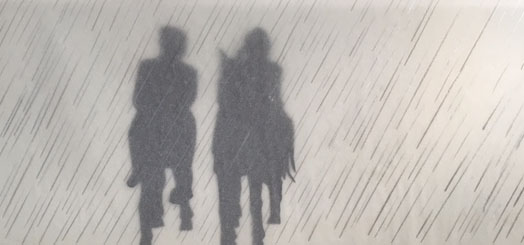
         It is Nic’s nature to persevere in kindness. It’s how I have a faithful patron after all my ways of disappointing him. It is who he is. So why would I expect anything other than his kindness when the shepherd asks us to stay on help?  We both know the winter is coming on and our supplies will grow thin with a third person helping himself to all of it. And neither of us knows how much longer it will take to cross these mountains or even to find a village or farm that can set our supplies right again. Yet Nic agrees to stay on without giving it one little selfish thought.

         Dear God, thank you for this example of selfless mercy. Amen.

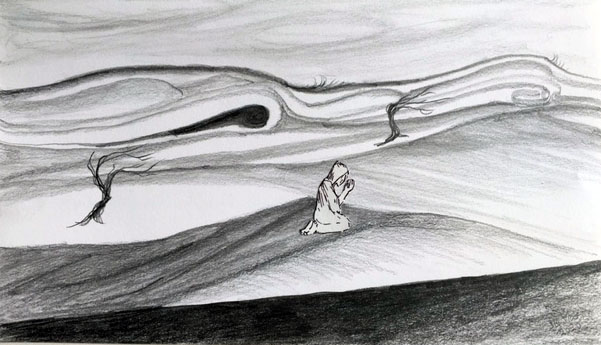
         The shepherd is a demanding master. His “duty instructions” are replete with detail.  It’s not just, “watch the sheep.” It is more like: “The two of you will stay far apart, one on one side of the sheep, and the other on the other. There will be no talking with one another when you are on duty.”

         It’s not like we are hired men who are paid. And we’re not the irresponsible sorts who would neglect the sheep simply to indulge in chatter; though there is a conversation Nic and I need to have without the watchful eye of the shepherd.

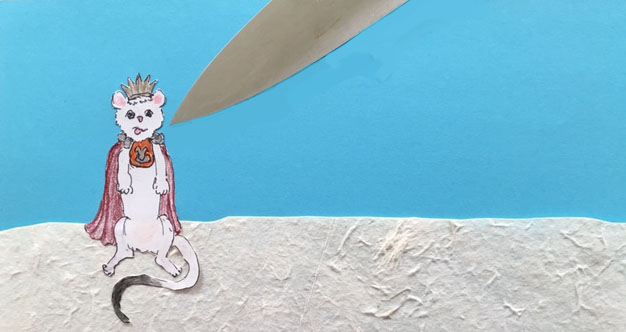
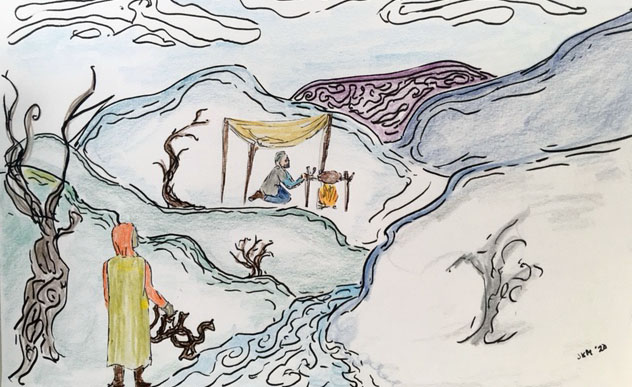
         Just now the shepherd appears again at the hillcrest. This time he is sitting on our donkey with his crutch in one hand so that he can wallop the stationary beast into motion. But it is a donkey. Once it is stopped no amount of beating is going to get it moving. It is stilled by fear. We can see this thing is likely to go badly for the donkey as the shepherd dismounts and prepares to flail the beast. Nic is the closer of us. He calls to him.

         “Stop! Brother Shepherd! If you wish to ride the donkey you will need to know something about donkeys!” Nic is hurrying to the top of the hill.  If you beat the donkey it won’t go. Wait! I’ll show you!”

         Nic reaches the man and the donkey before any harm is done. He takes the lead line in hand then takes the crutch from the shepherd and gives the lame man a leg up. Nic leads as the donkey takes a cautious step forward.

(Continues Tuesday, November 17)

Post #14.5, Wednesday, November 11, 2020

Historical setting: Along the ridges of the Pyrenees, 6th Cent, C.E.

         While Nic has provided the shepherd with a proper wrap for his foot, I turned the stick he carries into a finely crafted crutch but apparently he preferred the rough-hewn rod. I defend, “I thought you would need a crutch to help you walk until your foot heals.”

         Now he is flinging the crutch at me. I move quickly enough to avoid the first whack, and he is slow enough gathering himself to his feet (or foot) and recovering his crutch that I can easily avoid the beating. Then Nic steps up behind him and disarms him of his “weapon.”

         “Tell Brother Lazarus ‘thank you’ for making the crutch because  you will need it. He provided you a kindness.”

         The youth pleads with Nic, “But that was my rod! I need that rod for the fight! You need to teach me to fight with the rod!”

         “Sticks grow on trees my friend. You can get another. You will find this crutch is more useful in your healing.”

         The first howl of winter flings its ice crystals at this mountain ridge long into the night as though the morning light would sparkle winter. But it is barely November. On this new day the ice is melting moist into earth. Some of the crystals cling to the sheep’s long wools, and shine slick on north sides of rocks and posts, but otherwise the storm is gone.

         Before the light of day fully wakened us the shepherd has opened our sacks of grain, and he is now sharing a morning meal with the donkey and the big white dog. The Rose is taking notice of this as he usually eats first. Nic awakens with great concern and immediately checks the supply of oats, relieved to find that only the sack of our food has been tapped.

         As we tend the horses the well-fed donkey goes for a happy little romp in the pasture enclosure.  The big white dog is close by him. Who would have thought, in all our tenuous whinnies and stranger welcomes it would be the donkey and the dog that would find the bond?

         The shepherd counts every sheep and reports his amazement that none are missing. It is true. We didn’t steal a single sheep in the middle of the stormy night as only the shepherd would imagine. Today we are preparing to travel as soon as the sun melts the icy patches from the rocks. But the shepherd pleads for us to stay.

(Continues tomorrow)

Post #14.4, Tuesday, November 10, 2020

Historical setting: Along the ridges of the Pyrenees, 6th Cent. C.E.

         The shepherd is enamored by great possibilities that Nic will teach him courage and the fighting prowess of a mighty warrior. His chatter lets us see he wishes to attain personal power through becoming a fearsome danger to everyone around him.

         Nic is prepared to begin the lessons in owning the power by offering his wondrous animal training technique.  “So, when I got The Rose, my first horse, everyone was telling me ‘to train a spirited animal like this first you need to show him who is boss.’ Having been in the military for so many years I do know this is an important first step — training rank.  So I said to The Rose, ‘You need to know who is boss, and I will tell you: When it is a man thing like entering into buildings, or walking on two legs and speaking, then I am the boss; but when it’s a horse thing, you are the horse so you are the boss.’ So we’ve agreed to that, and it seems to be working out well. I’ve needed no leather thongs for flailing, only braids for holding the saddle onto his back so he can do all the trots and gallops and leaps and dances horses tend to do and I’ll stay astride. We’ve worked it out as though we were a captain and his mate.” The Rose standing at the critter end of the lean-to, twitches an ear and offers a snort of agreement.

         “So you can see, I can’t loan these leathers to you for flailing of an animal. They belong to The Rose and he won’t share them for that purpose. He always sides with the critters.”

         I have crafted a fine crutch from the Shepherd’s rod, and Nic offers his medical common sense advising the shepherd not to step down hard on that foot until it has healed.

         “But how will I follow the sheep?” he rails. “And when your food runs out I have to walk back to my father’s farm for more supplies.”

         We had kind of hoped to be in Gaul when our food runs out. And the crutch I’ve crafted will hardly meet his need in carrying a pack of food supplies. But I present my handiwork.

         “What have you done to my fine stout rod? How will I do my battles with this short padded stick?”

         He doesn’t seem pleased with my fine craftsmanship.

(Continued tomorrow)

Post #14.3, Thursday, November 5, 2020

Art Footnote: This is what happens when a pacifist artist illustrates a lesson in martial arts.

Historical setting: Along the ridges of the Pyrenees, 6th Century

         The shepherd, our belligerent host, defends his story. “I told you, I was injured by the rod and the lashes when I was fighting. I wasn’t running from my father!  I am a fighter, not a runner!”

         His persistence threatens his credibility.

         I explain, “It doesn’t really matter what caused it. Nic can wrap it for you for a better healing.  He’s had lots of soldier training in first aid. Healing takes time. But it will heal.”

         It seems no comfort at all for him to receive affirmation from this pacifist who I am.  I mean what do I know of fighting or of healing from a soldier’s wounds? But my mention of Nic as a soldier has assigned Nic the persona of fighting hero in the eyes of this man who is so anxious to be known also as a fighter.

         “You are a real soldier, Sir?”

         “Retired from the Roman Navy.”

         “So you are truly a fighter and not a runner?”

          “Depends on the need.” Nic answers with simple logic. “Mostly I was a rower.”

         The shepherd rants. “My grandfather was a soldier just like you. He had a sword and a dagger! And just like you he was so fearsome he didn’t even carry a shield! He was always far away fighting in the wars killing off the Franks and Goths and the Romans by the wagon load, except when he came back and then his raging riles flailed a fierce rod on all of us. Everyone cleared far out of his way except my father stayed. He’s not a runner. So I came out here to mind the sheep until I learn to be a fighter too.”

         “And you will learn that here?” Nic asks.

         “I will if you teach me. And if you would hand me the leather thongs I can practice flailing when I train my dog to come when I call him.”

         “So you mean you wish to train your dog to run from you as he already does so well?”

         “No! I want him to do whatever I tell him to do.[Footnote: another dog training tip for the real world] I want to be the master of the dog, like you are the master of your horse. I want to be powerful like you.”

         Meanwhile, I’m quietly at work carving and lashing his rod into a proper and useful crutch so he will be able to move around while his ankle heals; but I whisper under my breath, “Be careful what you wish for, young shepherd.”

         Both men turn their eyes on me – the shepherd heeding my warning — Nic only slightly amused.

         So Nic will need to explain his unique horse “training” technique himself.

(Continues Tuesday, November 10)

[Footnote: another dog training story from Sandy] “I have never been very successful in teaching mine (Great Pyrenees) to COME for no reason.  It was a hoot when I took Blizzard to formal obedience classes and had to call him from across the yard – he checked every blade of grass, the kids on the porch, the trees, and finally got around to me where I was – calling him and jumping up and down. The trainer joked about him all the while. The border collies and golden retrievers all bounded across the yard straight to their owners who would hide around corners or up in a tree.  It was funny and embarrassing, and annoying, for me.”  

Post #14.2, Wednesday, November 4, 2020

Historical setting: Along the ridges of the Pyrenees, 6th Century C.E.

         This pasture is not just a random field; it’s the designated place the shepherd comes each night with these same sheep. Here, at the far end of the night pasture is a lean-to for shelter and he invites us under this thatch with room enough even for our animals to be safe from the storm; having them in here brings more warmth. The sheep cluster themselves against the wall of rock forming one barrier of this enclosure. Apparently the big white dog chooses to nestle in with the sheep rather than risk finding warmth with the man who has the rod.  The shepherd explains the dog prefers the company of the sheep and the dog will stay awake all night and watch so even if the shepherd himself should fall asleep, the dog will bark if we were to steal a sheep and run off with it. In fact, we learn the dog will bark regardless.

         “Really, my friend, we will not steal a sheep.”

         We unpack our fleeces and prepare to be warm for this night’s rest. Our supplies are plenty so we easily share some food with this fellow. The wind with the storm is coming at us with the full force of the spawning of winter from the north and the west.  Now, our whimsy to be helpful to the shepherd is looking like more of a benefit for us. Where would we have found a shelter had we not stopped to help with the sheep? Ahead of us would likely only be more peaks and valleys and open spaces for the wind to press sleet onto our faces.

           “We are just grateful to have the warmth of this shelter.” I try to console this fellow who is obviously uncomfortable both in imagining our potential to steal a sheep, and from the pain in his damaged foot. Nic takes compassion.

         “May I see what’s wrong with your foot?” Nic offers.

Nic moves over to the man, and moves the young man’s cloak back from his ankle to reveal his ankle is badly swollen. “It seems a recent injury. How did this happen?”

         “It’s not what you think! I wasn’t running! I was fighting!”

         Nic is simply blunt though his intention was not to challenge him, “It looks more like a bad twist of the ankle and not so much a bruise from a beating.”

(Come again tomorrow)

Post #14.1, Tuesday, November 3, 2020

Historical setting: Along the ridges of the Pyrenees, 6th Century C.E.

So I asked a simple question, “What is courage?”

         Nic apologizes for my apparent goading argument. “My friend here, Lazarus, is a Christian pacifist so he is probably going to tell us meaningless things about courage.”

         The young shepherd backs away from me. He asks, “A Christian, what?”

         “He’s a pacifist. He doesn’t love the fight. In fact he doesn’t even fight at all.”

         Again, the shepherd takes a long gander at me — a slow gaze from my feet to the top of my head, and down again before he speaks, “So, you are very fast at running.”

         This fellow doesn’t seem to jest. And now Nic feels the explanation of pacifism has exposed my vulnerability so he places his hand on the hilt of his sword.

         “I neither run nor fight, I have a horse.” It’s established now; I’m defenseless and my pride is of no consequence either. It’s a good time to change the subject back to the sheep issue. This shepherd is exhausted after his attempt to limp up this hill; and now the sheep are off in all directions. Gathering them back will be a huge task for a man with a lame foot.

         “May we help you gather your sheep? After-all, it was our horses that caused them to scatter.”

         He is suspicious of us and worries if we help and he doesn’t pay us we will demand a sheep as our pay. “If you take a sheep my father will come for you.”

         “Let us just be helpful because you seem to need our help.”  Nic added, “We don’t need to be paid. Really we are simply offering to help.”

         The task here is guiding the sheep to a night pasture on the east side of the ridge. We aren’t shepherds and the sheep surely have no obligation to encourage our attempt; so the best we can do is bring the sheep up passed the ridge in small clumps of two or three at a time. It is slow work and the horses have no sense for it either so we put our beasts to pasture and do our so-called shepherding on foot.

         This seems to take a very long time and the longer night of winter is already upon us. The glinting light of November sun is lost under a storm cloud from Gaul. We will need to find shelter, and now the shepherd considers a kindness for us.

(Continued Tomorrow)

Post #13.13, Thursday, October 29, 2020

Historical setting: Crossing the Pyrenees in the 6th Century C.E.

         The shepherd nears this ridge as the scattered sheep have forgotten their hurry away from mayhem and are distracted by grazing. The shepherd is a ragged young man in fleece, hobbling with a clumsily wrapped foot.  He seems reluctant to accept our offer to help him gather his sheep back, and at the same time seems as awed by our horses as was his dog. He just stares intently at the leather braids that tether Nic’s saddle to The Rose.

         “I need those leathers.” He finally speaks. These few words are barely Roman. He has mastered the Latin “I need” but mostly he uses gestures.

         “What do you mean?” Nic asks.

         Pointing again to the leathers Nic has tied onto the horse – “I need those.”

         “They keep the saddle on my horse so I can’t lend them to you just now.  But we have a twist of hemp rope; perhaps you can use a rope?”

          “Leather thongs would be better than a rod for training my dog. [note] Before I can strike with the rod and he runs off. If I had a whip of leathers I could…” he gestures rolling a whip in his hand. “I could whip him into finer courage.” He speaks that word clearly in the Roman vernacular, ”Courage.”

         “Courage?” I have to ask. “How can a whipping bring courage?”

         “It’s how I got my courage. Whenever my father sees me cowering or trying to run he gives me a good lashing. Now when I think I’m afraid I tighten my jaw and fight back. Before I got trained to courage I was a fast runner but a very bad fighter.”

         “And now,” I wonder looking at his broken body, “you are a good fighter?”

         “Better at fighting than running.”

          “I don’t think my friend Laz gets it.” Nic offers.  “I never knew my father, but I’ll bet he would’ve also been teaching the courage that comes with blades and fangs and lashes of leather.”

         The pasture grasses lean over in the new easterly breeze with a calm as a storm gathers in the north. The horses have forgotten their terror of a dog, and the dog is soft at the side of the donkey. The donkey isn’t braying just now. And the three human beings make a circle of conversation. So in the calm of the moment I ask, “What is courage?”

(The story continues Tuesday, November 3)

[Note (Thank you, Sandy for sharing your information on training a Great Pyrenees.)] “A Great Pyrenees would probably not show fear except by barking even more fiercely, though it might back away somewhat.  He would not give up his dignity and control (in his mind)… The shepherd needs to know that you cannot train a Great Pyrenees to do much except for food and praise.  They are very independent and focused on the needs of the herd.  The dog might run away if the shepherd uses leather straps to try to train him, as this would belie all the good in their relationship.  I have had enough foster dogs that were mistreated earlier in their lives – it does permanent damage.  They do not forget and never trust humans again.” 

Post #13.12, Wednesday, October 28, 2020

Historical setting: Crossing the Pyrenees in the 6th Century C.E.

         “It’s no surprise then, when Jesus was born the same year as I, our families were already close and Jesus and I were together whenever his family was in Jerusalem. Even when Joseph wasn’t working nearby they still made that journey at least once a year because they too were devout Jews.”

         “So,” Nic adds, “You are telling me Jesus was always there from the beginning and forever, as far as you’re concerned?”

         “I guess so. If Jesus the human person is a true but earthly metaphor for that which the hair-splits of the Orthodox Trinitarians call the ‘Christ,’ then I would say, yes. He was with the world before I was born so I can’t say otherwise.

         Our peaceful ride across the ridges of the Pyrenees allowed me this meander far from the story I started to tell of seeing flocks of sheep moving in patterns like murmurs of birds in the skies or schools of fish in the sea.

         “So Nic, I was going to tell you about the time when Jesus and I went out and found the shepherds in hills outside of Bethlehem.”

         Just now, our ride is taking us very near a flock of sheep that are on the move up the hillside toward us on this ridge. The shepherd seems a distance off.

         Oh!  Right from the midst of the sheep a large white dog[Blogger’s note] rises up barking furiously at our horses!  The Rose rears up! Nic seems a skilled horseman as he stays in the saddle like a statue of a Roman Emperor rearing on a pedestal. Umber whinnies and shies away but at least all fours stay on the ground. The commotion gets the donkey’s sweet song of terror started, and the dog turns his ferocious clamor toward the donkey. All the noise and plunder send the sheep asunder back down the hillside.  I slide down with the reign in my left, and my right hand reaching out hoping to calm the dog, or get bitten, whatever would be the nature of this critter. Under all his bark and fluff the dog turns his incessant barks from stranger warning into a friendly fugue of loud voiced greetings for the donkey.

         With the sheep scattering, the dog barking pointlessly, the horses abating, the donkey confused, only the men are left to their shrieks and hollers.

         The shepherd is still a long way off hobbling toward us waving his rod over his head and shouting curses in a language neither of us knows, but surely it is curses.

(Continues tomorrow)

[Blogger’s note] This blogger’s dog-life with collies has never included Great Pyrenees a herd guarding breed so I sought help for dog training possibilities from a cousin and friend in Texas who works with SPIN Rescue.org. Look for her tips on training these magnificent dogs in the notes used with tomorrow’s blog.  

Post #13.11, Tuesday, October 27, 2020

Historical setting: Remembering the First Century, Jerusalem

         Nic is probably getting impatient with my explanation of First Century Temple politics. But in order to hear a whole story it’s important to start where the story starts. So my friendship with Jesus has to begin with my father and with his friendship with Joseph. Besides, all we have to do right now is ride across these mountains and yammer our stories away.

         “As I was saying, my father had an instinct for taking notice of the skills of a good teacher. He saw Joseph at work and recognized this man was gifted, not only in the craft of construction, but also with special skills for guiding his apprentices. Joseph brought empathy when working with others, not simply edicts of righteousness for the less-skilled workers assigned to help him. In fact it was Joseph who made Jesus into such an excellent …”

         “…teacher?” Nic asks.

         “…carpenter.” I answer.

         “In those days King Herod planned major renovations to the Temple in Jerusalem. Joseph came down from Nazareth hoping to work on the project, but like everything else the Sadducees touched, work on the Temple was assigned according to politics. The Sadducees claimed that because the Holy of Holy’s could only be approached by Priests and Levites no other artisans were allowed to work on the Temple.  Thus Joseph, a Pharisee, wasn’t ‘qualified’ to do the work – but — he could be a teacher of the necessary skill.

         “My father really enjoyed making jest of the inability of priests and Levites to build anything, much less the Temple. His chatter was one snide bit of political sarcasm after another. He would say things like – ‘look at these mountain peaks? According to the rod and plumb line of the Temple priests these peaks are declared level!’ Of course truth is elsewhere. Any guests or family gathered at our table would be expected to share their political agreement in a good guffaw. Maybe a Pharisee doesn’t meet the priestly requirements for reconstructing the Holy of Holy’s but a Pharisee can be a fine teacher.  So there was Joseph chosen to teach construction to the fumbling and useless Sadducees.

         “Though Joseph had an uncle not far from us in Bethlehem that elder lived in a tiny room, sparse even for one man. So while the work was being done Joseph was a welcome guest at our villa. That was how my father and Joseph became good friends.”

(Continued tomorrow)

Post #13.10, Thursday, October 22, 2020

Historical setting: Remembering the First Century, Jerusalem

         Nic is still listening to my ancient family story. And I am still telling it.

         “While my father, known as Simon, worked in the marketplace at the Temple porticos he contracted an illness, probably a pox, spreading among the foreign merchants in those days. He called that ‘God’s blessing,’ also, if you know what I mean.

         “He followed the Law and he went away from family to stay outside the walls of the city to await the end of the illness either by healing or by death. He didn’t die. He became strong and well but marked with pox.

         “As a wealthy Pharisee he always felt he was in a power struggle with the Sadducees who controlled the Temple. He railed against them all his years because he believed they only followed the politically expedient laws of Torah not the proper details of the Law. He believed the Sadducees divided their loyalty to God with obedience to the little Roman assigned ‘King of the Jews’ – Herod. 

         “So when he recovered from his illness he went to show himself to the priests at the Temple as the law requires for cleansing after healing. (The priests were of course, Sadducees.) But the Chief Priest labeled his scars ‘leprosy’ and my father was permanently evicted from the Temple.

         My father was shrewd. So he challenged the expectations of the sentence he was given.  Instead of endlessly begging outside the gates of the city as was the usual plight of lepers, he simply moved my mother and sister into a beautiful villa, an easy walk from Jerusalem, into the town of Bethany. He was in a good place to receive merchants and trades from all the four corners of the winds. So in a way he turned his difficult circumstance into a true blessing. He simply continued to follow the ancient Law of our people as though he were among the scattered as he felt he was. He practiced his faith and nurtured us, his children in wisdom and strength and love for God above all else.”

         Nic interrupts my reminiscence, “So, how did he become friends with Joseph and is that how you meet Jesus?”

         “Oh, yes, that’s what you were asking isn’t it. And I was just getting to that part.  My father was one who saw education of his children as a significant and holy responsibility. He valued good teachers in all subject matter.”

         Nic inserts his guess. “And Jesus was a teacher?”

         “No, no, Nic. This all happened before Jesus or I were even born.”

(Continued Tuesday, October 27)